

French Sound Of the Week Activities In 2/3
My whole group lesson program
In my 2/3 French Immersion class, I also teach English Language Arts and use UFLI. To prevent an overload of sounds and 8 lessons, I don’t “follow the rules”. I teach one sound pattern in each language, meaning I do Day 1 and Day 2 for both French and English. If you teach French only, you may want to adjust for doing multiple sounds per week.
For French I use Son-Au-Graphe. I have also used Calgary Board of Education’s program. It’s totally up to you which you use, the operate very similarly. Pick one though, no need to do both.
In addition to the structured lessons, we use the target sound in many ways throughout the week. Below you will find some things we’d do during a typical 5-day week. Of course when we miss Monday, things have to be shifted. For a missed Monday, we would do SAG lesson 1 on Tuesday and lesson 2 on Wednesday (it just replaces another activity in my schedule).
Special events, needing more time for other projects etc. will also affect things. Morning work and the lessons are fairly consistent. The rest of it can be removed as needed.
A note about my teaching style
I do not do centre rotations. I do not do regularly scheduled small groups.
I teach whole-group almost always.
But Marissa…what about differentiation!…Yes, I know.
I adapt based on need, reduce workload, give a select few a simpler text, cross off parts etc. It totally depends on the individual for which I am differentiating. They might also work with me and a few others (an impromptu small group) at my rainbow table.
It’s also important to know that I do not do reading groups, at all. I read individually with every student meaning having a group read with me while others rotate is not necessary in my class. Learn more about my reading program here.
You don’t have to like it and you don’t have to do it the way I do, but I’ve done this for many, many years and it works for me! Please feel free to take the ideas and add them into your schedule in whatever style suits you.
Overview of programs & resources I use:
**Resources are not linked every time they are mentioned below. Please return here for links.
Son-Au-Graphe (SAG) OR Calgary Board of Education (CBE) FREE
Alpha dessin (morning work) from Mme Marissa * FREE
Cartographie (morning work) from Mme Marissa * FREE
Dessine la phrase from Mme Marissa * FREE
Roll and read/other centres activities from La Trousse de Madame PAID
Phonics worksheets, sentence strips, passages, word wall etc from The French Apple PAID
Decodable reading comprehension with sounds from First Grade Frenchies PAID
Mots de la semaine lists from Mme Marissa PAID
La Chasse aux Mots from Mme Marissa PAID
Game generator (add your own words) from UFLI FREE
*= found in my freebie library located in the top menu. These activities are found in the literacy folder.
I am not endorsed or sponsored by the listed sellers. I paid for their products myself and use them by my own choice in my classroom. You may have similar products in your resources, you’re welcome to use those instead. Many of these products are part of large bundles and portions of them may or may not be sold separately. Please contact the sellers if you have questions.
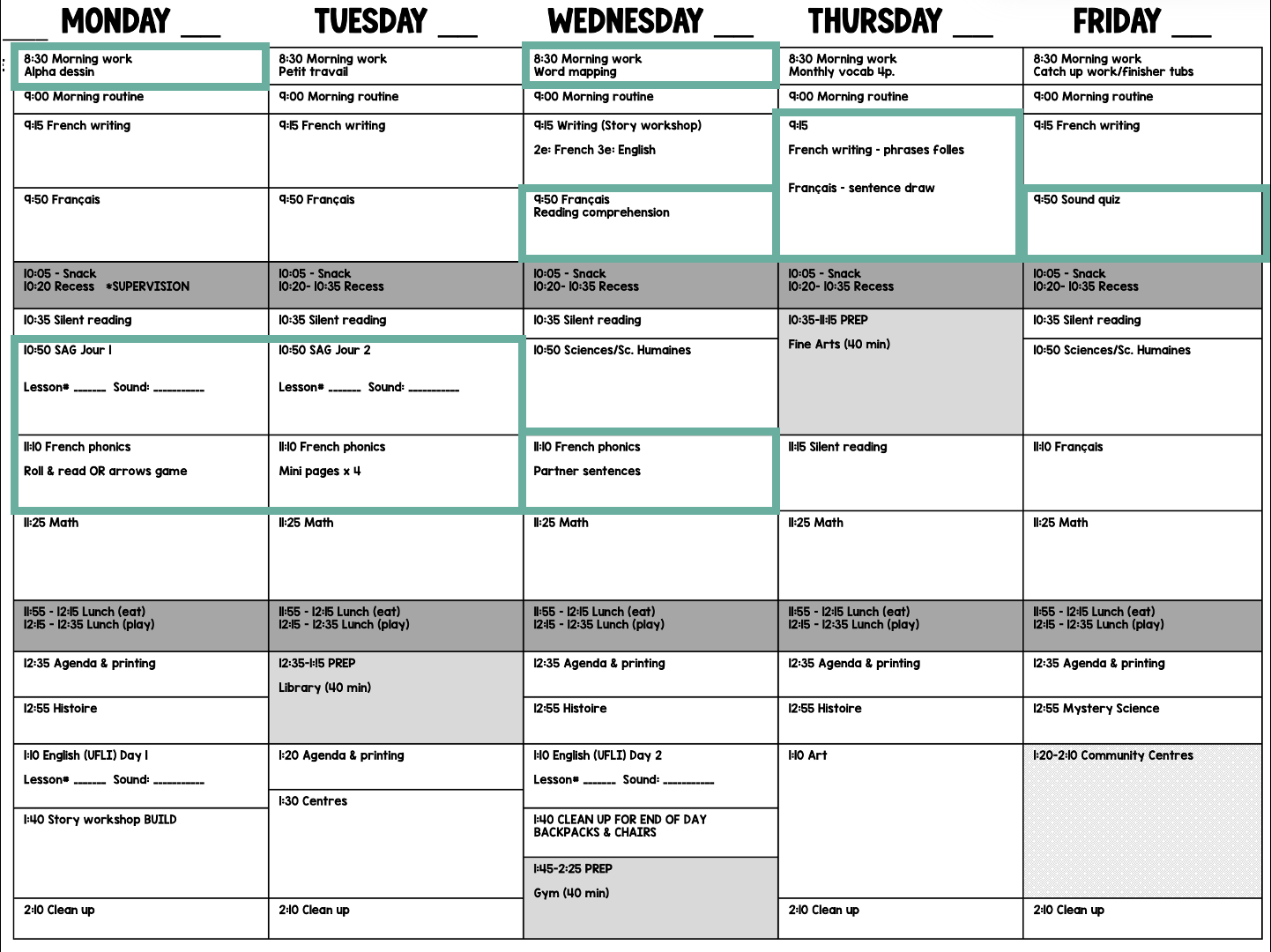
A note about my schedule
No one tells me how many minutes I must teach of math or literacy or whatever per day. They also don’t tell me when to teach things during the day.
I have flexibility over my own schedule.
This schedule is a perfect 5 day week with nothing that needs to be swapped or moved or added etc. We know those days can be rare. I frequently cross things out, add more time for X or completely remove Y.
Take it with a grain of salt! :)
Storing my materials
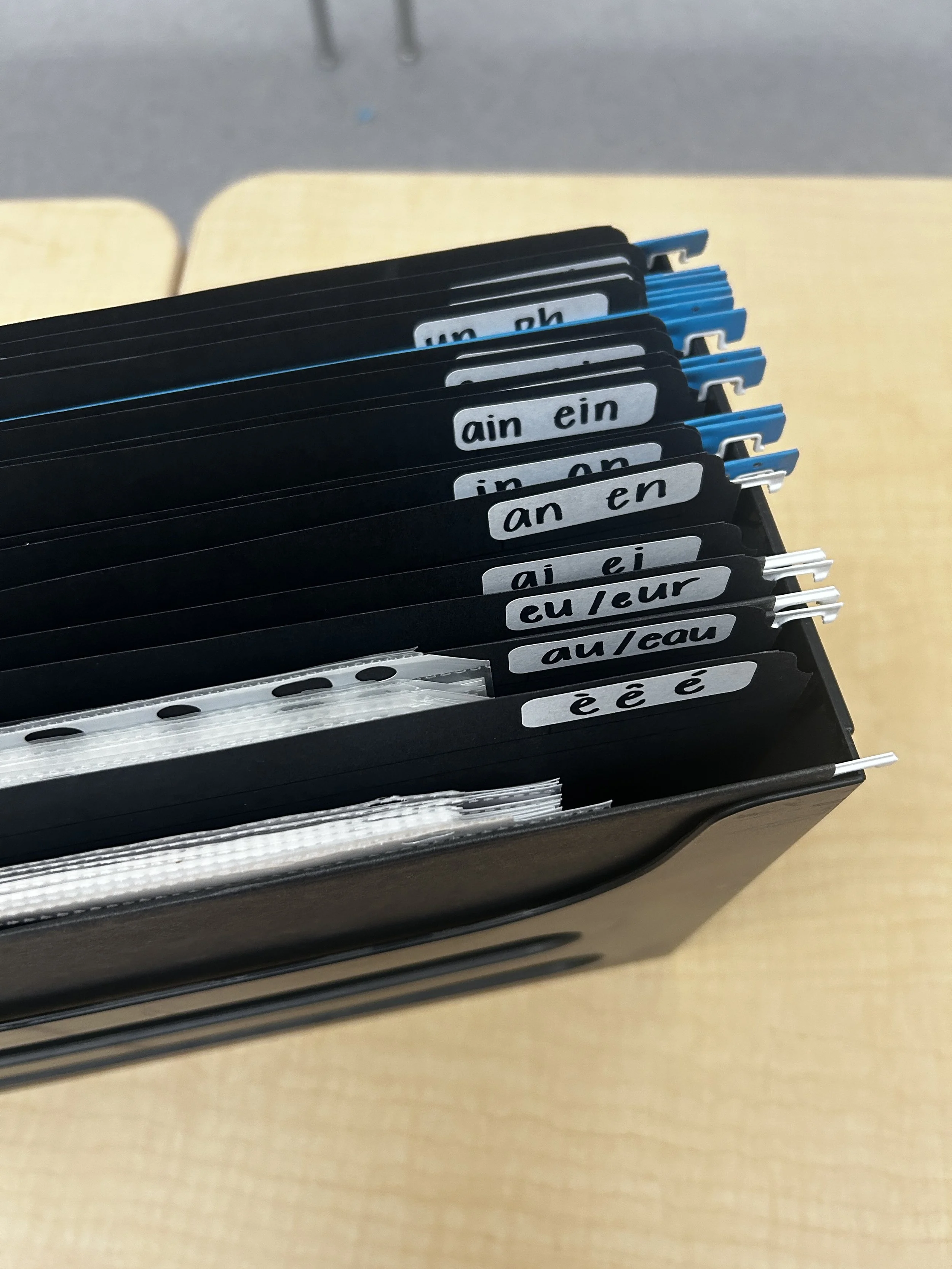
Games - stored in hanging file folders. I put two sounds per folder because I didn’t have a million on hand but you could do one per folder. This is for things that are printed for many uses, not worksheets that a student would write on. Sentence strips also go in these folders. Basically prepared materials you’d use multiple years in a row.
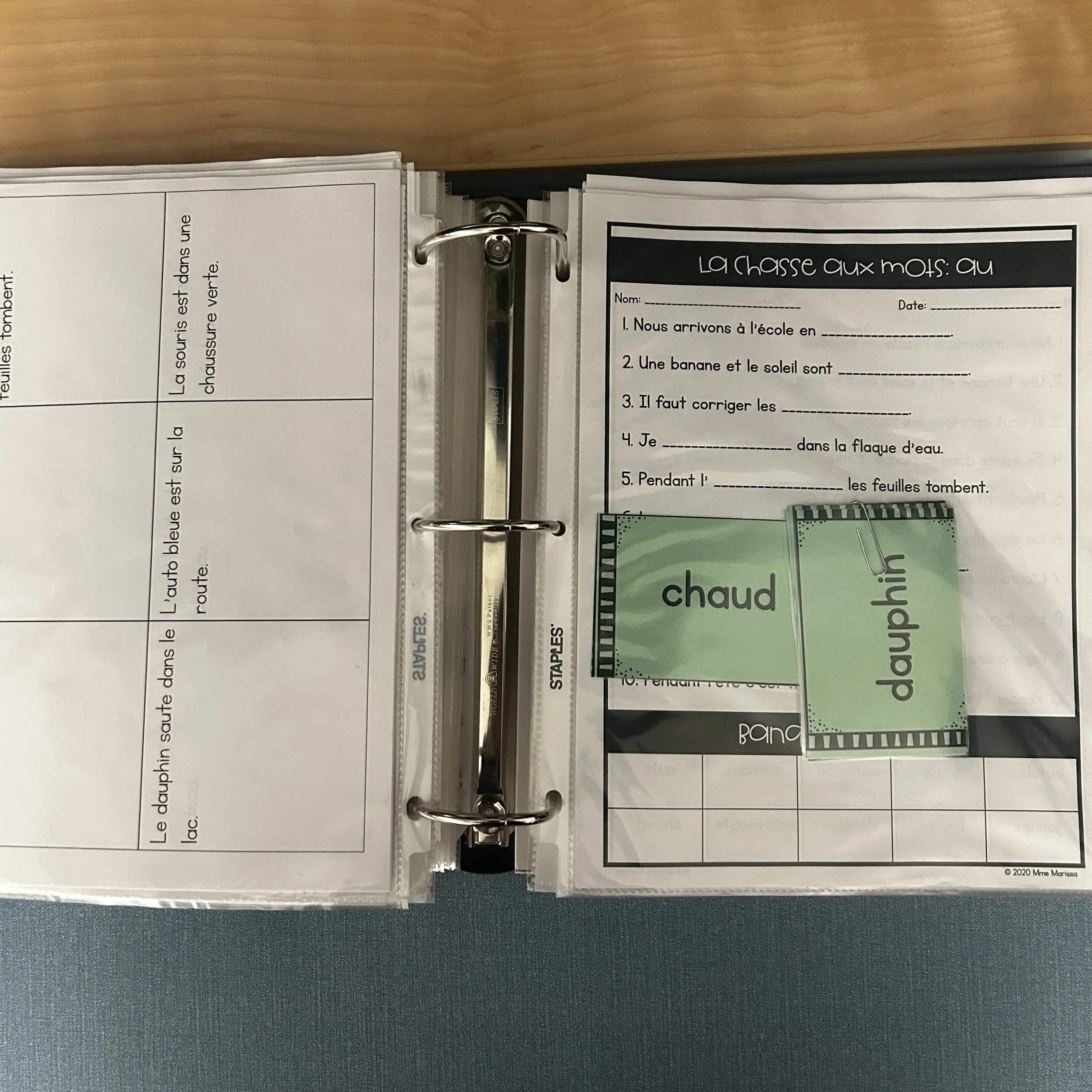
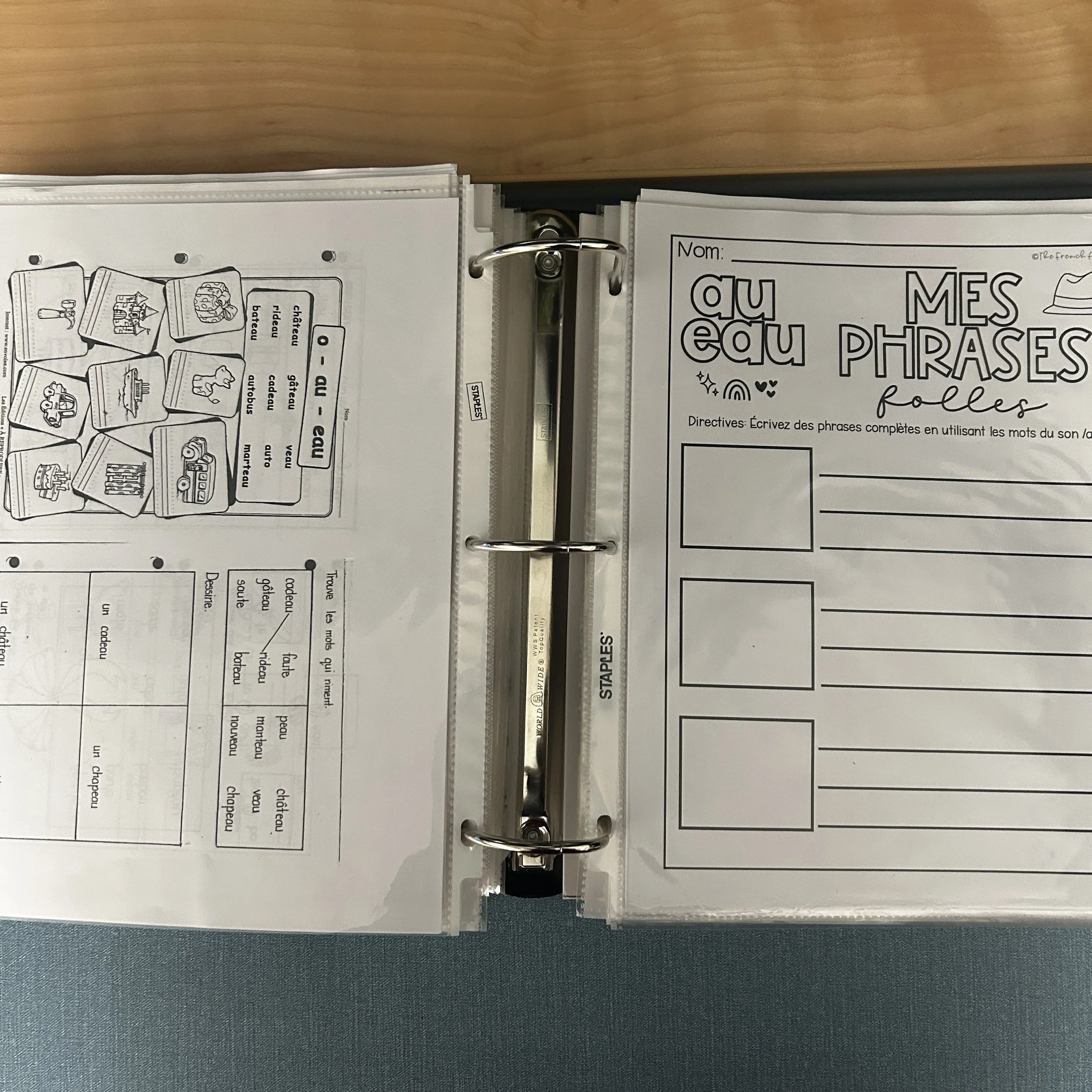
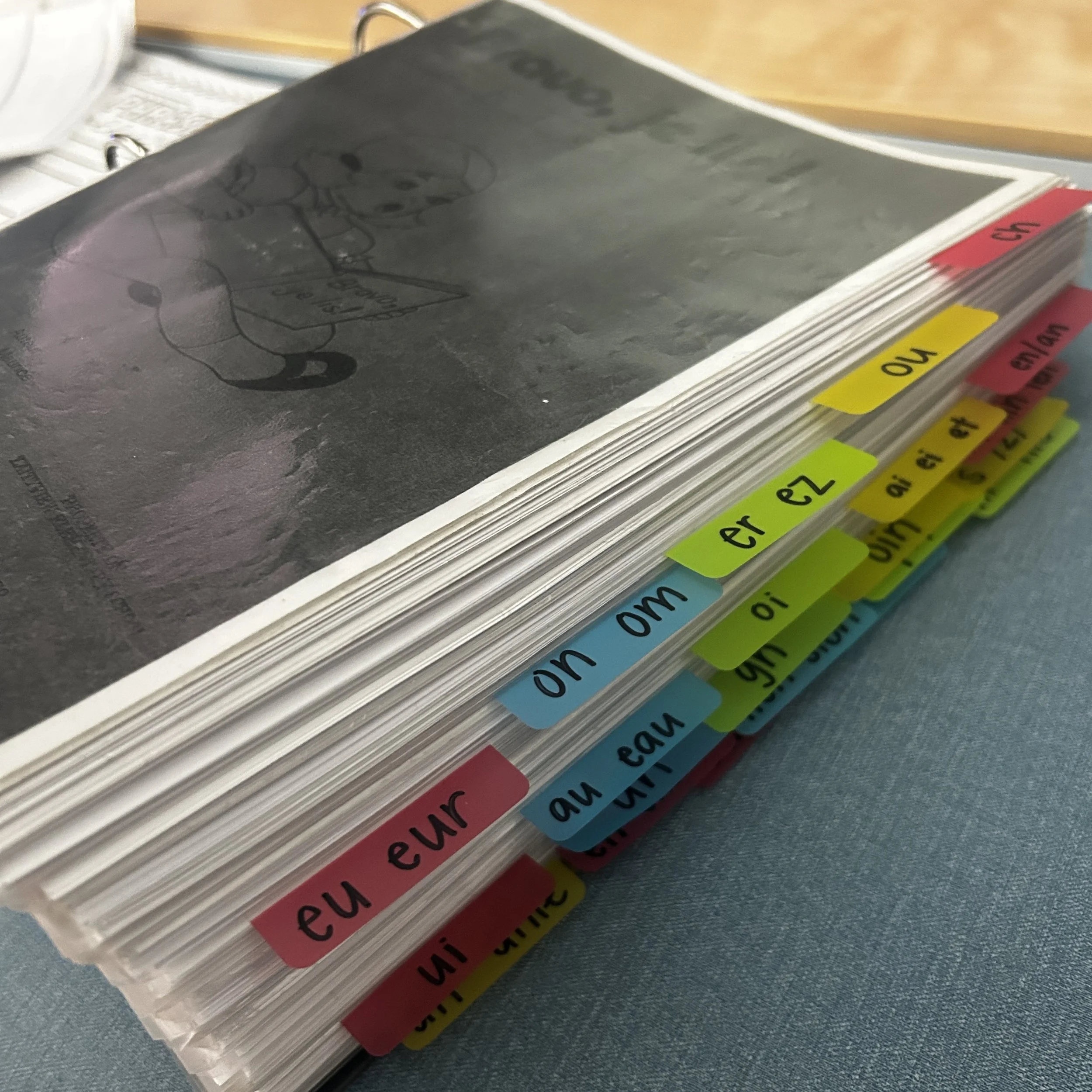
Worksheets, masters etc - masters for games, worksheets, activities etc. go into a large binder (you can use several smaller ones). I also put other things in there like I have poems for some sounds or other activities that I’ve been given or found over the years. Anything sound related that has a master goes in there. When I need to make copies, I just take the page protectors I need out and take them to the copy room.
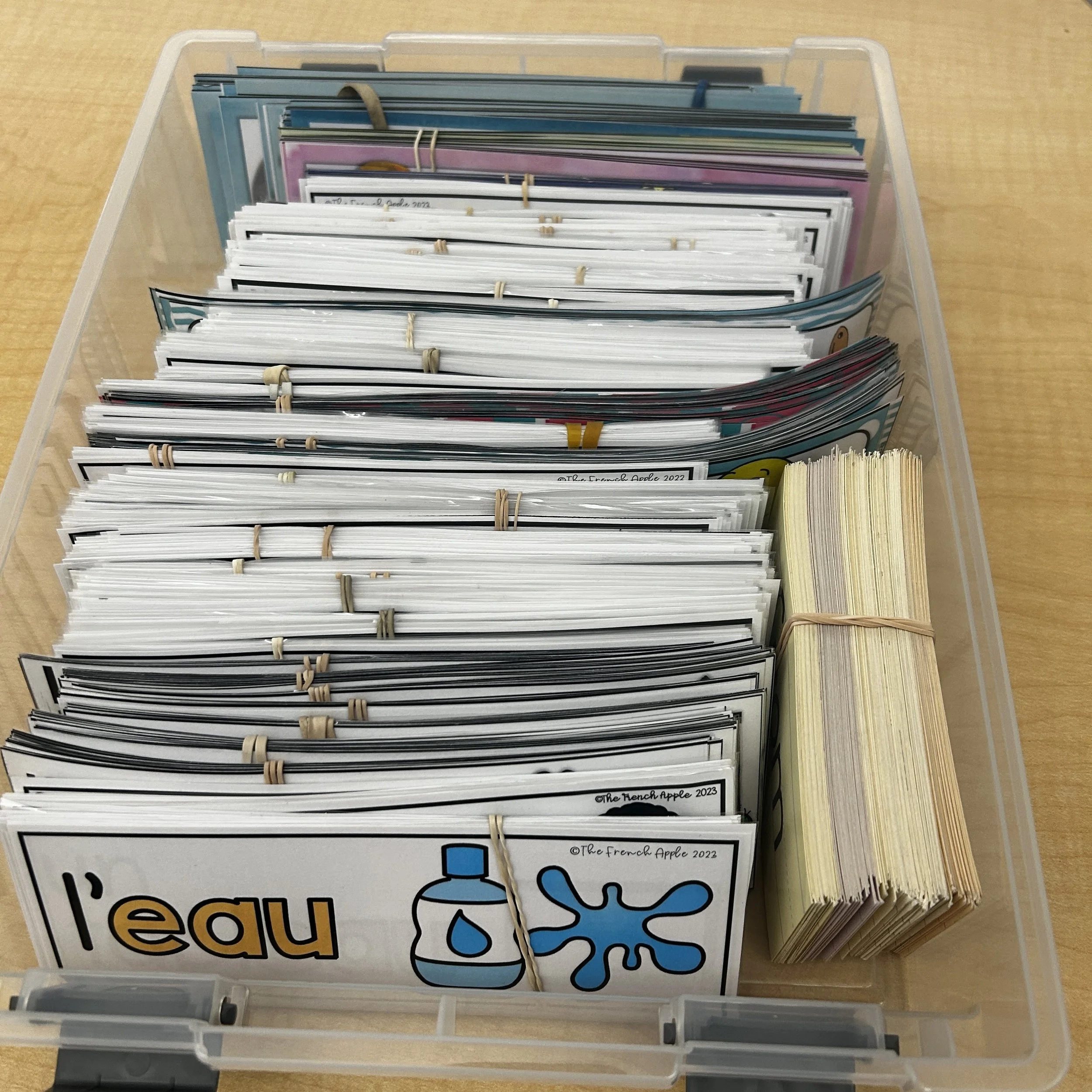
Words of the week strips - Stored in this container (from Dollarama, it has a lid that latches and it’s large enough to fit paper inside). I rotate from front to back so the next sound is at front and rotates back once we’re done with it.
Monday
Morning work – Alpha dessin
Resource I use: Alpha dessin sheet (from the freebie library)
Students need: Alpha dessin sheet, list of 8 words (mine are on the board), pencil and pencil crayons (optional)
How it works: Each week I pick 8 words and write them on the board. For example: chaise, aime, mitaine, maison, laitue, balai, fraise, éclair
They must write the words in alphabetical order and draw a picture. I usually have a pocket chart with word strips that change based on our sound so they can refer to this if they get stuck with not knowing what it means.
PREP TIP: To save myself time, I count how many Mondays we have in term 1 and print that many sheets (I make them double sided). That way there are no loose sheets and I don’t have to remember to print each week.
Note: if it’s a word that you can’t really draw (like “parce que”), it would be noted that they wouldn’t need to draw that one and we’d just talk about it instead.
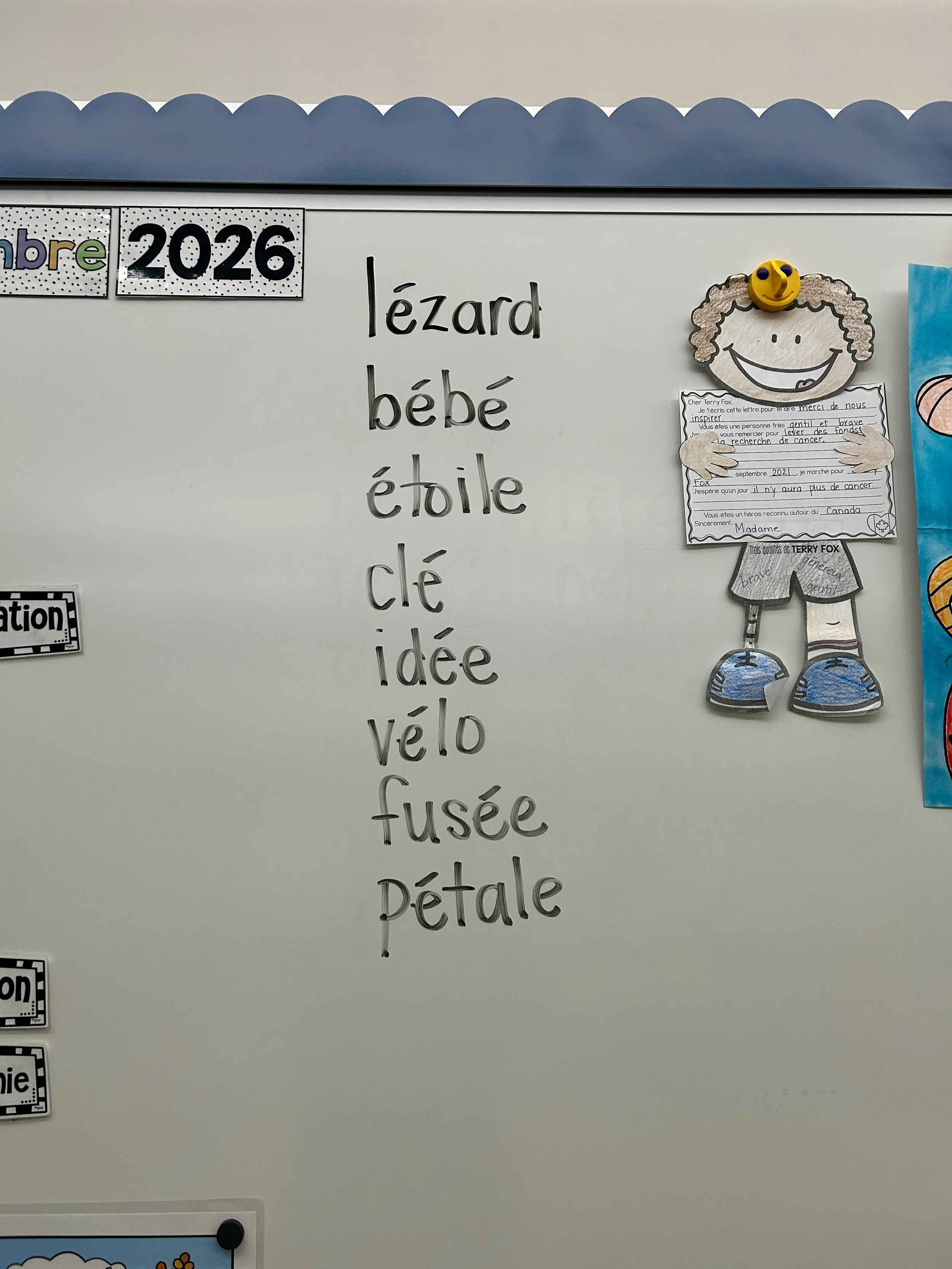
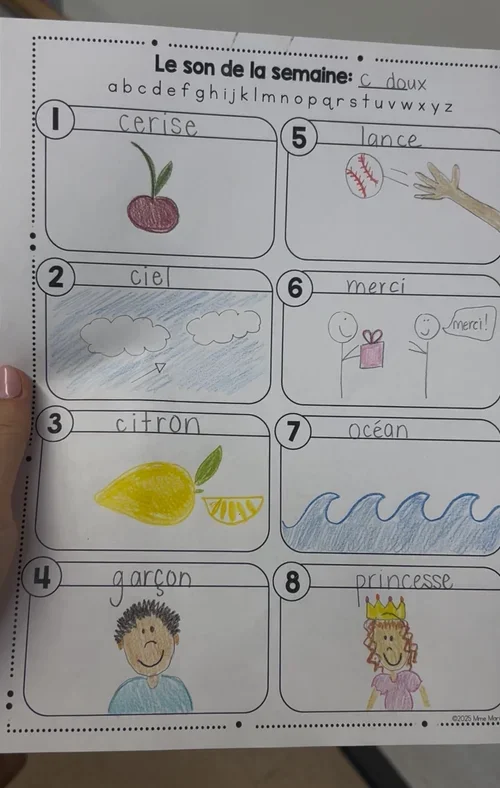
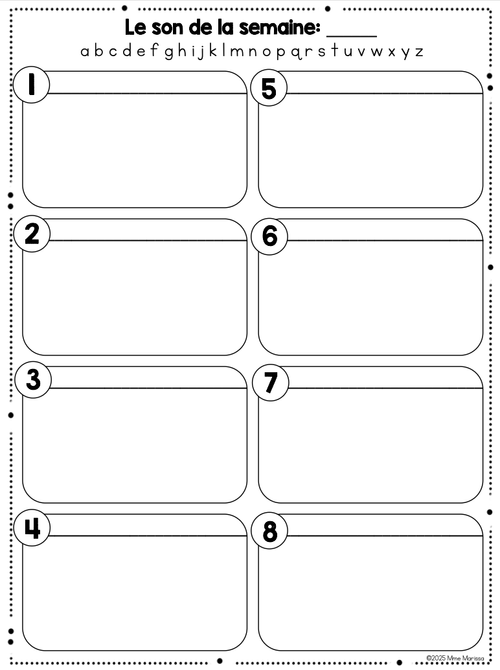
*Photo of board words and a completed page were not from the same week
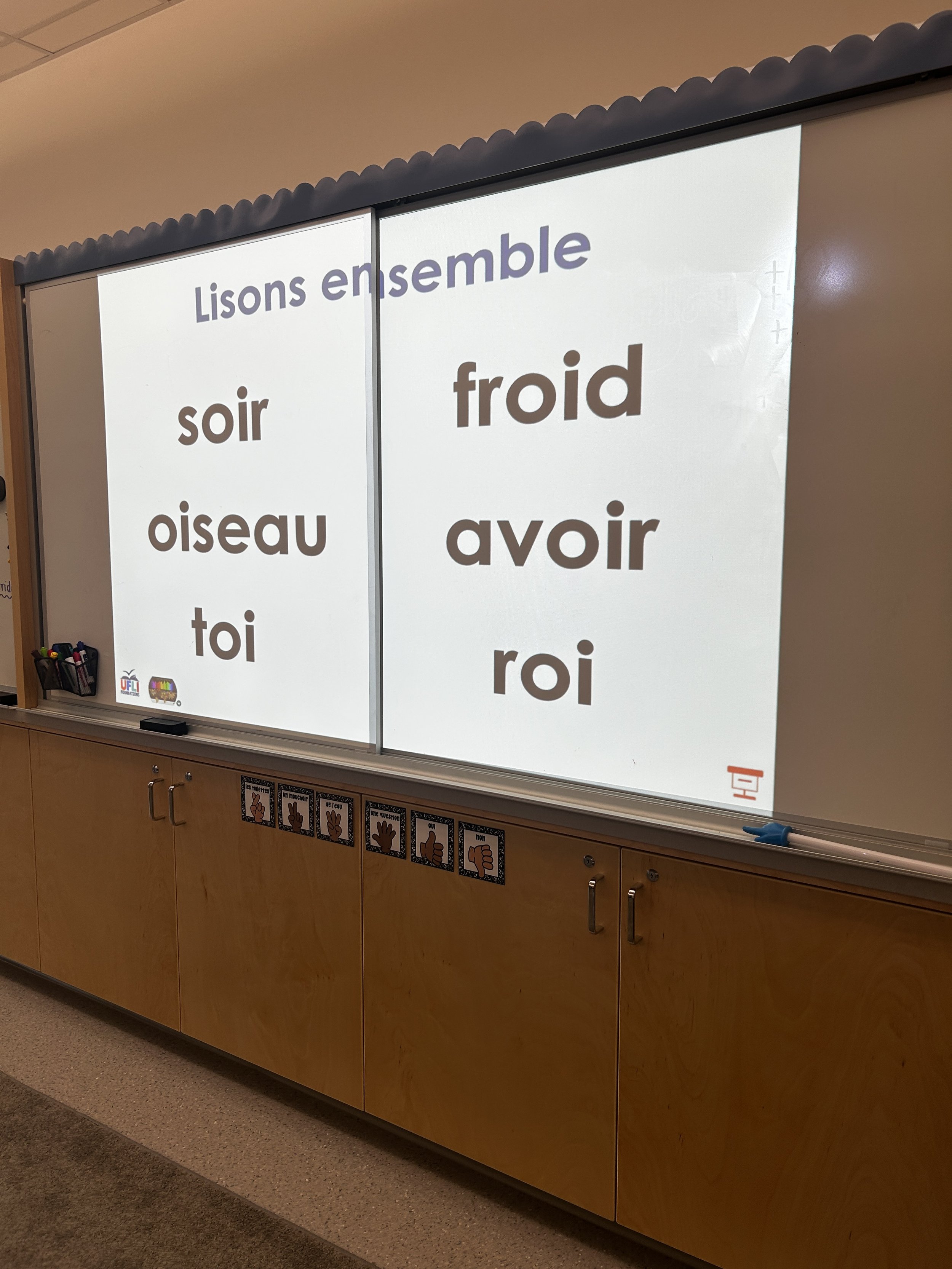
SAG lesson day 1
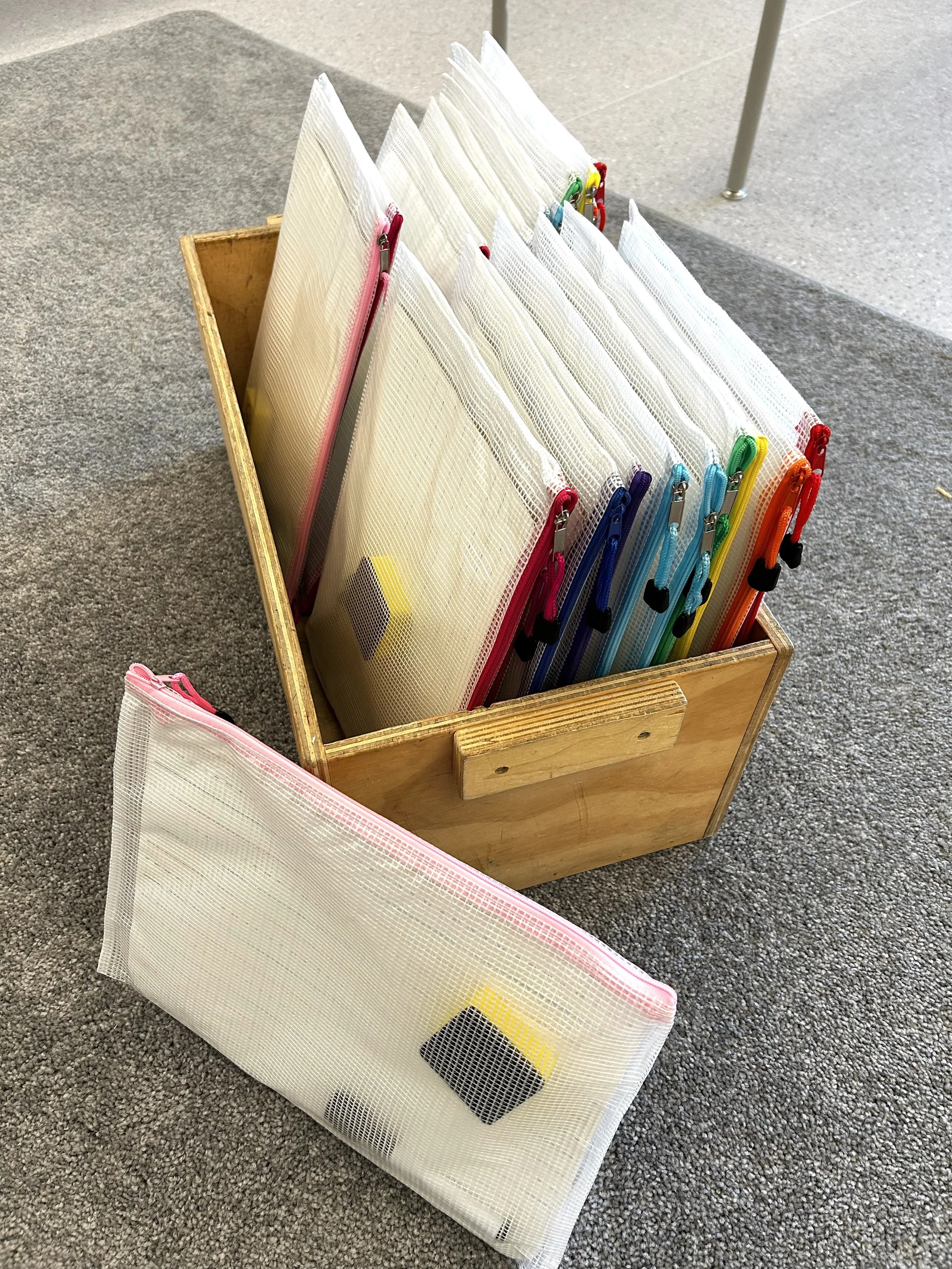
Materials: I keep my whiteboard, eraser and marker in a zipper pouch. That makes it super easy for student to collect and put away. It also allows them to keep their board in their bag when we don’t need it to take away the temptation to draw while I’m talking.
Resource I use: SAG lesson guide page and lesson slides
Students need: A dry erase pouch or whiteboard and marker
How it works: After recess we do the Son-au-graphe lesson for day 1. If you’re unfamiliar with each part of the lesson, please read the information in the SAG folders. If you prefer to watch, I recommend looking up UFLI lessons being taught. Those were super helpful at the beginning for me. Different language, same process.
In my class students may choose to sit at their table or at the carpet.
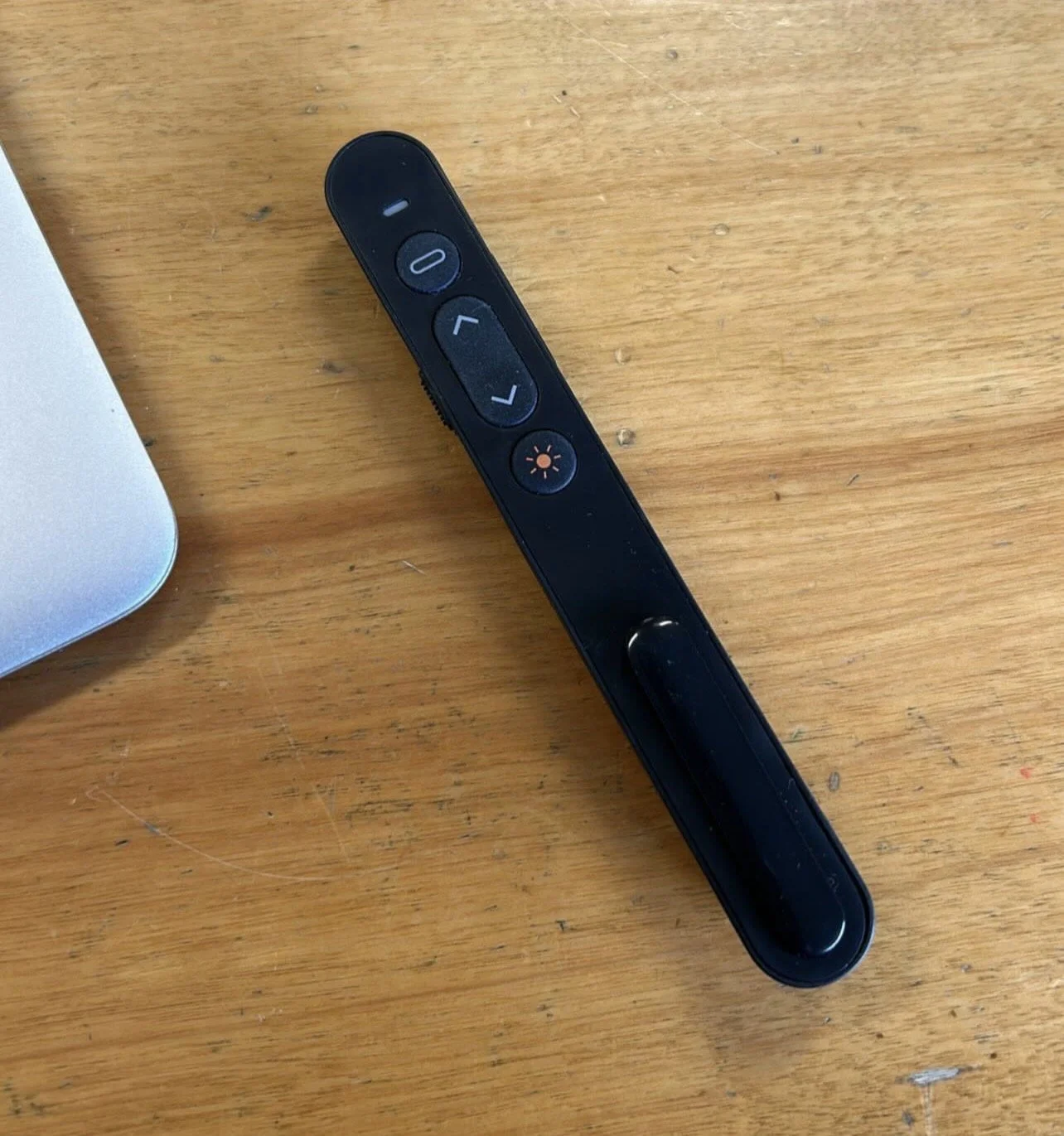
I sit/stand at the front. I HIGHLY recommend a remote slide clicker. Mine also has a laser and I use it constantly. This lets me leave my computer and walk around while I’m teaching.
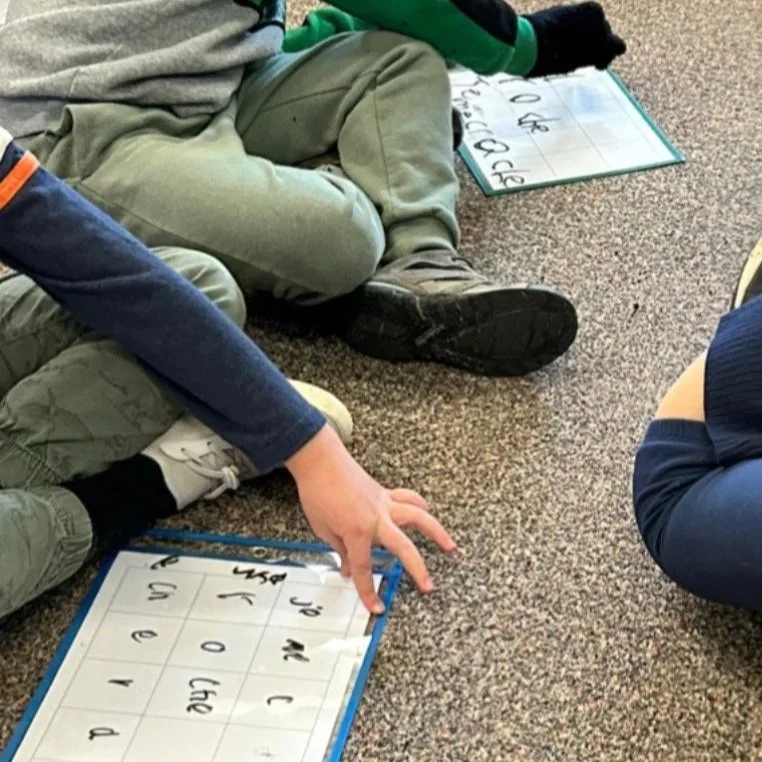
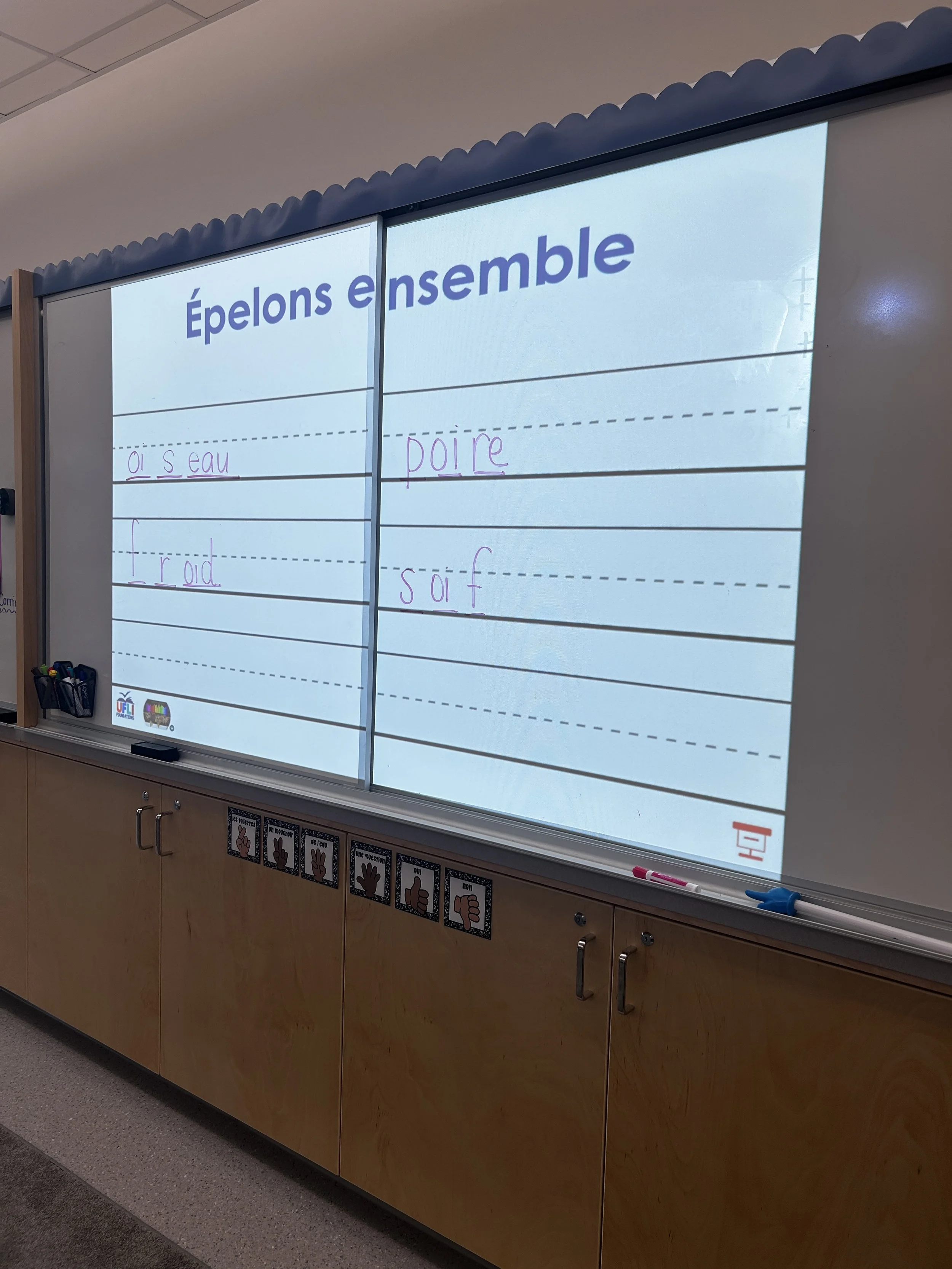
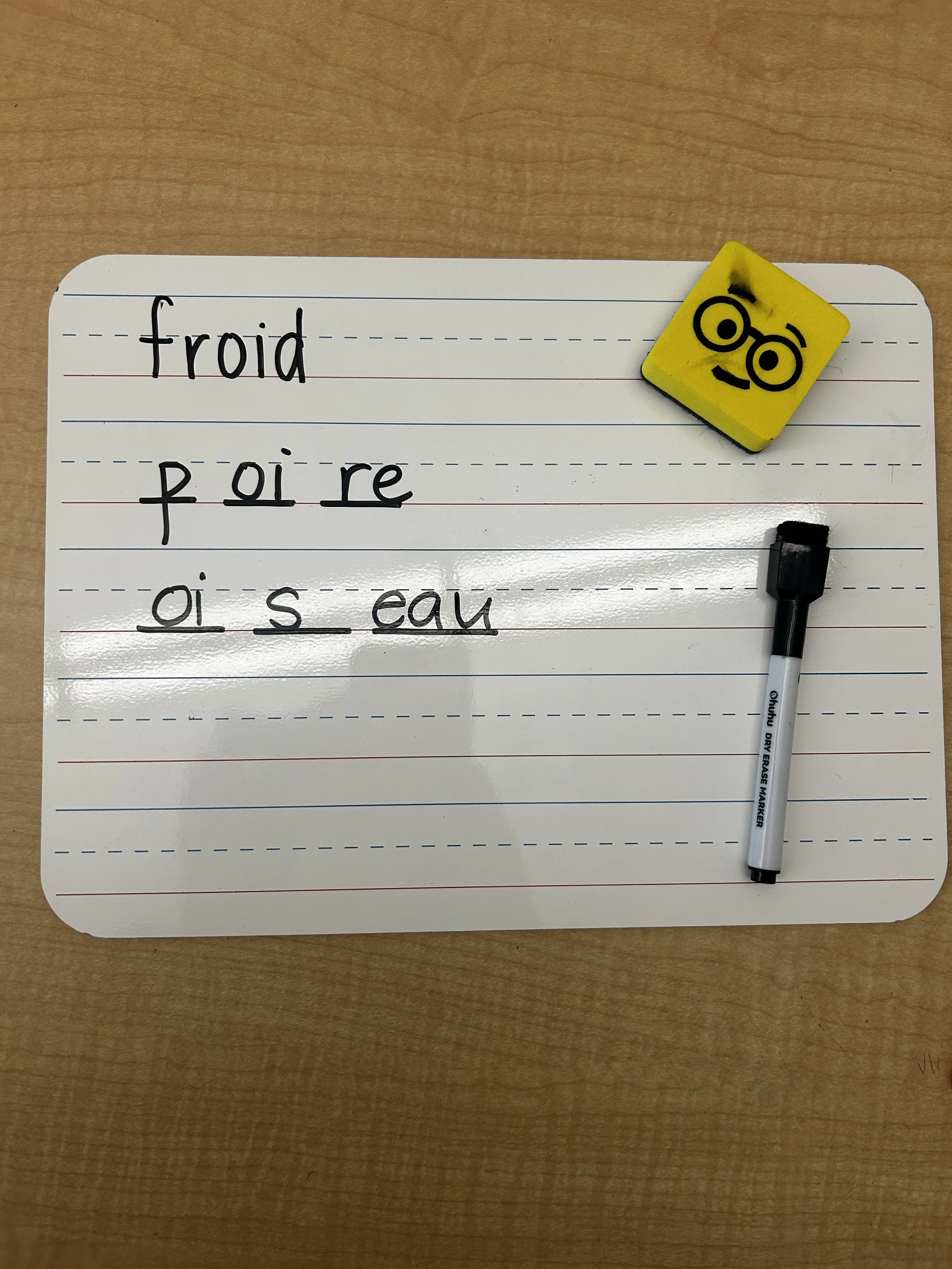
I used to have students write on dry erase pouches that had boxes on one side and lines on the other. I got new whiteboards with lines, that’s why I changed. Use what works for you!
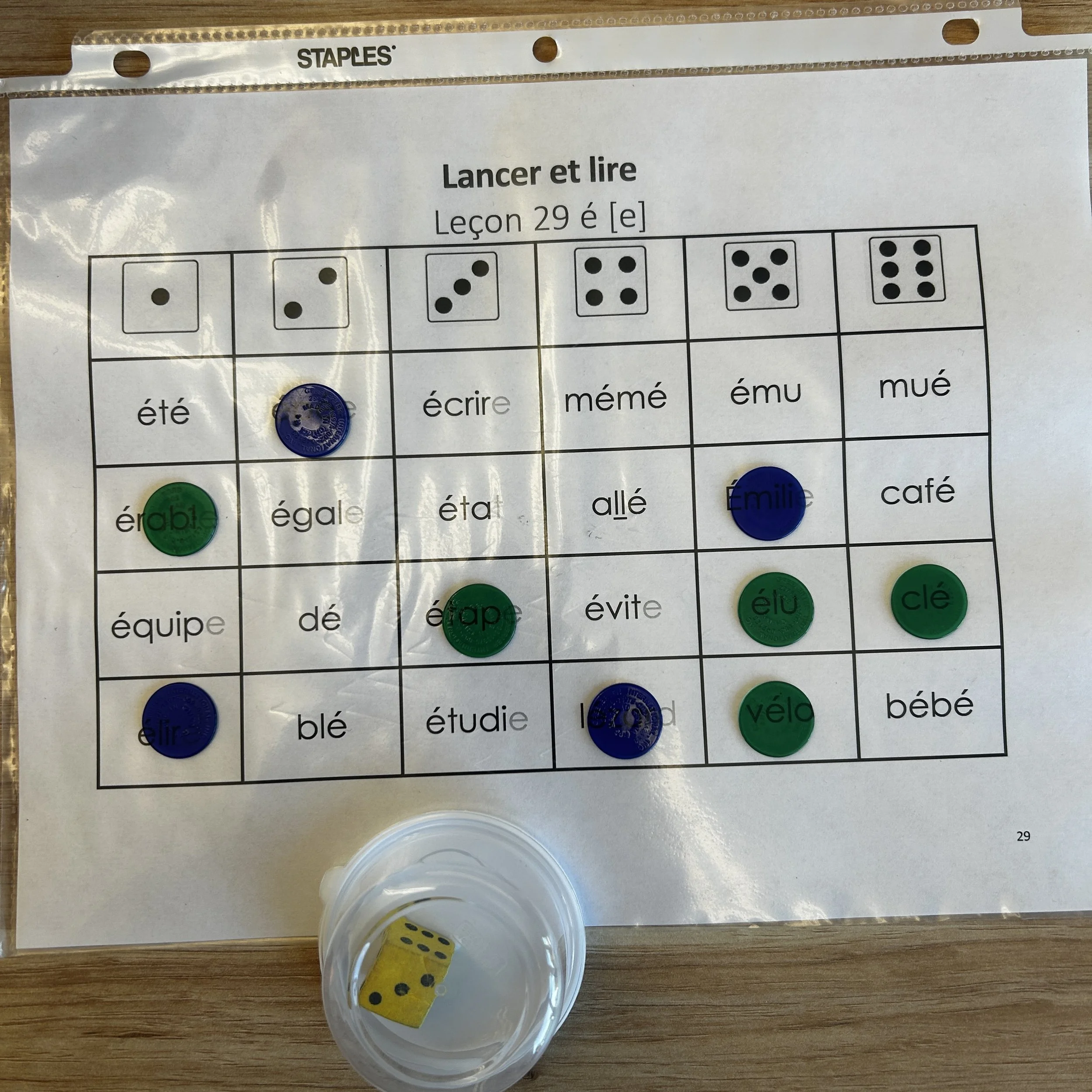
GAME OPTION 1 - Roule et Lis/Lancer et Lire
Resource I use: roll and read style activity either from SAG’s selection or La Trousse de Madame’s selection within the centres resource
Students need: roll and read sheets, dice, dry erase pockets or page protectors, markers or tokens
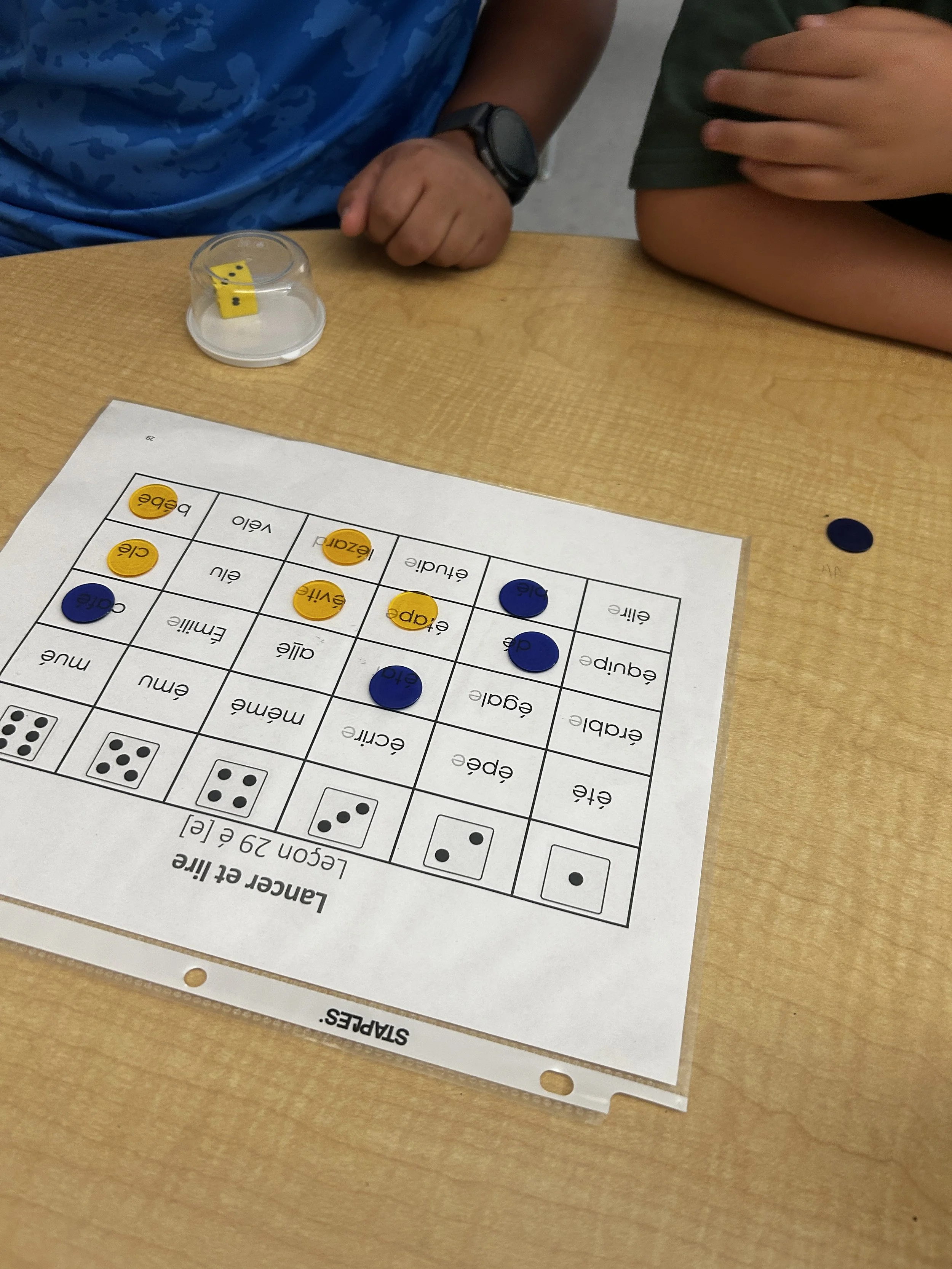
How it works: I may do this as a whole group or in pairs where everyone is playing the game, no rotating to stations. This can also be played individually or in a small group. I print enough for a whole group of partners. So for 22 students I have 11 copies.
This happens right after we finish our lesson. I only have a 15ish minute block for it. It’s just a bit of additional practice. It’s not meant to take all day. Student A roll a die and choose one word to read from the column that they rolled. They may put an X or a token on that word. Student B takes their turn.
“Winning”: There doesn’t need to be winning, you can just have them play it where the goal is to cover every spot. If column 2 is full, they reroll.
Alternative: Play 4 in a row. Students will need a different colour marker or different colour tokens. They are aiming to get 4 in a row but they have to obey the die roll, so it may not always work in their favour. This adds a fun spin on it to keep it fresh and adds some strategy for older students.
GAME OPTION 2 - “Ups and downs” (Le jeu des flèches)
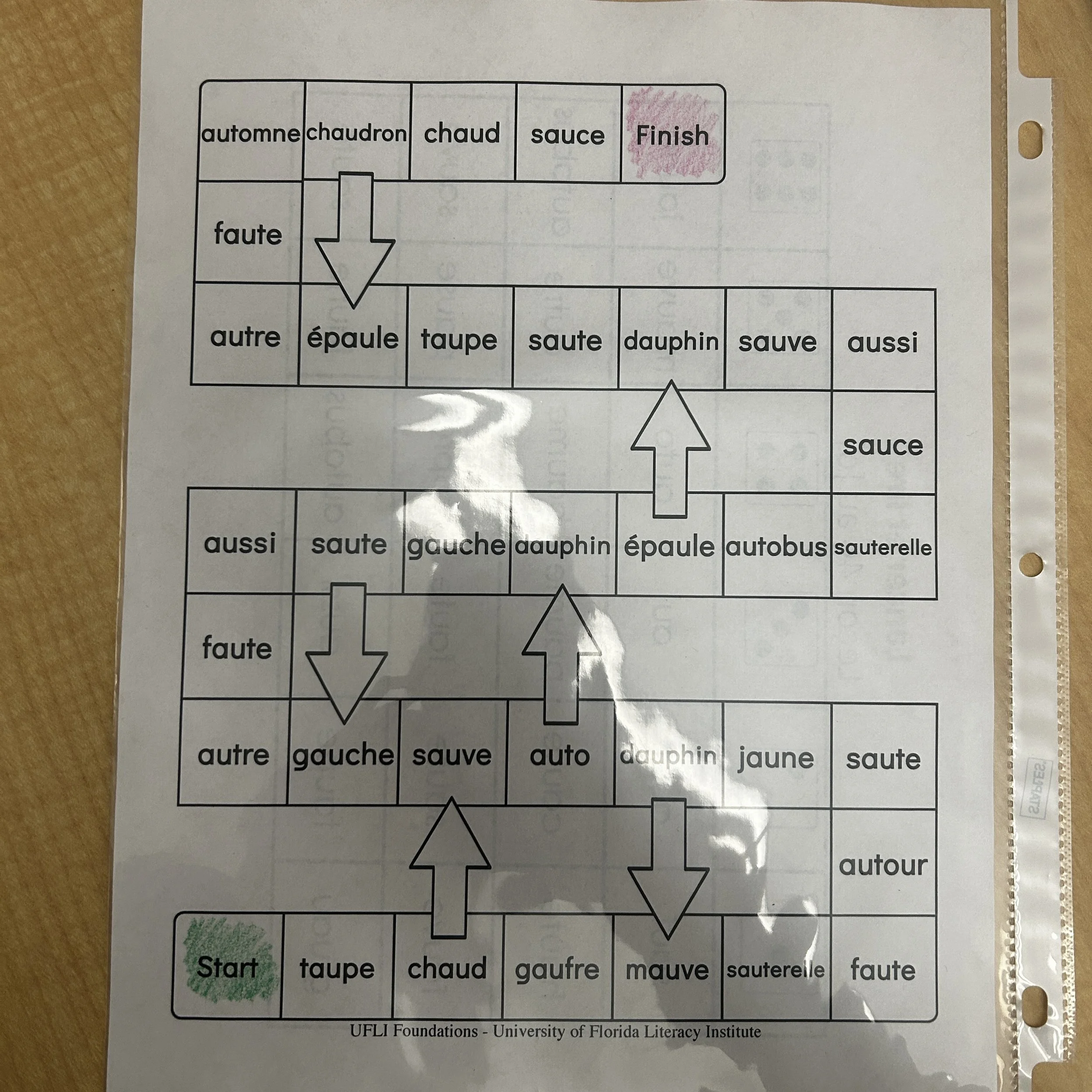
Resource I use: UFLI game builder
Students need: game board, dice, tokens
How it works: Instead of roll and read, students may play a snakes and ladders type game (called ups and downs). This is from the UFLI game builder. You will need to input your own list of words but it will create the game board for you and you can print it out.
PREP: You need to input the words into the game builder. Once you’ve typed your words, you can print a copy (or play it digitally as a group). Sometimes the arrows don’t seem to print, so I just draw them myself before I make copies.
I print this on the back of the roll & read. That way no matter which one I want to do that week, I’m prepared and it’s only 1 sheet.
It could be a great early finisher if they finish one side early, play the other side!
Tuesday
SAG lesson day 2
It’s now day 2. We follow the slides for the day 2 portion.
Note: If we missed Monday, I’d shuffle so that we would still get two lessons in, so today would be day 1 and we’d do day 2 either Wednesday or Thursday, depending how it fits best in my schedule.
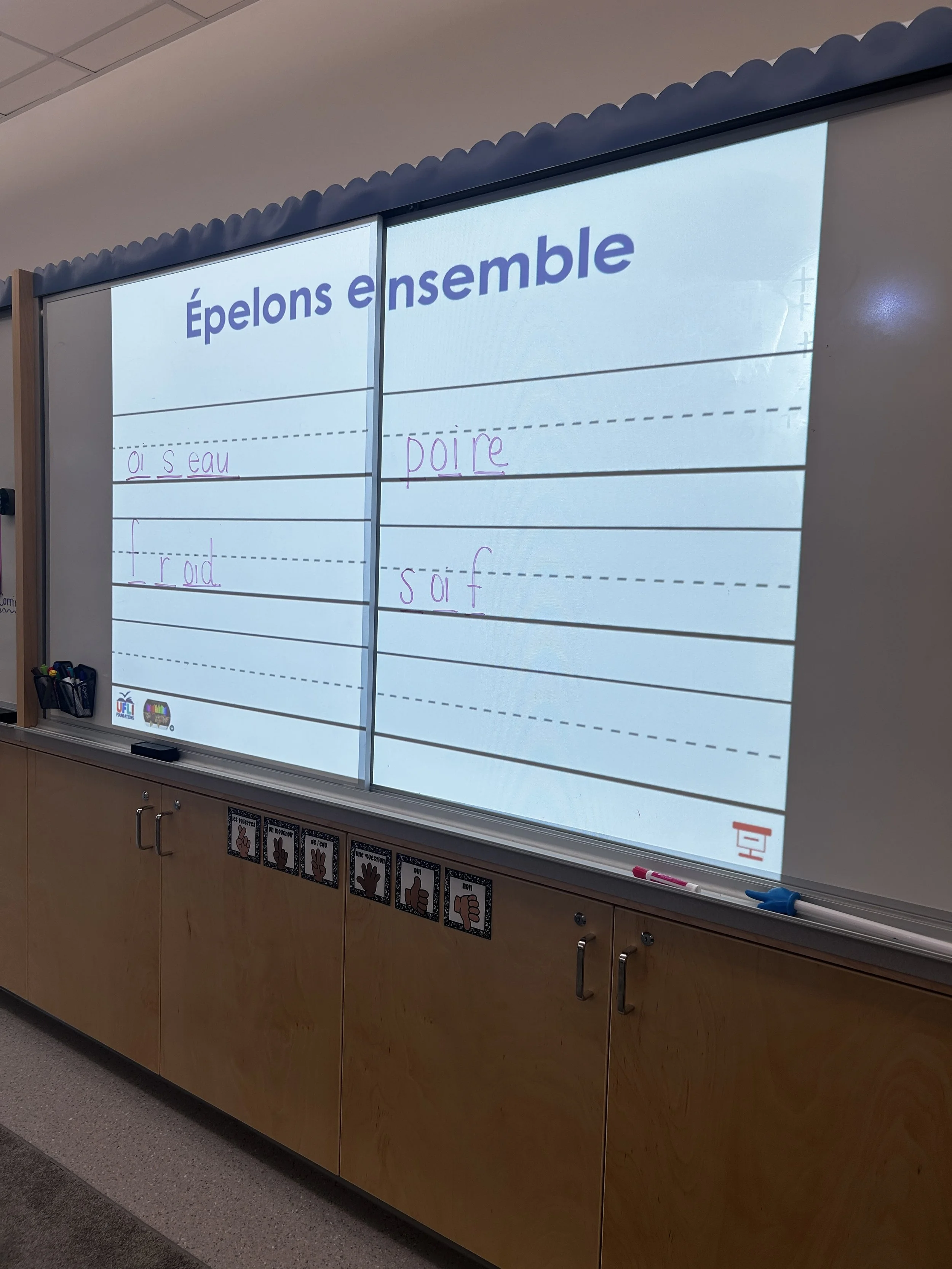
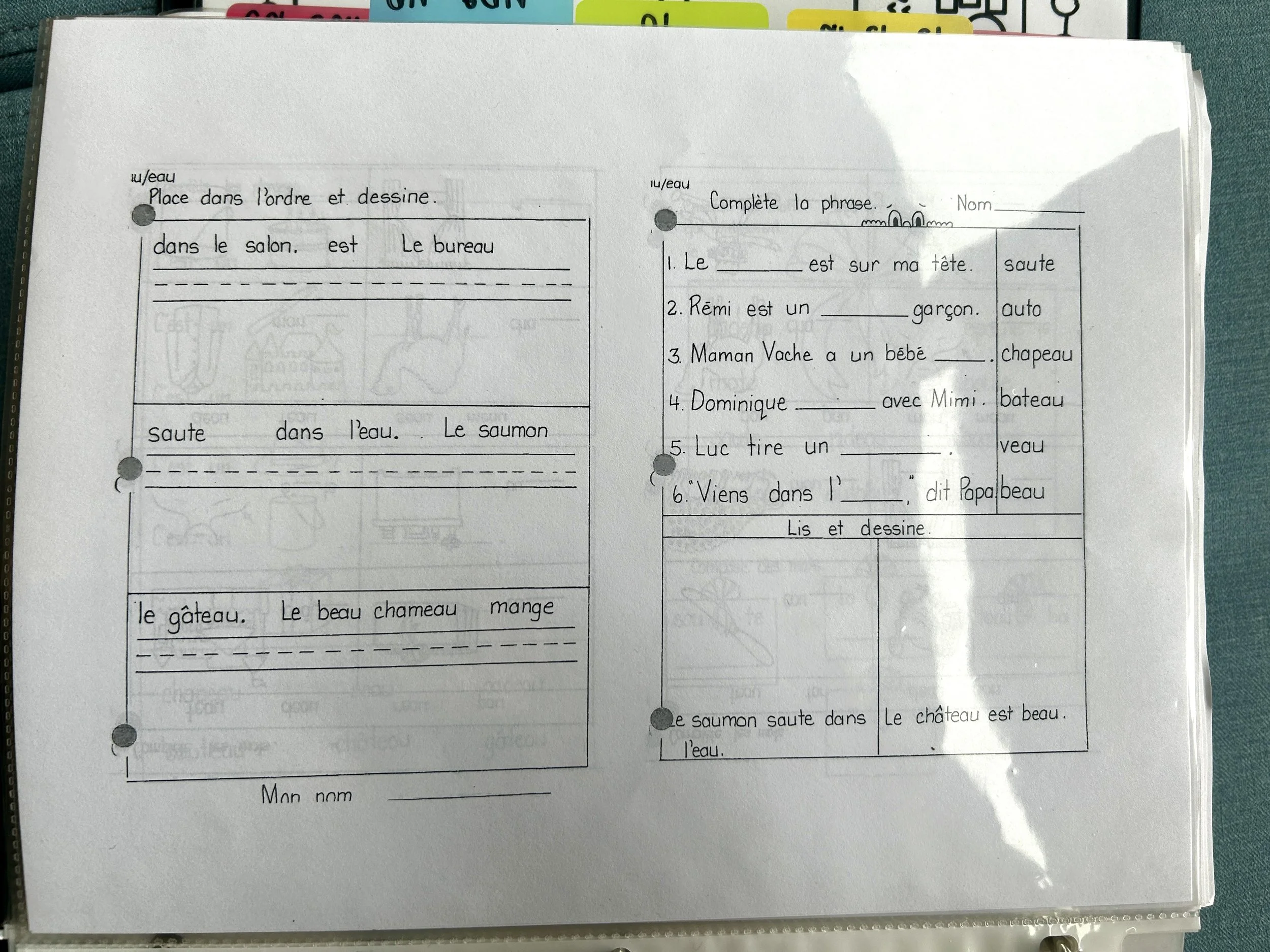
Phonics worksheets
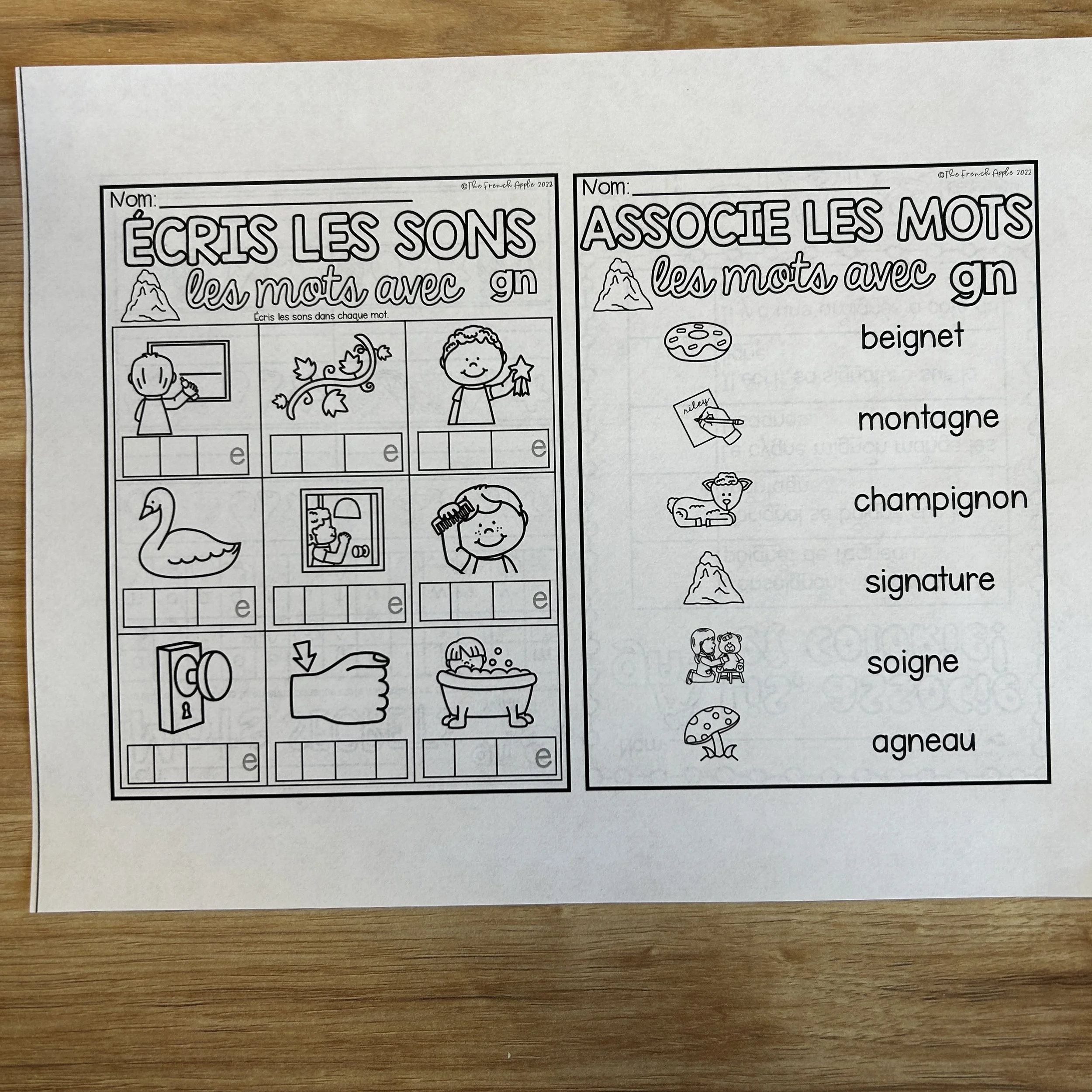
Resource I use: some type of phonics worksheet
I use sheets from The French Apple. I also have an incredibly old resource called Bravo Je Lis (and another I can’t remember the name of) that a colleague gave me. Think 80s phonics. I may choose to do these pages instead. Any phonics worksheet will do.
Students need: phonics sheet, pencil
How it works: We typically do 4 mini pages. I use Adobe to print and select multiple so I can choose 4 pages I want and it prints them mini, front and back. This means only 1 piece of paper for each student.
I often go through each page under the doc cam to ensure they know what’s expected of them in each activity, then they work independently.
Wednesday
Morning work – Cartographie (word mapping)
Resource I use: word mapping sheet (Mme Marissa freebie library)
Students need: word mapping sheet, dry erase marker, words to map (mine are on the board)
How it works: Back to our 8 words of the week. Students use the same words they wrote on Monday and map them. I leave my words up on the board so that they don’t have to get out their Monday duotang. You can change the list of words if you prefer.
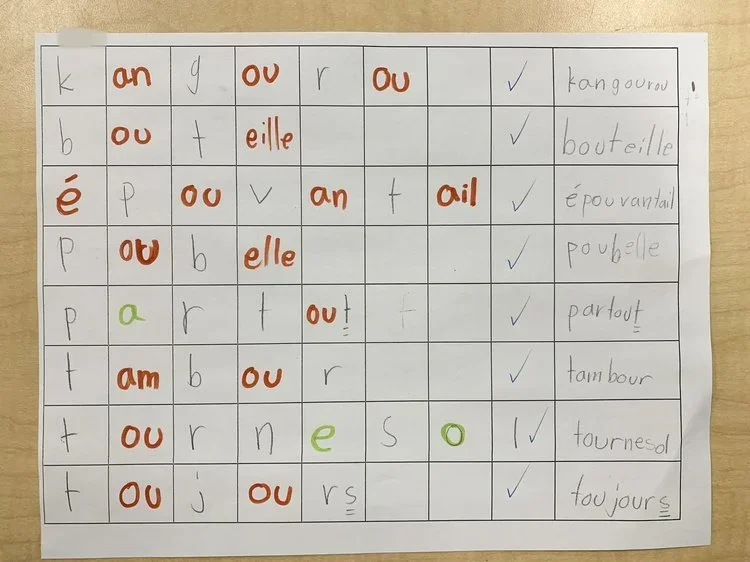
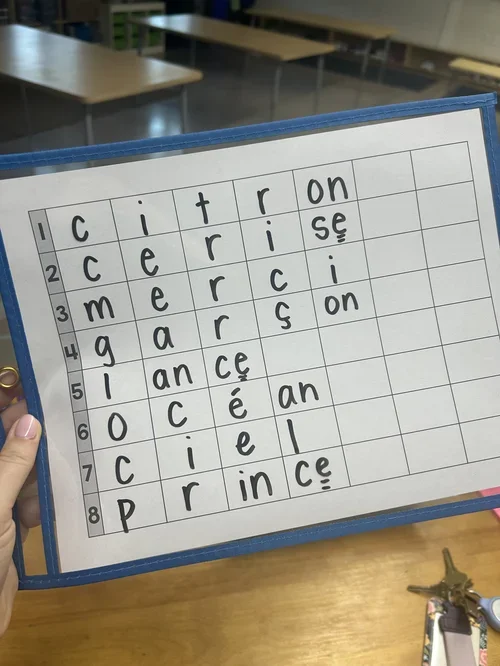
For example: ch-ai-se/m-ai-s-on
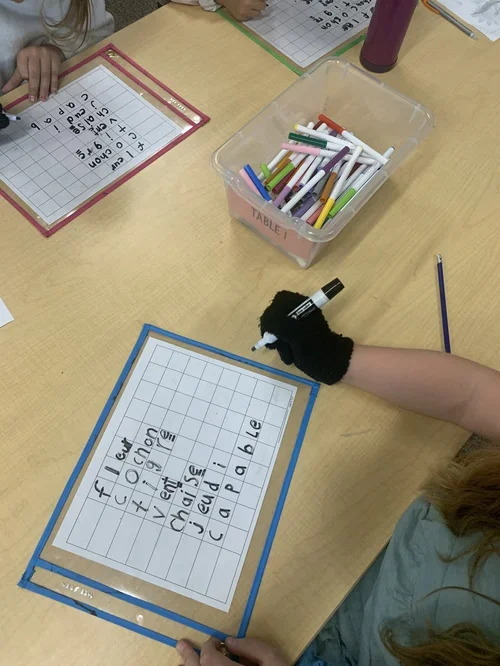
I like to do these on dry erase pouches where I have a sheet with mapping boxes inside so that we reuse the same paper every week. Students come show me their work, it’s easy to erase and fix if needed and then erase it once complete.
You can absolutely do these on regular paper and have students colour code the target sound or even all complex sounds.
*the first picture is from when they were learning to map, so there isn’t a consistent sound. We’d use the same pouches and sheets though!
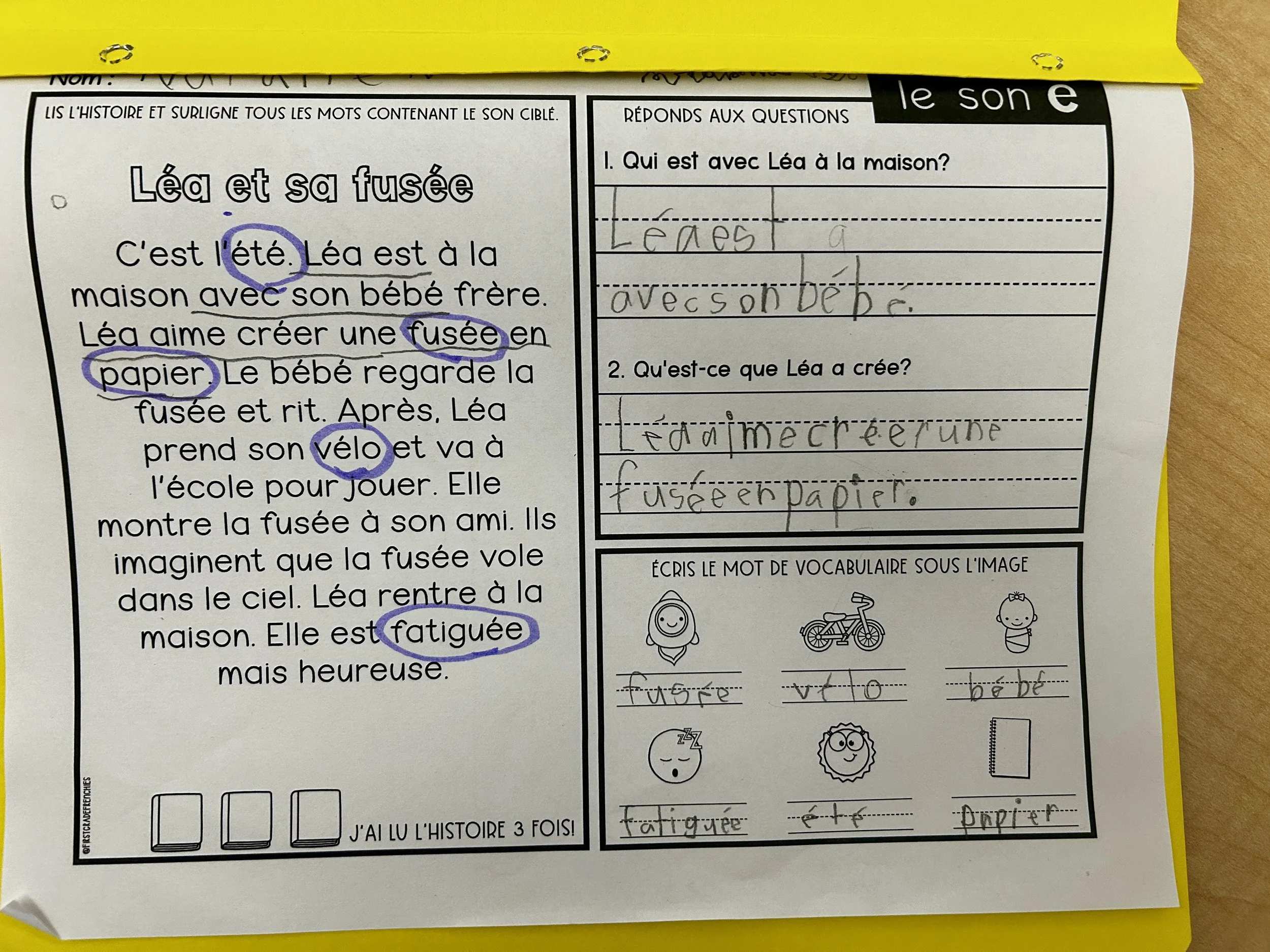
Reading comprehension with target sound (First Grade Frenchies)
Resource I use: Reading comprehension from First Grade Frenchies
We may do this as a group on the board, or they may do it independently.
*picture below in yellow duotang
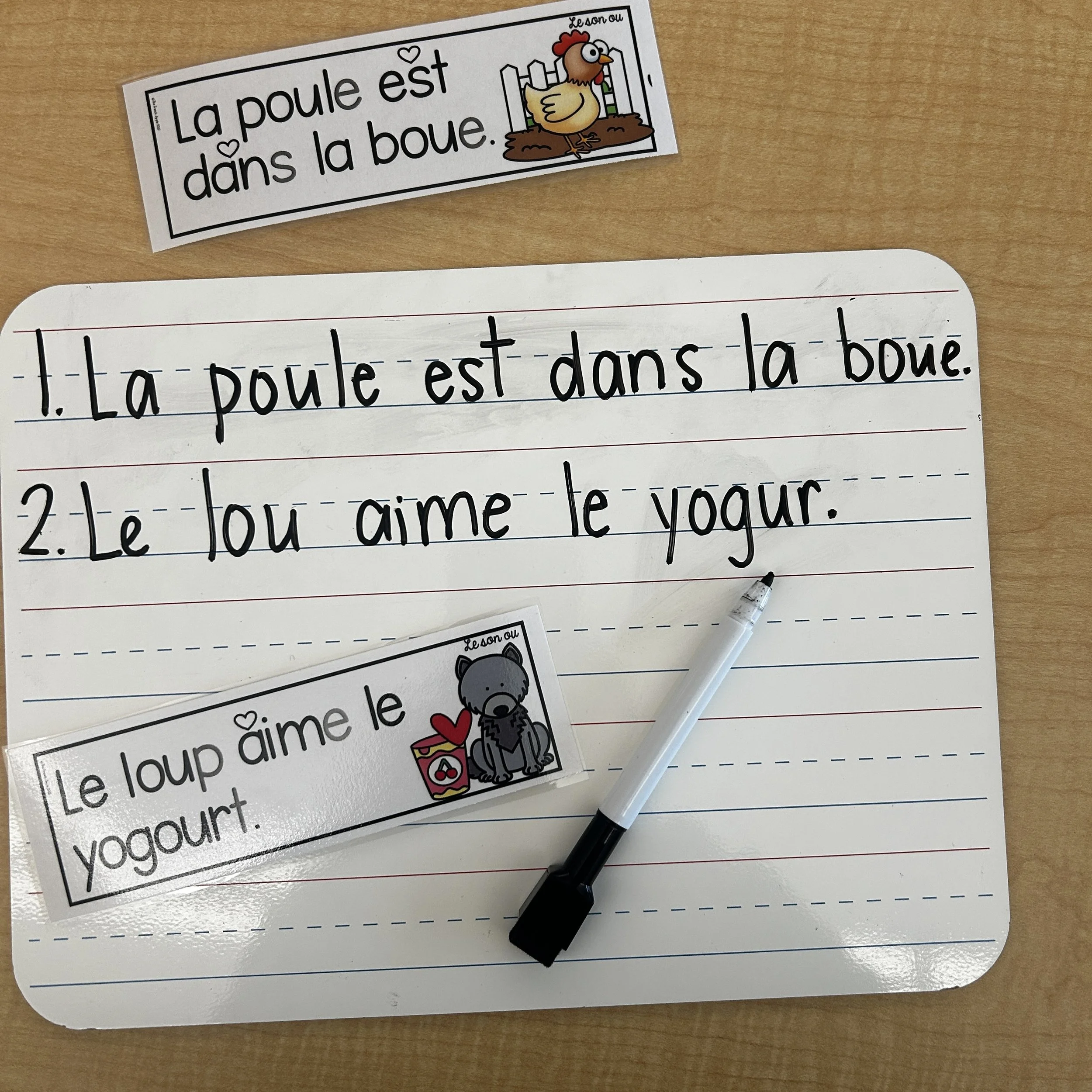
Je Lis, Tu Écris - partner sentence writing
Resource I use: Sentences featuring your sound of the week. The French Apple & La Trousse de Madame have this activity in their resources. You can also just write some yourself!
Students need: 1 whiteboard and marker/pair, sentence strip
How to play: You can play this one of two ways. First you can have student A hold the sentence strip (keeping it hidden) and dictate it to student B who will write it on the board. Alternatively you can make it headband style where it goes around the head (in whatever fashion you see fit) of the student with the whiteboard and other student dictates the sentence to them.
TIP: This would be very easy to differentiate. If you have students who are not yet able to write a sentence, have them do a word instead.
Thursday
**Note: The next two activities (sound sentences and draw the sentence) are on the same sheet, I use both sides of the paper.
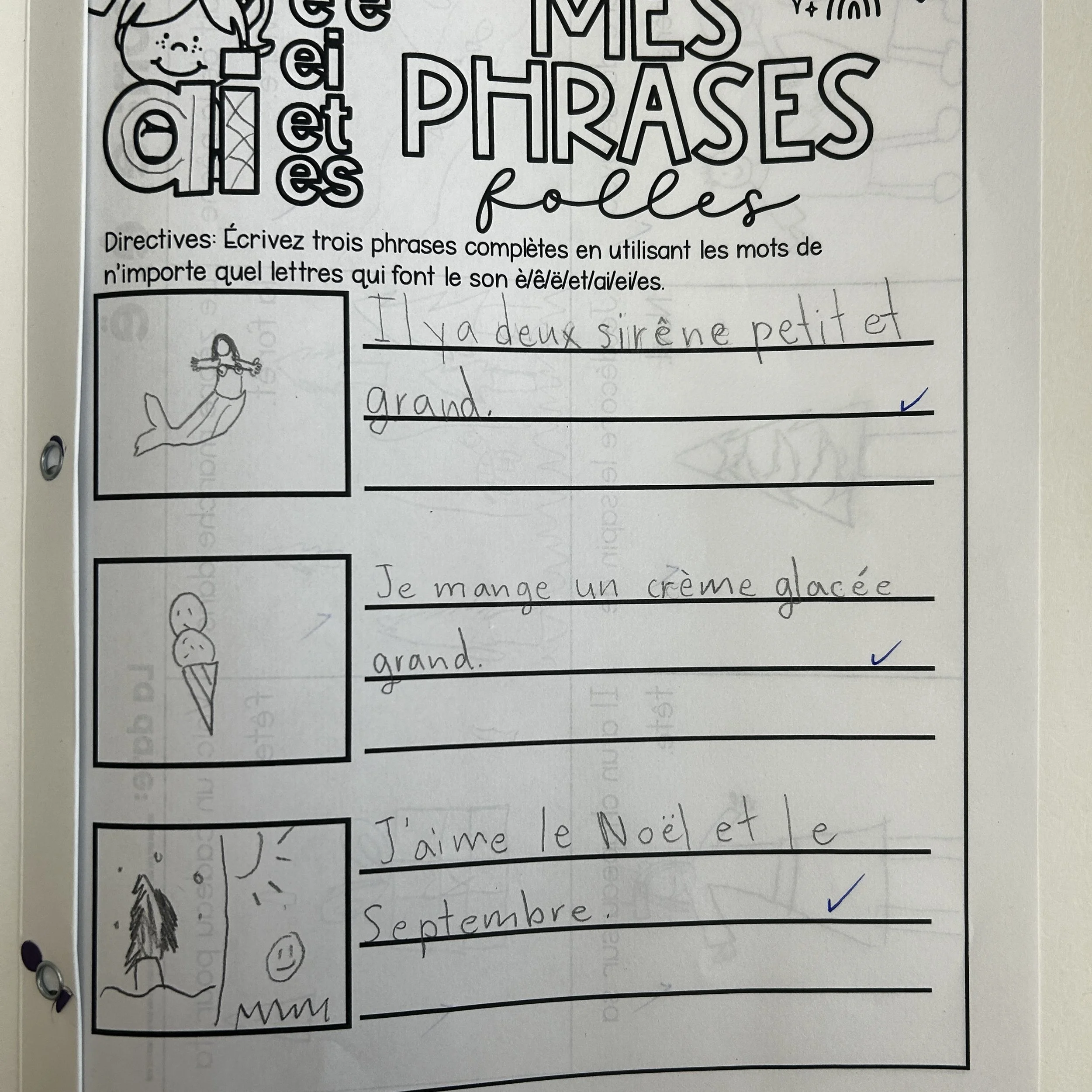
Sound sentences
Resources I use:
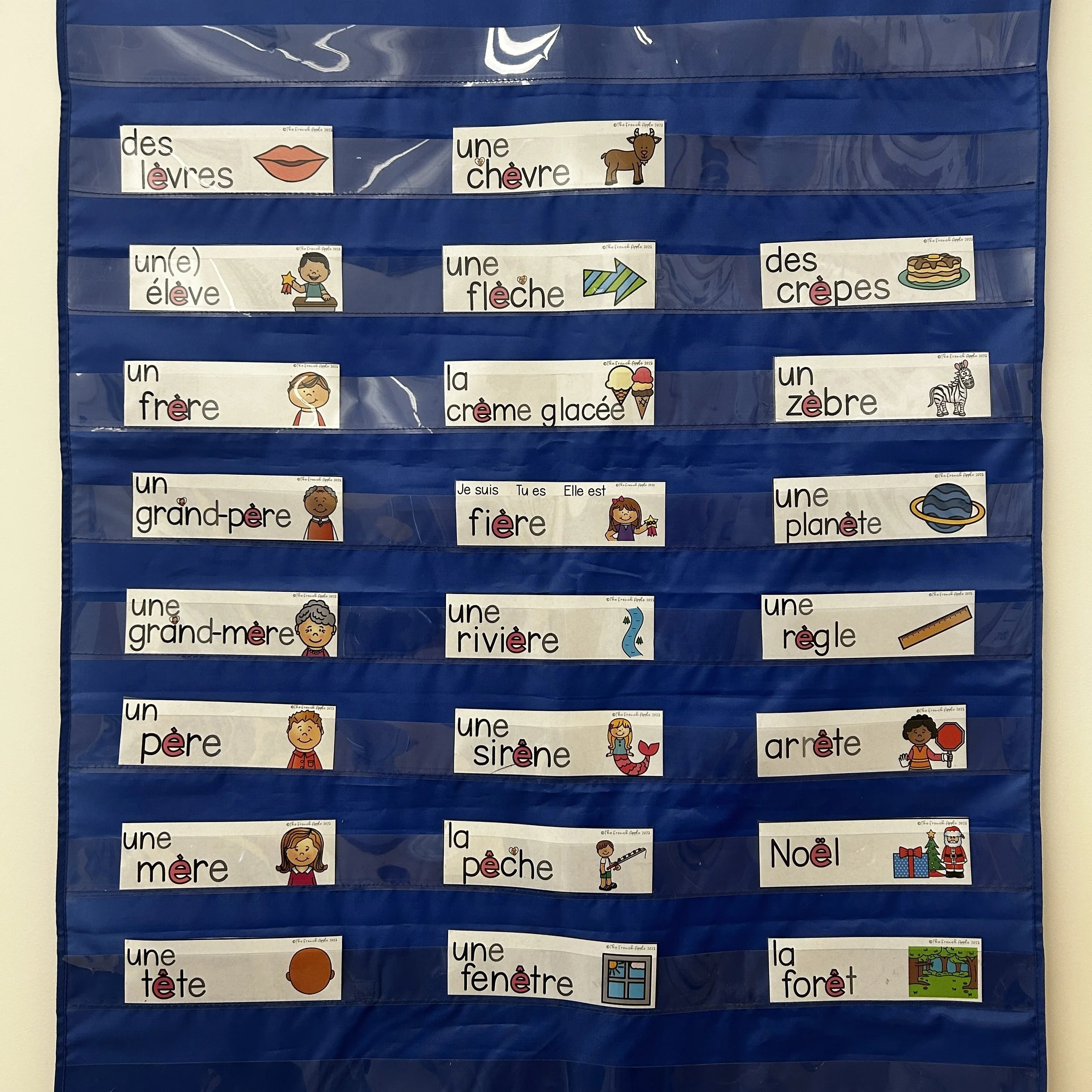
Sound word wall cards (The French Apple)
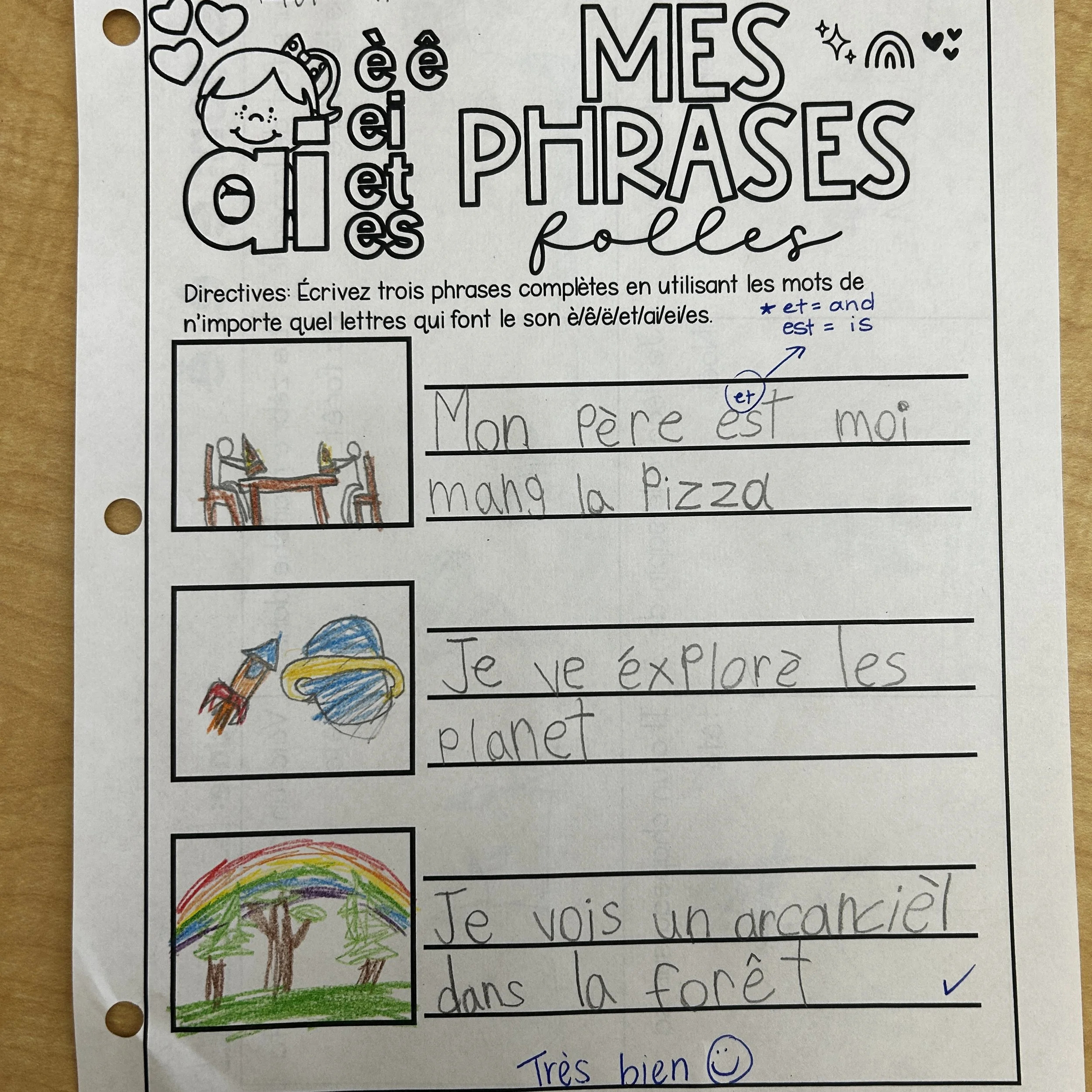
Mes phrases folles sheet (The French Apple) - alternatively do this in a journal or on a whiteboard
How it works:
We do this back to back, so as soon as students finish one side, they start the other. I don’t do “writing” and then do “drawing” as two separate activities.
For the sentences, sometimes there are 3 required, sometimes there are 4 requires. Students write sentences featuring at least one word with the target sound. They are welcome to add more and are often challenged to do so. The complexity of their sentences will depend on their grade and abilities.
I have a pocket chart with words that changes every week. Students are invited to use these words in their sentences but if there’s another word with the target sound that’s not up there, they are welcome to use it.
They then illustrate their sentence. They do not have to colour, that’s up to them.
Draw the sentence
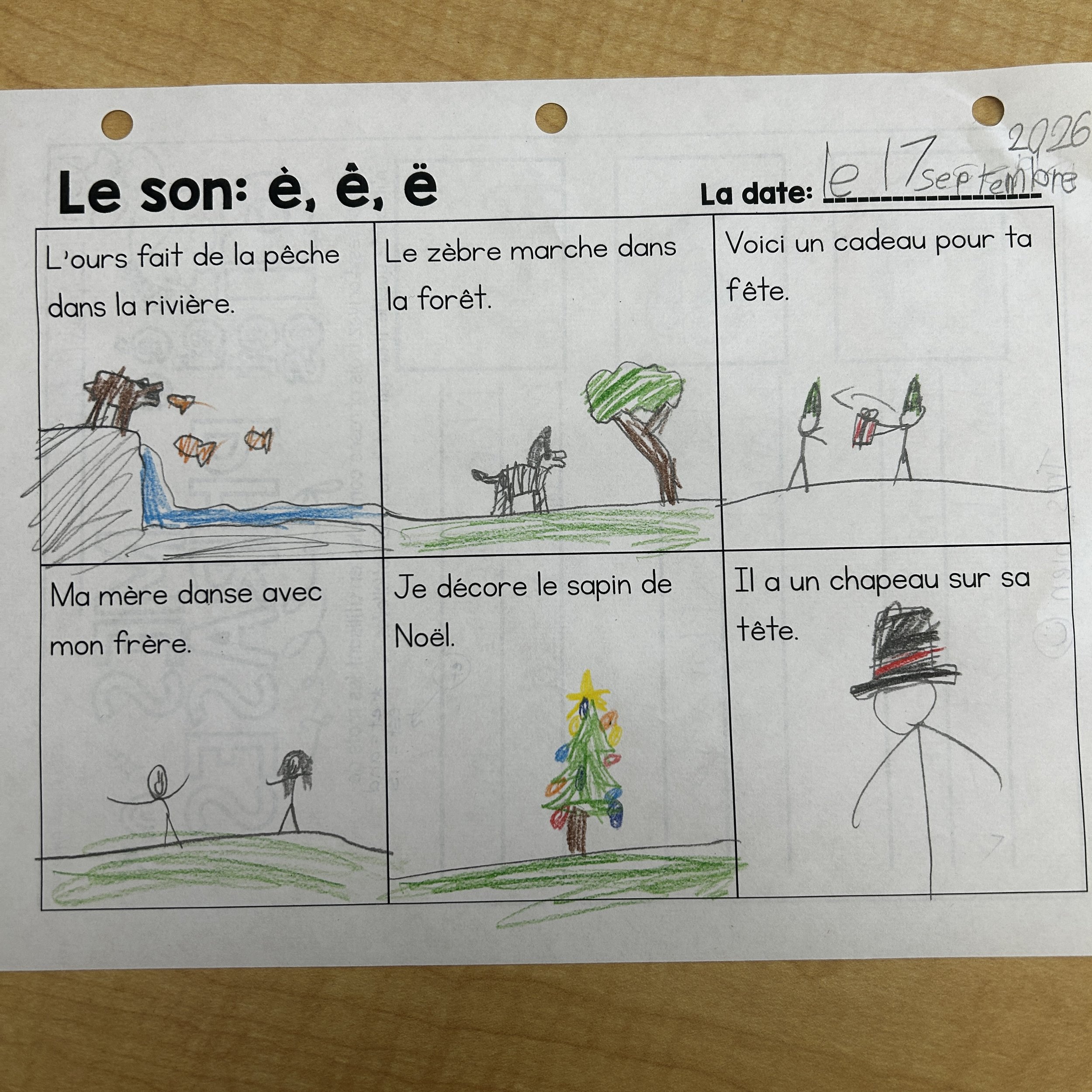
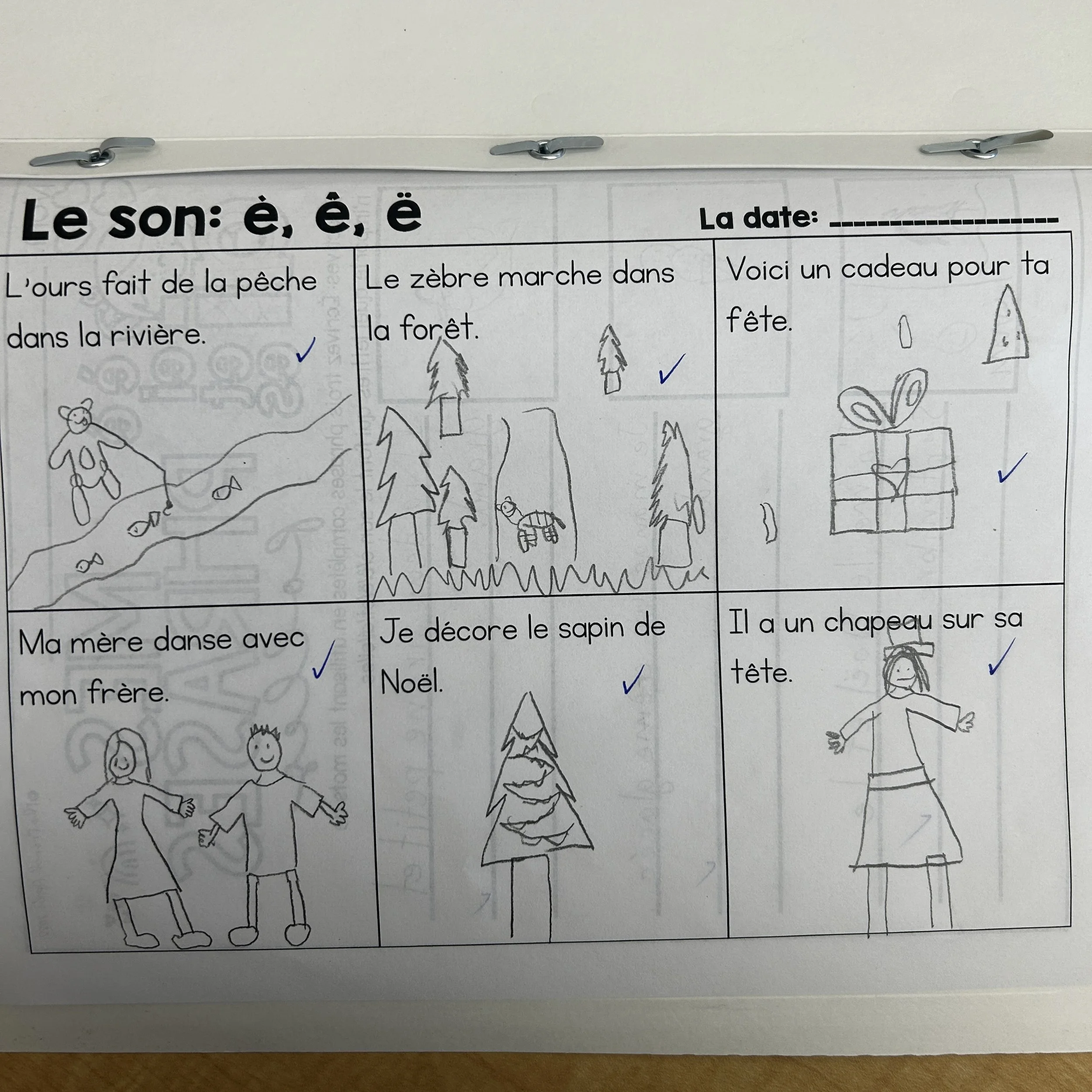
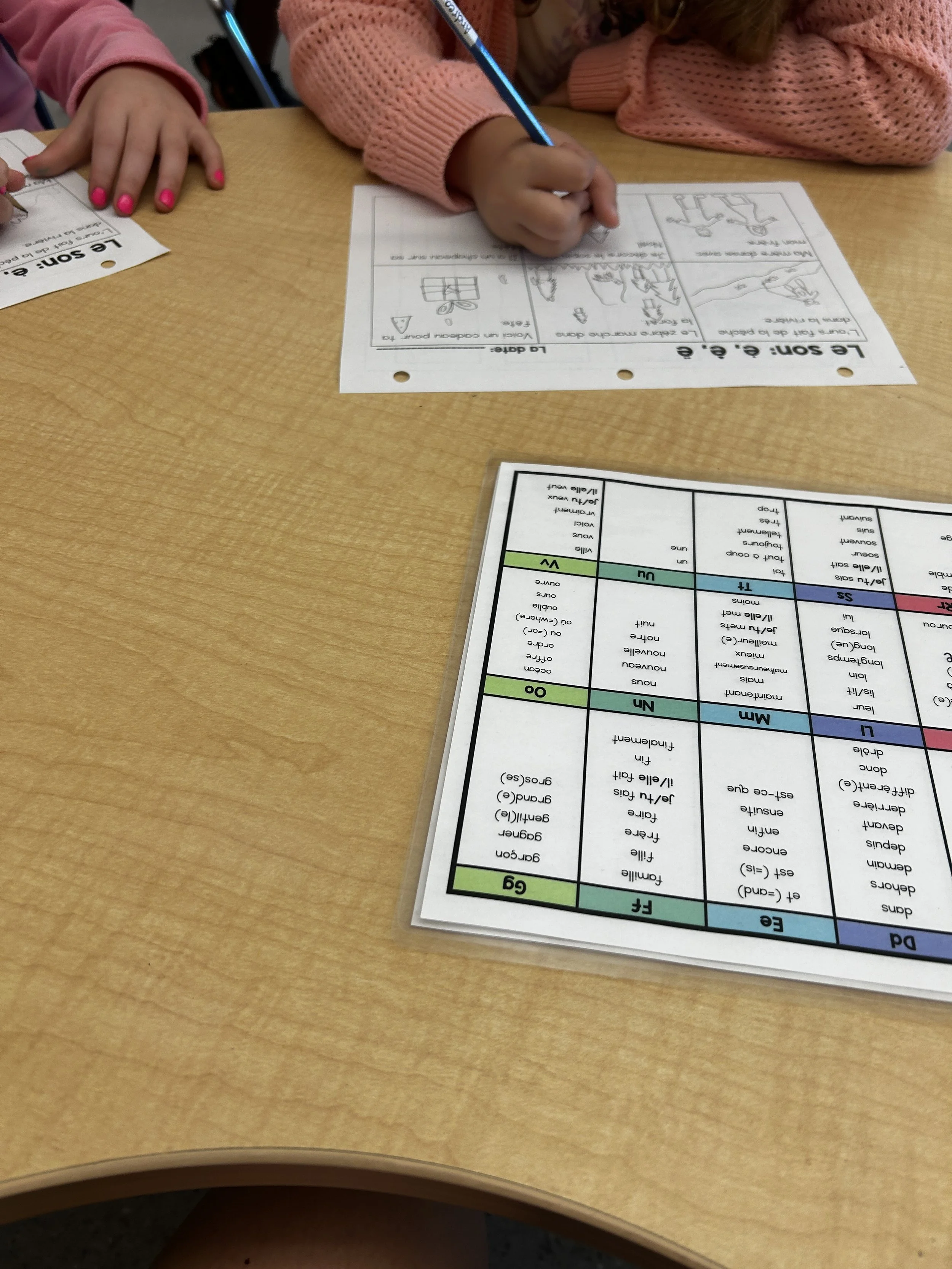
Resources I use: Draw the sentence (Mme Marissa freebie library)
How it works:
We do this back to back, so as soon as students finish one side, they start the other. I don’t do “writing” and then do “drawing” as two separate activities.
Students simply illustrate the sentence. Again, they do not have to colour.
I also often get them to circle the sound every time they see it (I forgot to tell them to do it in these photos).
*note: The file currently has sounds together (ie: au and eau). I am working on making options for individual sounds as well.
Friday
Sound quiz
Unlike a traditional dictée/spelling test, I don’t give them a list of words to memorize at home at the beginning of the week. Yes, you do end up memorizing words at some point but I want them to show me they understand the spelling pattern we’ve been working on all week.
The words I choose for the quiz are unknown to them but…remember all those activities we did. We practiced these words many times!
I give 5 words. Depending on my group I might include a sentence too, but that’s up to you.
I also give the quiz for our UFLI spelling pattern (that’s why it has the numbers twice in the photo below)
The testing sheet
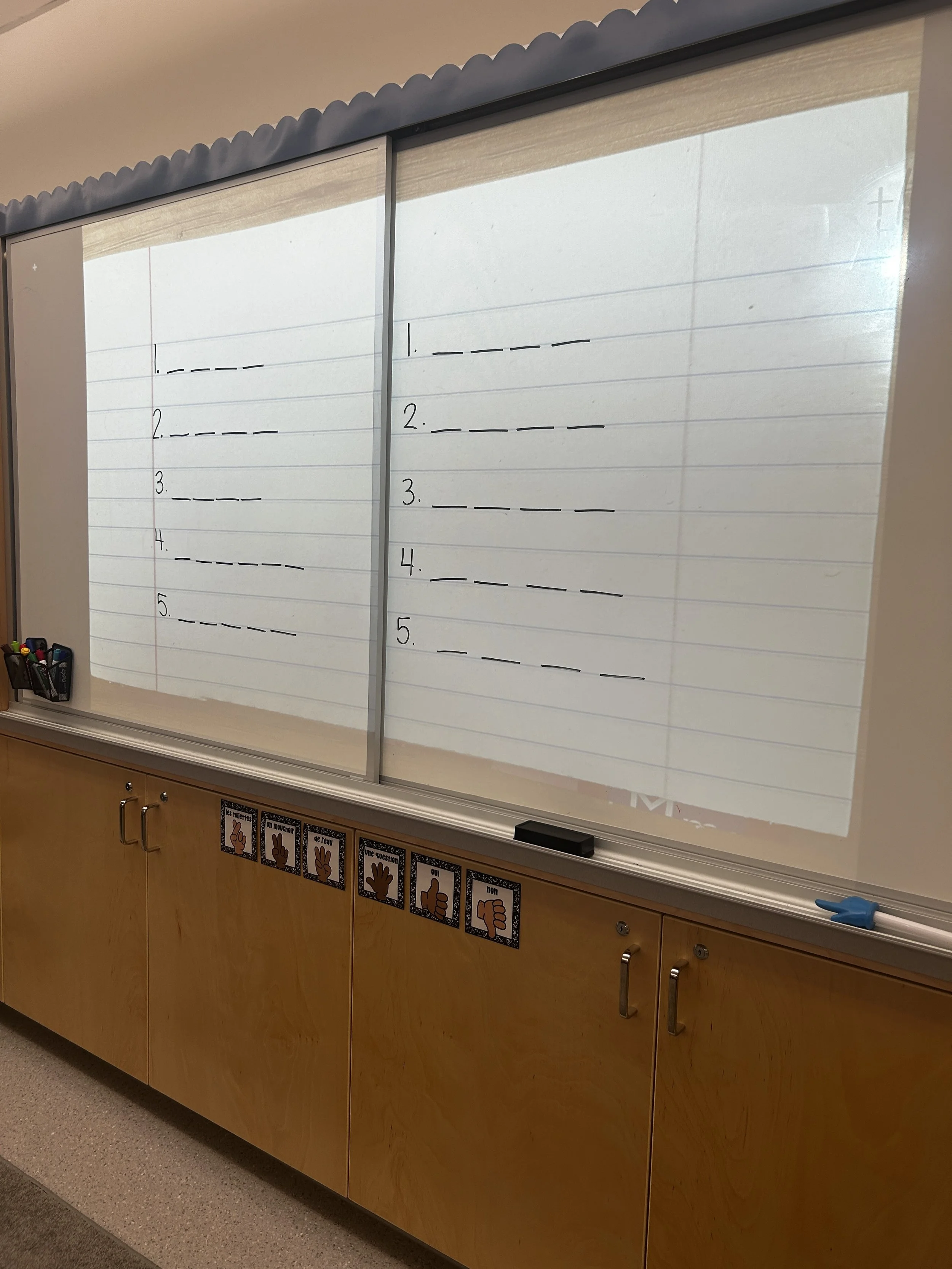
I used to print out a sheet for them (which you can totally do) - it’s in my freebie library (check the literacy section, it’s called sound check-in).
Last year I had more notebooks than I needed so I used our big paper cutter and chopped them in half. Students use this mini book for the quiz each week. No printing for me! I mark it while they eat snack and it goes home in their pochette on Friday and they return it the following week.
PAGE SET UP: I very slowly say the word and emphasize the number of phonemes in each word. Students need to make sure they have a sound on each line (that’s how many sounds there are).
Word selection/differentiation
I often just give the quiz as is, the same 5 words for everyone. My pro-spellers often get it all right and that’s fine. I’m not aiming to challenge here. It’s a check-in, remember. Can do you do it not?
I may differentiate my list if I feel I need to that year. If you have my son de la semaine lists, they come with 3 levels. When differentiation is needed, students know they’re in group A or group B etc. I say groupe A, numéro 1…, groupe B, numéro 1…, groupe A, numéro 2…groupe A, numéro 2…
Marking the quiz
I mark based on their sound success in each word, not on the word as a whole. I also don’t score them 3/5, for example.
So if they wrote papillon like this “p-a-p-i-on” they would check a check over everything but the i, and I’d write the correction. I want them to know they succeeded in the other parts. This is a check-in. It’s not a be-all, end-all quiz.
Everyone gets a sticker. If you get it all right, if you get some of it right, if you get none of it right. Sticker for everyone.
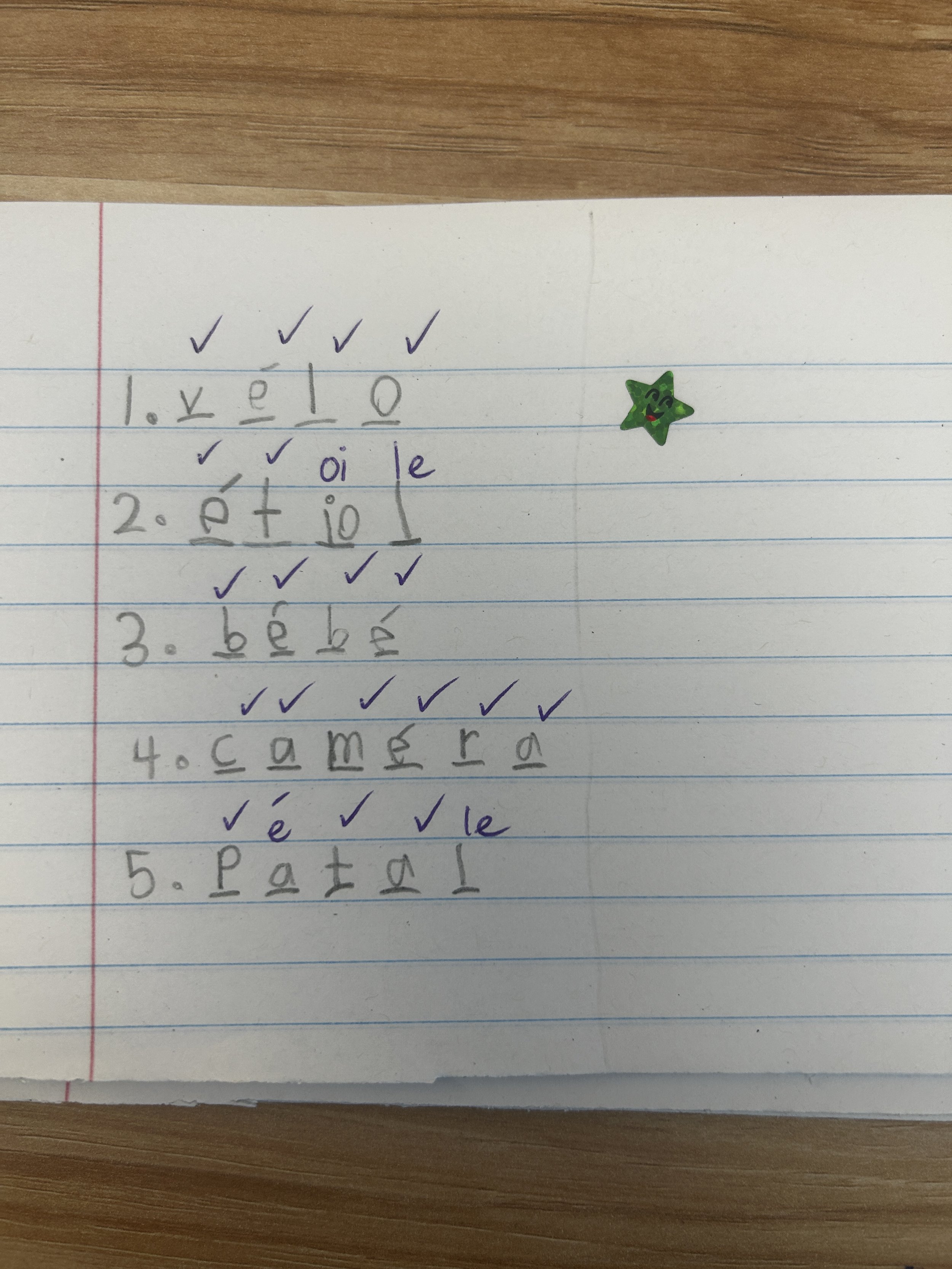
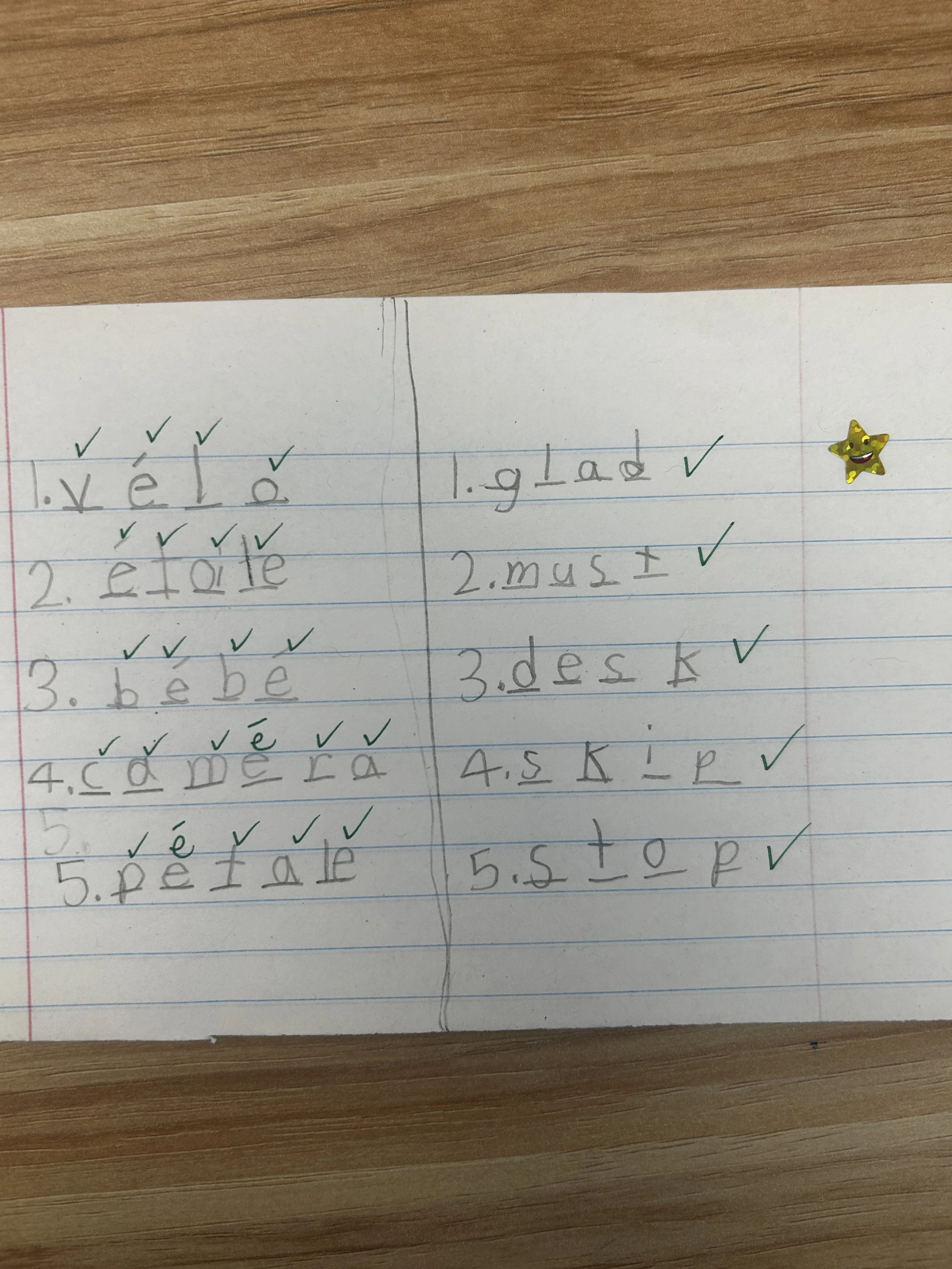
Note: I said I didn’t mark as a whole, but in photo 2, you can see that for the English words I started giving a check for a totally correct word. I ended up doing that with the rest of the ones I marked. If there was a mistake, I check the parts that are good and make the correction. If it’s all correct, it’s just one check.
OTHER GAMES & ACTIVITIES
I will often do these on Thursday or Friday depending on what’s happening in our schedule. I may also swap one of the other activities earlier in the week to keep things fresh. They don’t necessarily happen every week, but they add to the rotation to keep students motivated.
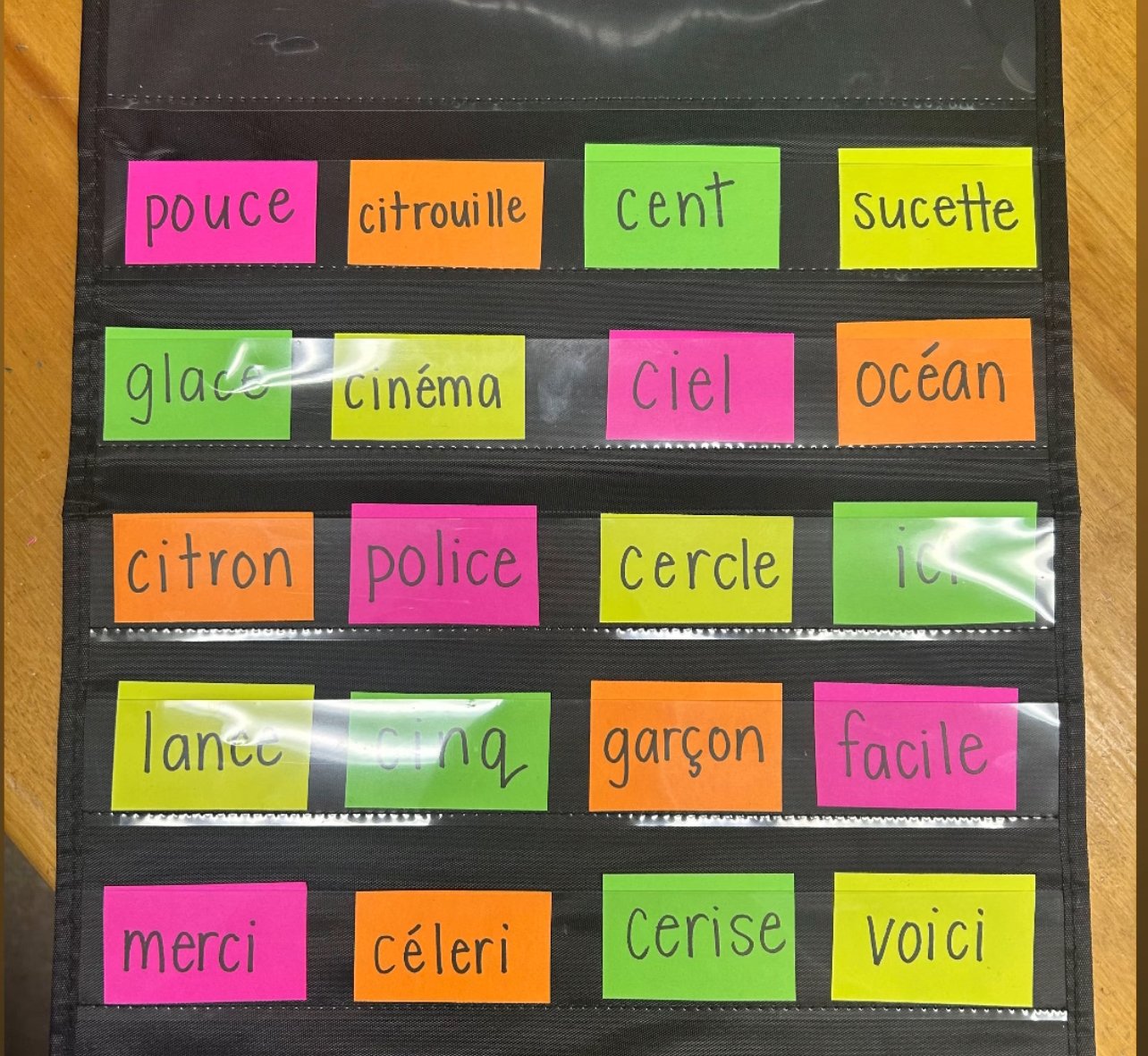
Hide & seek pocket chart game
Read more about how it works HERE.
I play this as a whole group but it would also be a great game for a small group to play as a centre or for a group to play with you in a rotation.
Phonics centres or decodable text
Resources I use:
La Trousse de Madame has some other games as part of her resource - (jeux de mots, je peux trouver le son, mot-image)
The French Apple’s phonics resources also have additional games and texts to use.
*PHOTO TO COME
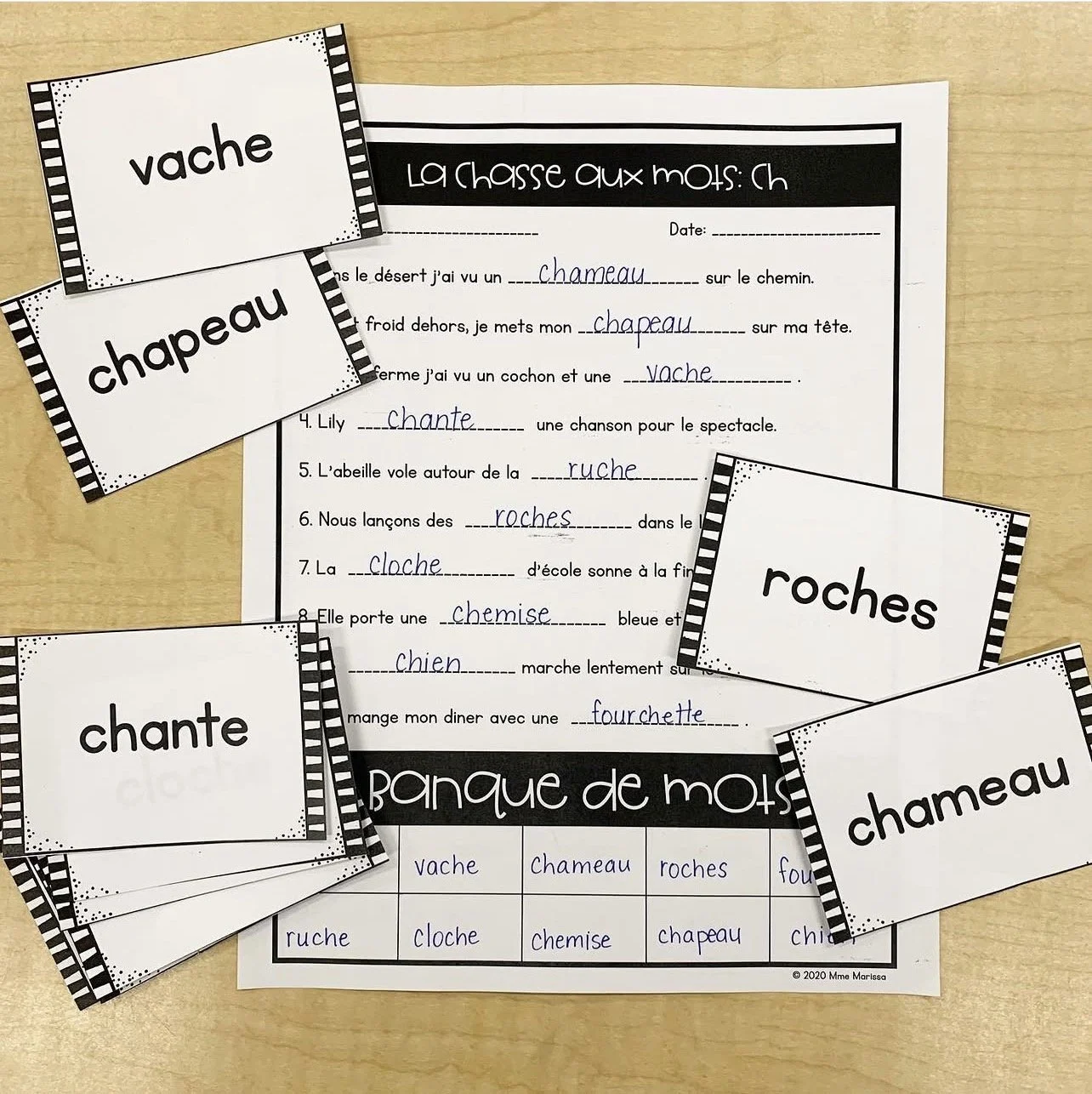
La chasse aux mots (les sons)
Resource I use: La chasse aux mots (les sons) from Mme Marissa
Students need: recording sheet, pencil, clipboard
How it works: Teacher hides the vocabulary cards around the room (like in a write the room). Students use their recording sheet to walk around and collect the words in the word bank at the bottom of their sheet. Once they have found all the words, they use the word bank to fill in the sentences using context to make the best choice.