

My Grade 2/3 French Immersion Morning Work Routine
What is morning work and how do I get started in September?
In my class, students have a task each morning. You might call it a bell ringer, morning tub, morning task…basically it’s their first job after their shoes.
We practice a lot together at the beginning so that it becomes routine and means I don’t have to worry about them for the first 30 minutes.
I’d say I’m quite heavily involved for most of September. Since each task only happens once per week, I need to do it with them a few weeks so that they’ve practiced each one a few times. After that they can ask for help but it’s meant to be independent.
Why do I want to release the responsibility?
Having this be independent with very little Madame involvement is important as I may need to speak to a parent at the door, speak to students privately, sort out issues etc. This also gives me time where they’re fairly independent so that I can read with students.
I read individually with students, not in groups, so I don’t have dedicated “reading” time in my schedule. This means I am constantly pulling students so if I can get a few done first thing, I’m already off to a good start. Want to learn more about my reading system? Click here!
Organization & storage
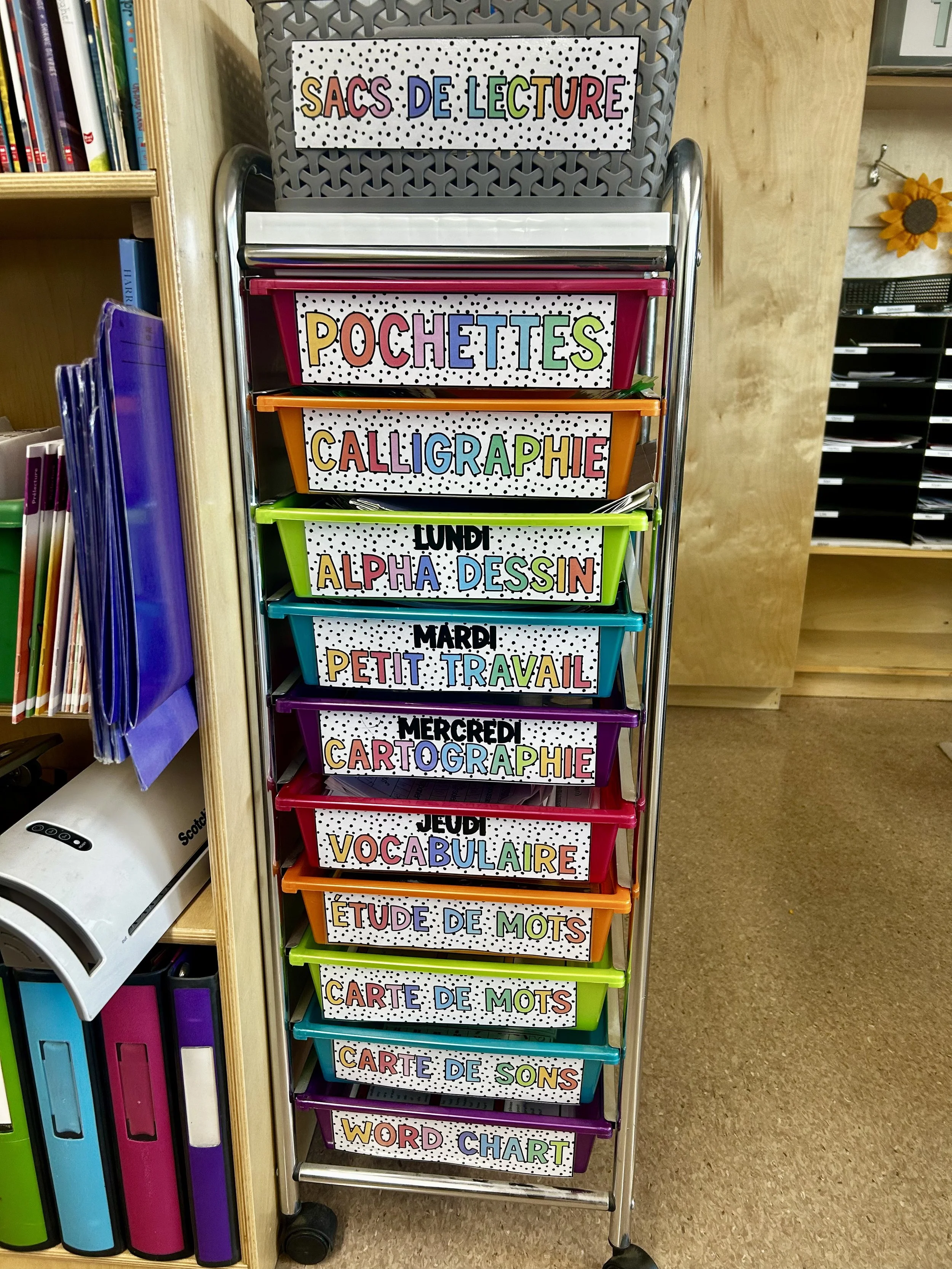
I don’t have desks in my class. If you do, you might want each student to manage their own duotangs instead of this all together system.
I use a 10 drawer rolling cart for their daily materials.
I pull out what they need and set it out for them to grab at our materials table (just off to the right in the picture).
Even though the material or notebook changes daily, they know exactly where to go and this helps with learning the routine.
Note: I keep other things in this cart too, it’s not JUST morning work. The morning work bins I need are: calligraphie and lundi-jeudi.
What I keep in all bins (not just morning work)
Pochettes = Student poly folders that they take home every Friday and return on Mondays
Calligraphie -> Vocabulaire = morning work bins
Étude de mots = pochettes for word work (CBE/Son-au-graphe and UFLI)
Carte de mots = French frequent word chart
Carte de sons = French sound chart
Word chart = English frequent word chart
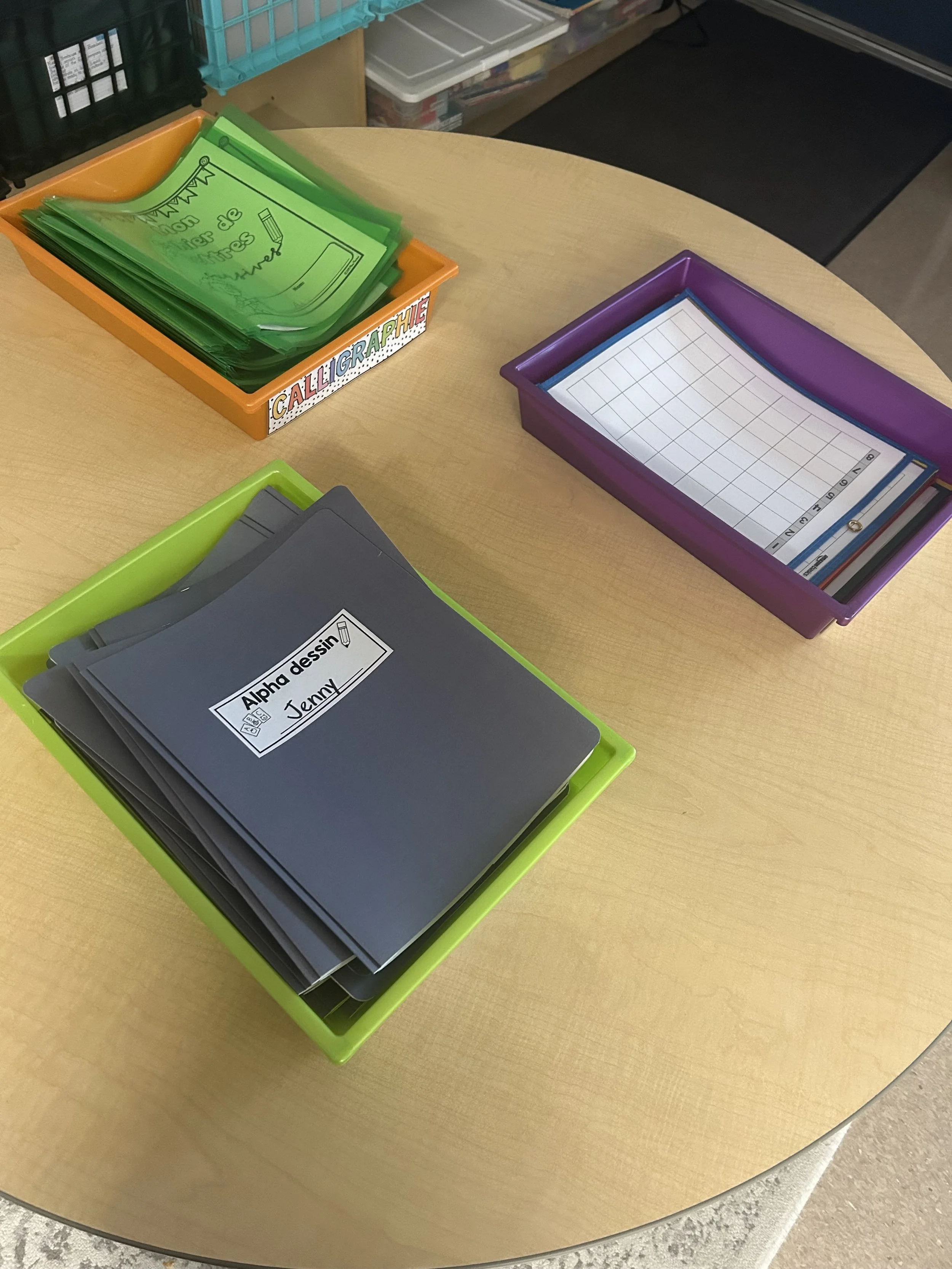
Pick up table for supplies
I don’t want students in my rainbow cart so I pull out the bins that they’ll need and set them on our round table. This is always the supplies area, from morning work to math materials to art supplies. You might choose a counter if you don’t have an extra table.
They collect their things and take them back to their own table spot. When they’re done they come show me and then return all materials to the same place they got them from.
This avoids them wandering around looking for things and makes it easy to know that no matter what the day, even if the supplies needed change, it’s always picked up in the same place.
Weekly overview
Each day they have a different task. This is based on a 5 day week and things may get shuffled or skipped with a short week.
Monday - Les mots de la semaine: ordre alphabétique & drawings (=alpha dessin)
Tuesday - Petit travail duotang
Wednesday - Les mots de la semaine: word mapping
Thursday - Cahier d’activités (vocab packet)
Friday - Work catch up for unfinished assignments + finisher bins (or read/draw/colour).
*In previous years we used iPads (French or math game only). Until recently I had a class set of iPads for Fridays but they were decomissioned and unlikely to be replaced due to budgets.
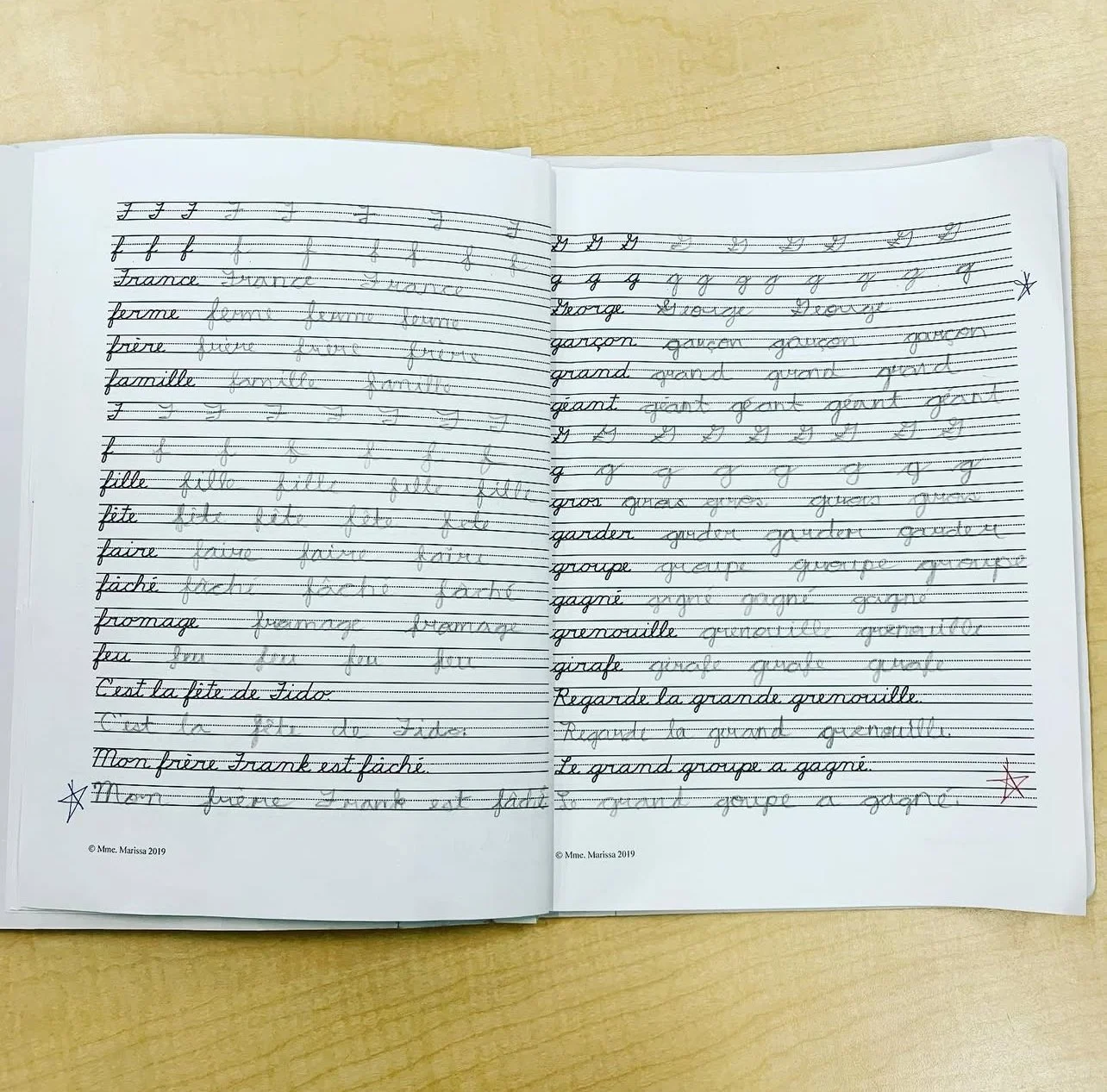
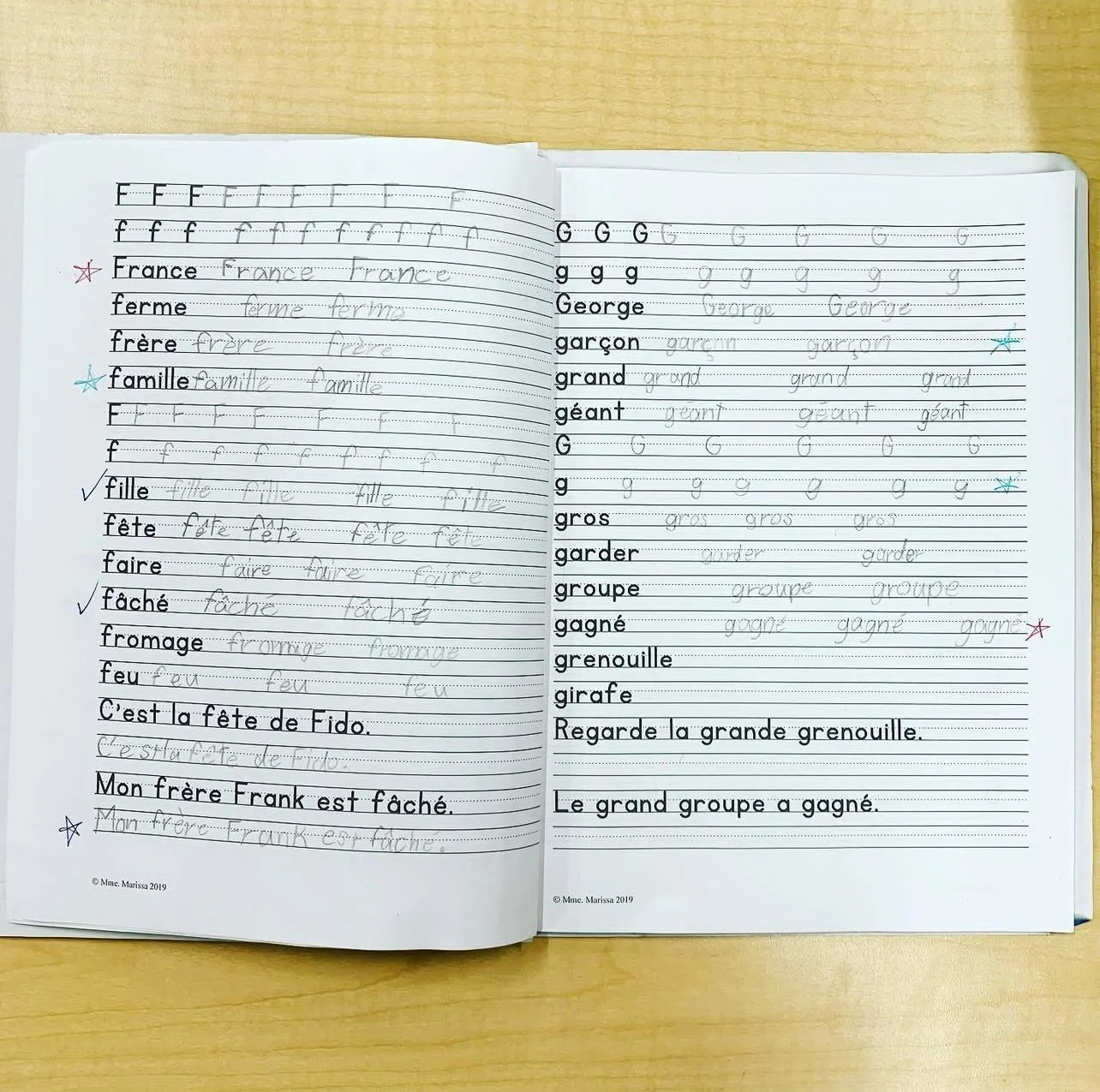
PLUS, each day they must also complete a few lines in their printing or cursive booklet. Find them here on TPT.
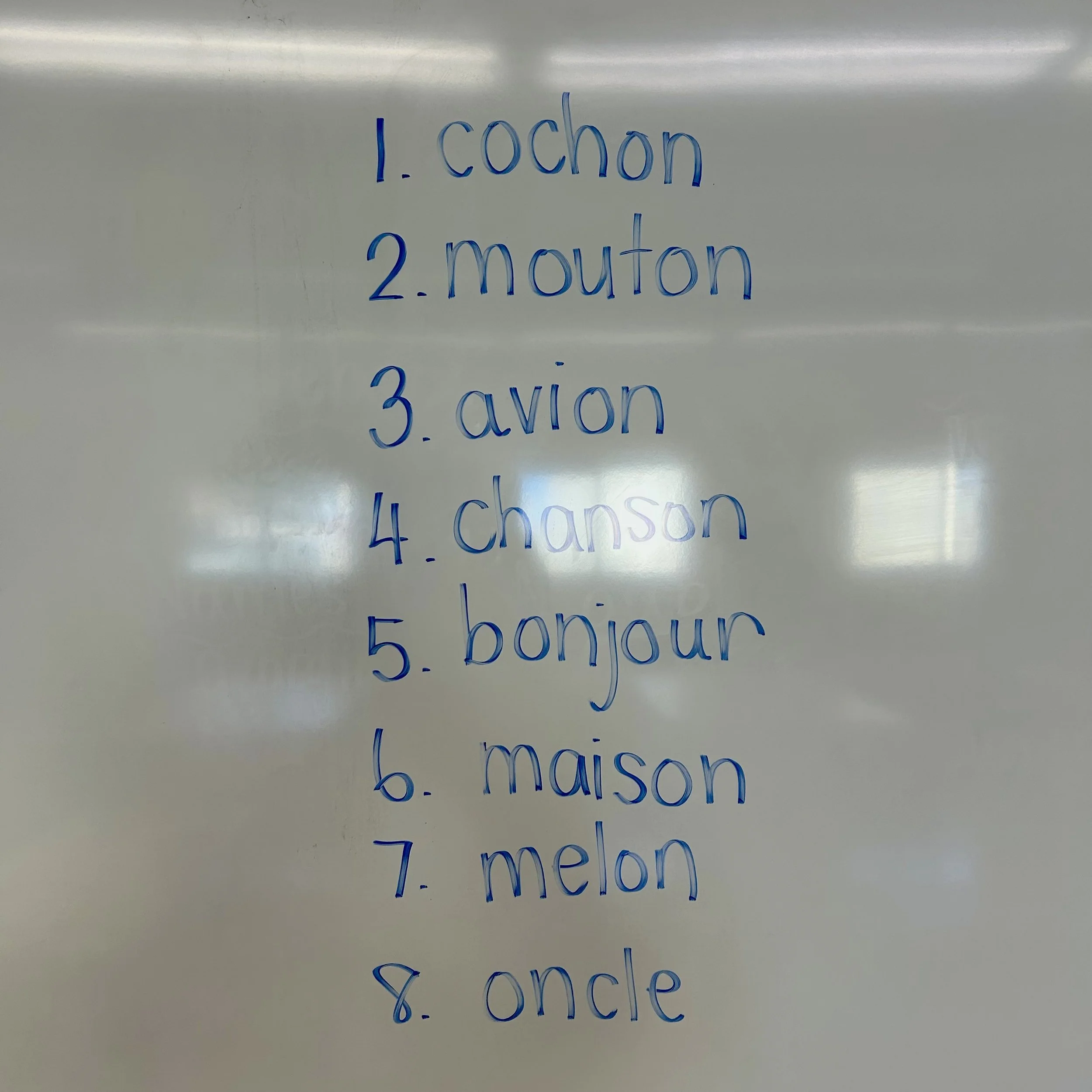
Words of the week (needed for Monday & Wednesday)
Each week I have 8 words that come from our target sound. I write these on the board. For example, below is a list I might give while learning about the “on” sound. You’ll notice that there are no articles, this is okay because I don’t need them to use the article in my activities. If you’d like to have them practice with the article, you are certainly welcome to.
They will use these words for their Monday and Wednesday morning work.
Note: Depending on your students, you may want to avoid choosing words with the same first letter. So, not cochon AND chanson. I teach my students to alphabetize and look for the next letter if the first is the same but if your students are younger, you may want to make this simpler during the alphabet day by choosing words that all begin with different letters.
Monday: Les mots de la semaine (ordre alphabétique & drawings)
In my class we don’t do a traditional dictée with a list of words that are tested on Friday. Instead, we have words of the week that come from our target sound, then there’s a check-in at the end of the week. This means that students don’t know which words they’ll be asked to spell, but they have seen all of them through various activities throughout the week. I don’t want memorization. I want to see if they can apply what we’ve been learning about all week.
Each week I pick 8 words and write them on the board. For example: chaise, aime, mitaine, maison, laitue, balai, fraise, éclair
In their duotang they have a page for each week. They must write the words in alphabetical order and draw a picture.
Note: if it’s a word that you can’t really draw (parce que, for example), it would be noted that they wouldn’t need to draw that one and we’d just talk about it instead.
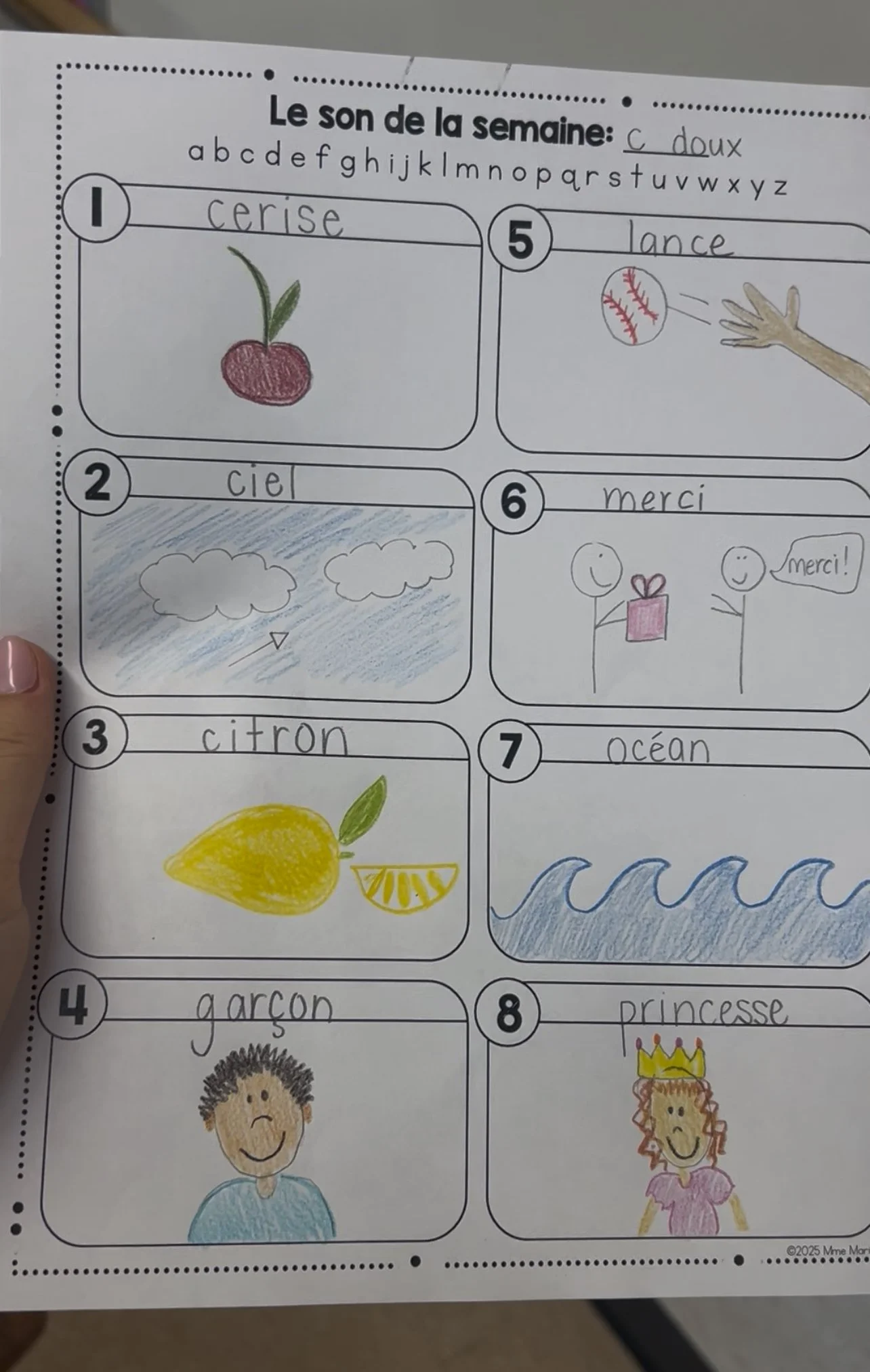

*I print this by term so in September I count the weeks we’ll be doing it during that term and print that many pages. It saves the headache of remembering to print new sheets each week. Students just get their duotang. For term 2, we’ll take the old stuff out and add a new batch.
Tuesday: Petit travail du matin (duotang)
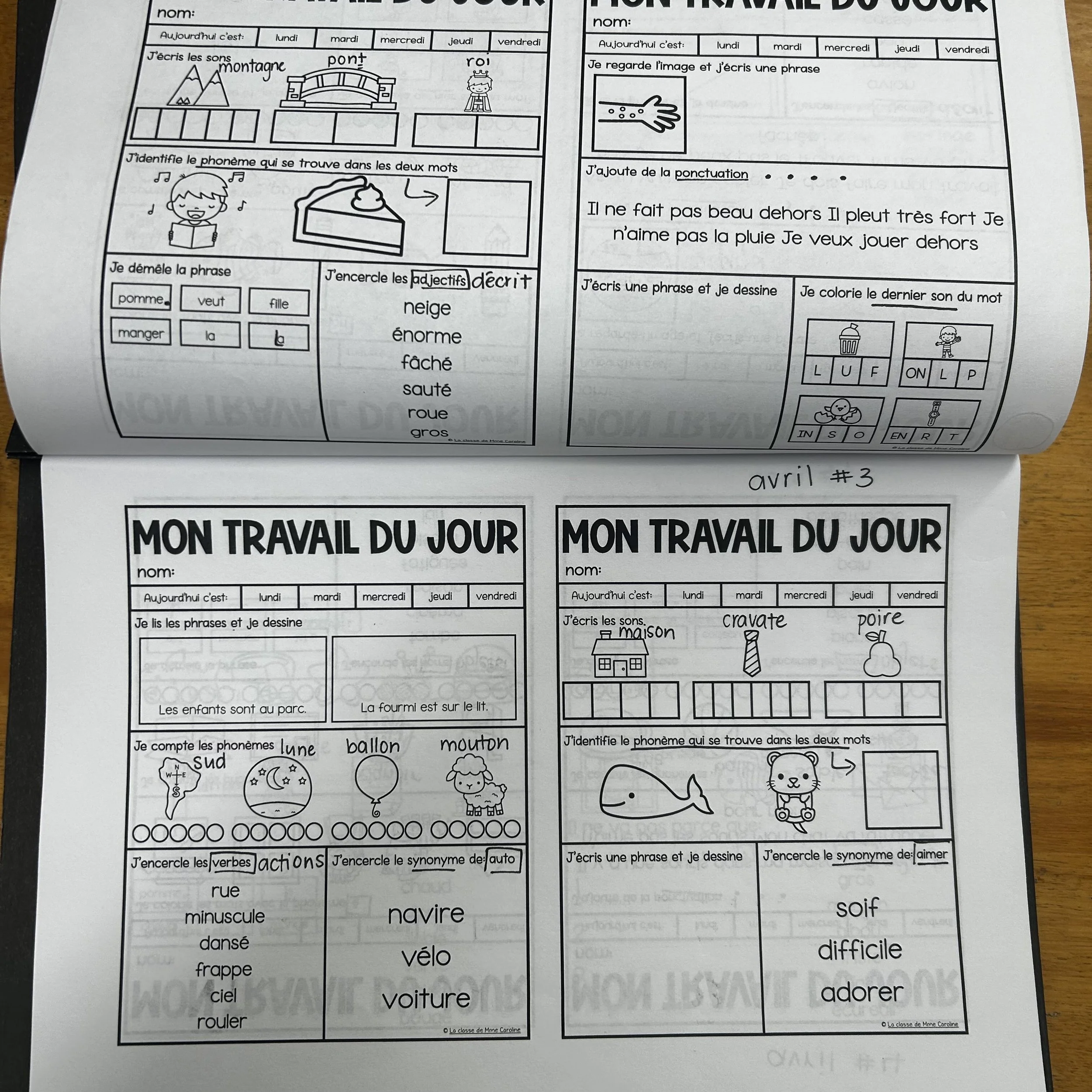
This is from Mme Caroline on TPT and includes things like writing, vocab, drawing, reading, mapping etc. It’s recommended as grade 2 but I use it for everyone.
Students complete two pages. I print them as minis (2 per page) to save paper. To support students, I sometimes add things like vocab or I’ll underline key words in the instructions. This is totally not required, and you might not do it for everyone either, but just a heads up that it doesn’t come like that.
I print this by term so in September I count the weeks we’ll be doing it during that term and print that many pages. You’ll notice that it says avril #3. That means April, week 3. It saves the headache of remembering to print new sheets each week. For term 2 and 3, we’ll take the old stuff out and add a new batch.
Wednesday: Les mots de la semaine (mapping)
Back to our words of the week, students will use those same words they wrote on Monday and map them. I leave my words up on the board so that they don’t have to get out their Monday duotang.
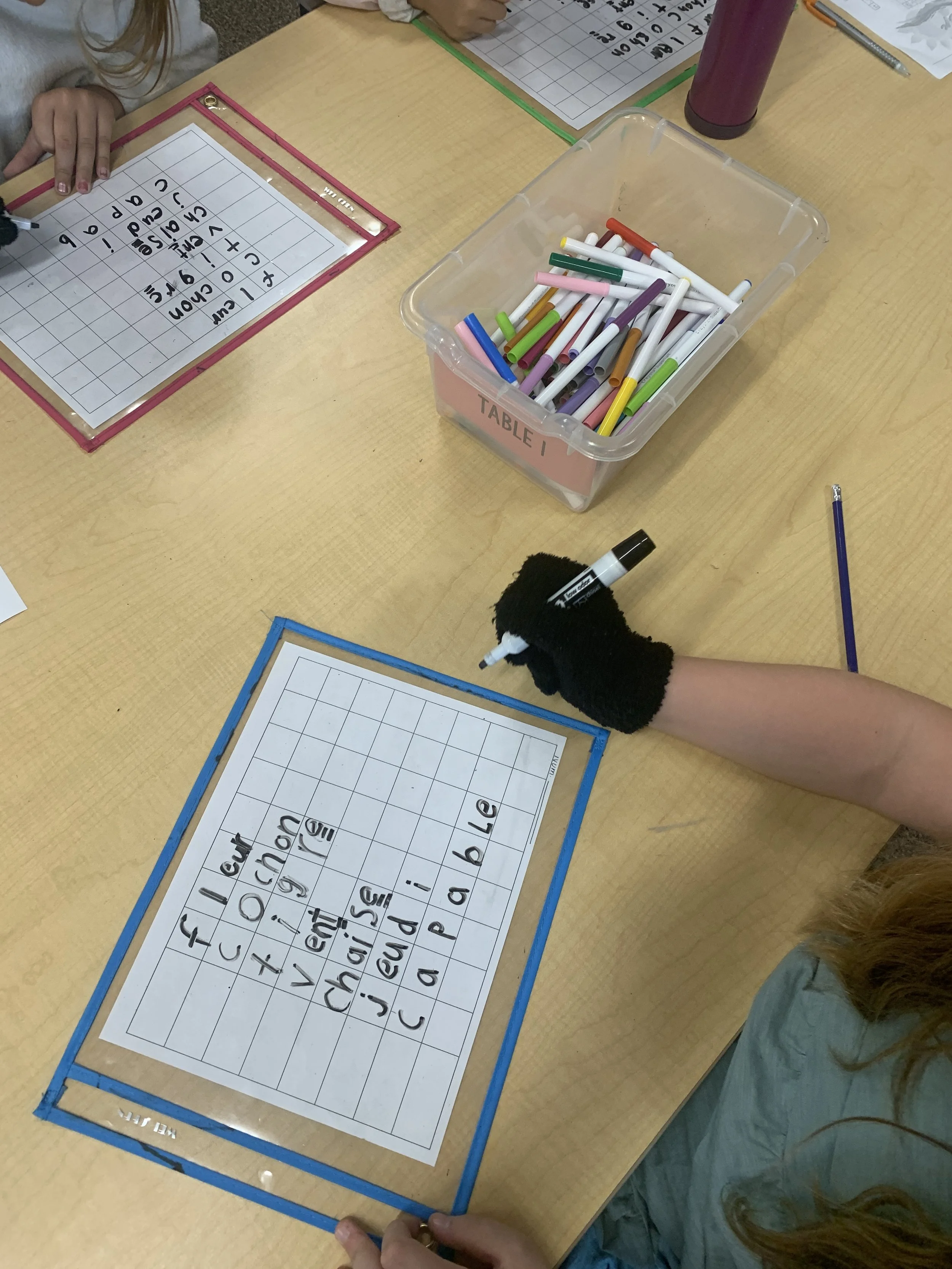
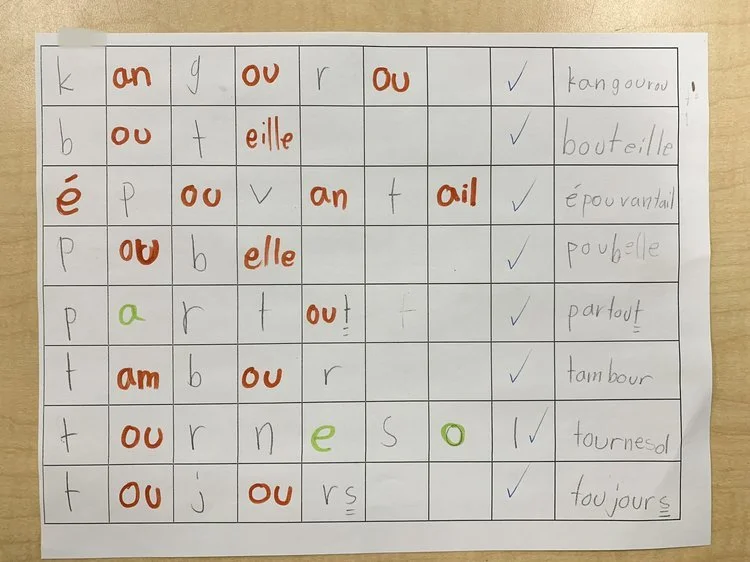
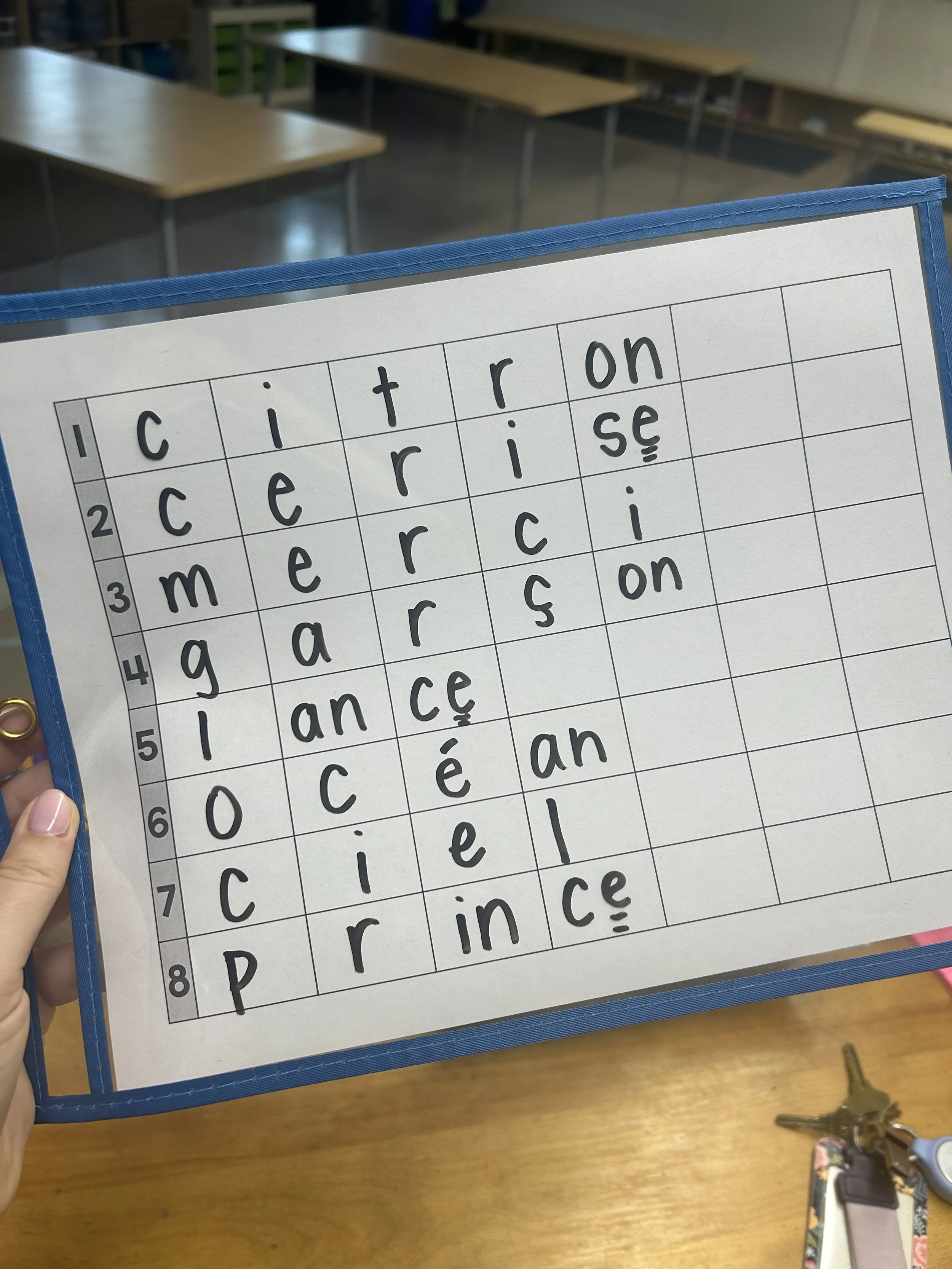
For example: ch-ai-se/m-ai-s-on
I like to do these on dry erase pouches where I have a sheet with mapping boxes inside so that we reuse the same paper every week. Students come show me their work, it’s easy to erase and fix if needed and then erase it once complete.
You can absolutely do these on regular paper and have students colour code the target sound or even all complex sounds.
*the first picture is from when they were learning to map, so there isn’t a consistent sound. We’d use the same pouches and sheets though!
Thursday: Vocabulaire - Cahier d’activités
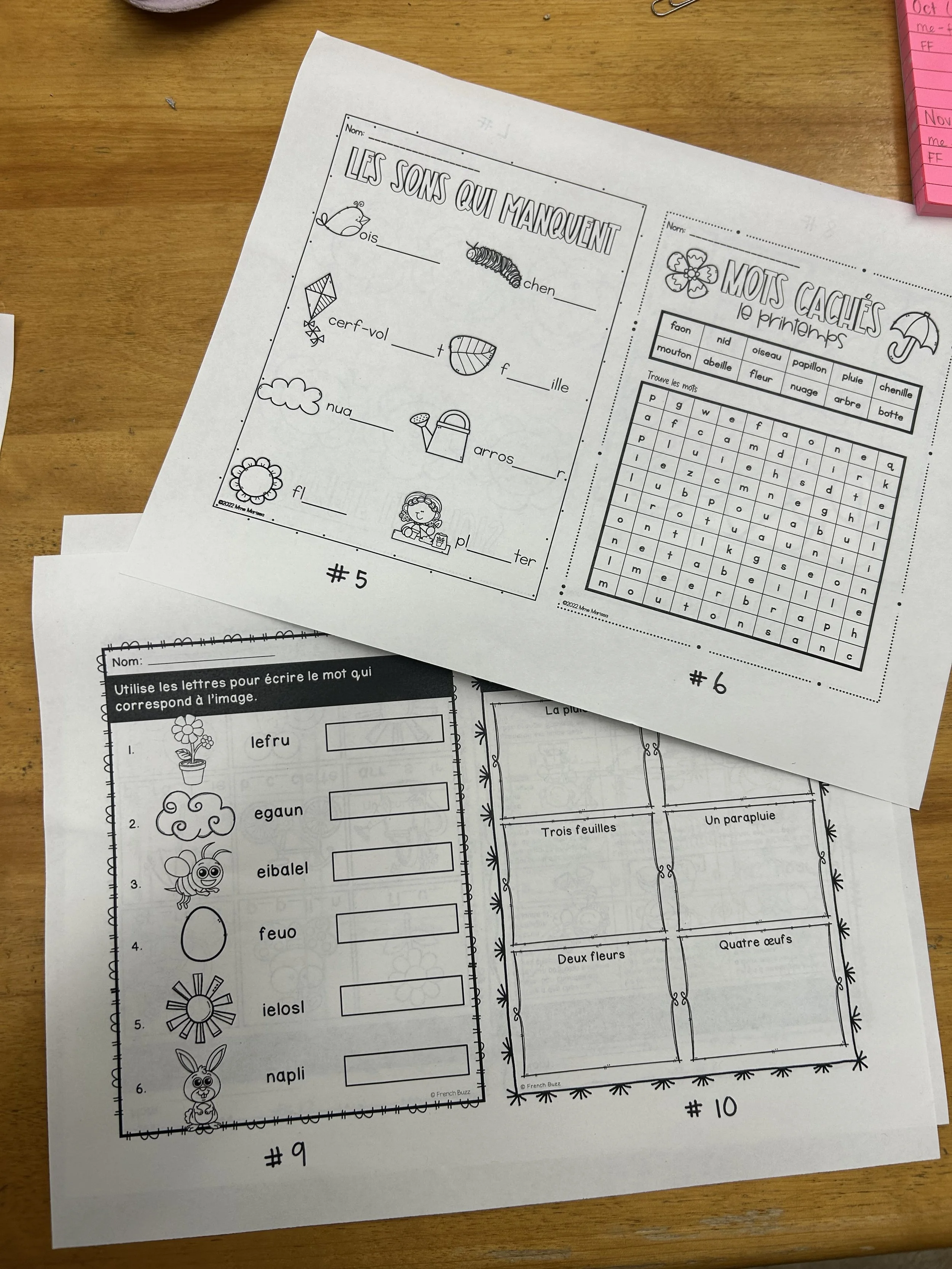
Students receive a little packet that they’ll use each Thursday that month. The focus here is on thematic vocabulary. I print this once at the beginning of the month and then just keep their packets until we’re finished. These don’t go in duotangs, but they could if you wanted.
I use various “cahier d’activités” of my own and some from French Buzz.
To save paper, I print them two sheets per page. Students usually need to complete 4 of these mini pages.
I print it all at once to be ready for the month. They need 4 mini pages per week so if there are 4 weeks, I need 16 minis. I write the # at the bottom so I can remind them that they need to do #5-8, for example.
Friday: Catch up period for unfinished work & soft start for those finished
I have a bin that collects unfinished work. If they still have incomplete items by Friday, this is an opportunity to get work done. We have community centres (where they get to play in any French primary classroom) on Friday at the end of the day but they can’t go unless their work is complete so this serves as time to allow for that.
If they’re finished they have a bit of choice. They may do an early finisher bin, read, draw or colour.
In previous years - Friday: Ipad (French or Math)
We have access to Ipads in my class so on Friday mornings students are allowed to do any French or math app of their choosing. Obviously you have to set expectations around this. If students are caught not using a French or math app and are playing with the camera, using Siri etc, they will lose their privilege and have to do reading for the rest of the period and the following period.
Which apps? Well, that is sort of dependent on what your school has access to. My students love: FunFrench, Math Town, Math Bingo and Marble Math
Where am I during this time?
I don’t circulate, I’m almost always at my desk. Remember, this is supposed to be independent. My desk has two sides, the longterm side and the quick service side. The longterm side will be where a student sits if they need more 1:1 support or, if everyone is doing okay on their own, I pull students to read.
While that longterm side is being used, I also have my other side which is like a drive thru. Students come up to ask a question, show me work etc. It’s not for hanging around.
What do they do when they’re done?
The task isn’t designed to take them 30 minutes. Their 30 minutes gives them enough time to enter the room, get themselves situated, do their task and finish. Sometimes it does but it’s typically the ones who can’t focus on it and it takes them the entire time.
First, they come show me their work. Since these are fairly simple tasks, I mark them on the spot. If I can’t mark it on the spot, they put it my “fini” bin that sits in front of my desk. I’ll mark it later.
Next they return their materials to their designated spaces. Put away their duotang, dry eraser marker etc.
Now they are an early finisher! They need to check the “pas fini” bin to see if they have any other unfinished work that needs to be completed. If they’re caught up, they are welcome to use any of the early finisher bins, read, draw or colour. If their choice of activity is something individual and quiet (like reading), many will return to their seat. If they choose a game to play with another peer who’s finished, they are usually asked to go do it on the carpet, allowing their peers to continue their work at their tables without nearby disruption.