

My Grade 2/3 French Immersion Morning Meeting Routine
In grade 2 and 3, the lengthy calendar routine isn’t necessary. Older primary students can still have a morning routine that is purposeful, consistent and effective without repeating the same old things.
How long is it?
My morning routine (aka morning meeting) typically takes about 15-20 minutes. We move quickly through it because I like to do our activities and then move on with the rest of our day. I’ve also done this same routine for years now, so I’m very fast at it, which makes my students fast at it. Everything I need is either on my desktop to easily find/project and any physical materials are all at my front table. Feel free to adapt the structure to suit your needs and use the parts that work for your class.
When do we have morning meeting?
It happens about 30 minutes after the bell has rung. Before we start the routine, students have already entered the classroom, washed their hands, hung up their coats, changed their shoes and started on their morning task. The task depends on the day, but often it’s dictée related. On Mondays, for example, they always write the new dictée words in their agenda. Tuesdays they practice their dictée words twice, Wednesday they put them in alphabetical order…
This independent work also allows time to let stragglers join in, gives me a chance to speak to any parents or students, read any notices or collect money for field trips/hot lunch. I also use this time to pull students individually to read with me. Once it’s time to start the routine, I ring my bell which signals students to come to the front carpet to get started.
Structure of the routine (aka morning meeting):
Good morning & SEL check-in
Class affirmation & deep breaths
“Ami du jour” (special helper) selection
Sound practice
Oral activity - Mot du jour (word of the day)
Oral activity - Which one doesn’t belong ( can be done with pictures, words or numbers)
Phrase du jour (sentence of the day)
Alternatively I’ve done Problème du jour (math word problem of the day)
Schedule overview
Song and/or poem
Movement break
Note: This structure is flexible and I’ll change it depending on time, student need, changes to our schedule etc.
Good morning (Chat and/or SEL check-in) (3 min)
This gives us a chance to connect and gives students the opportunity to share about their evening, weekend or about something exciting happening. No one is forced to speak, it’s a share if you want to. I also use this time to talk about anything that we need to discuss as a group. Sometimes we totally skip this, depends if anyone wants to say anything or if we’re stretched for time.
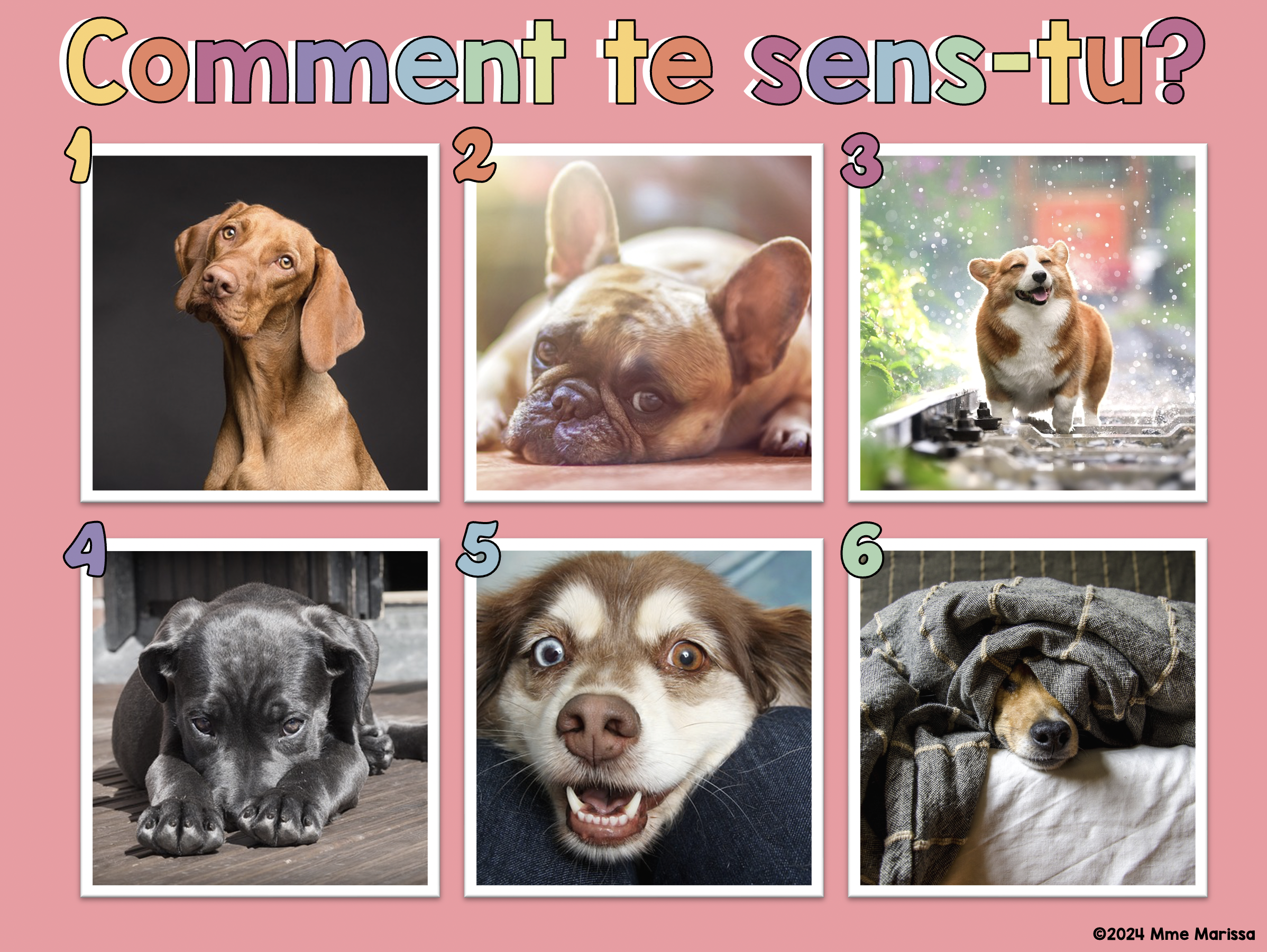
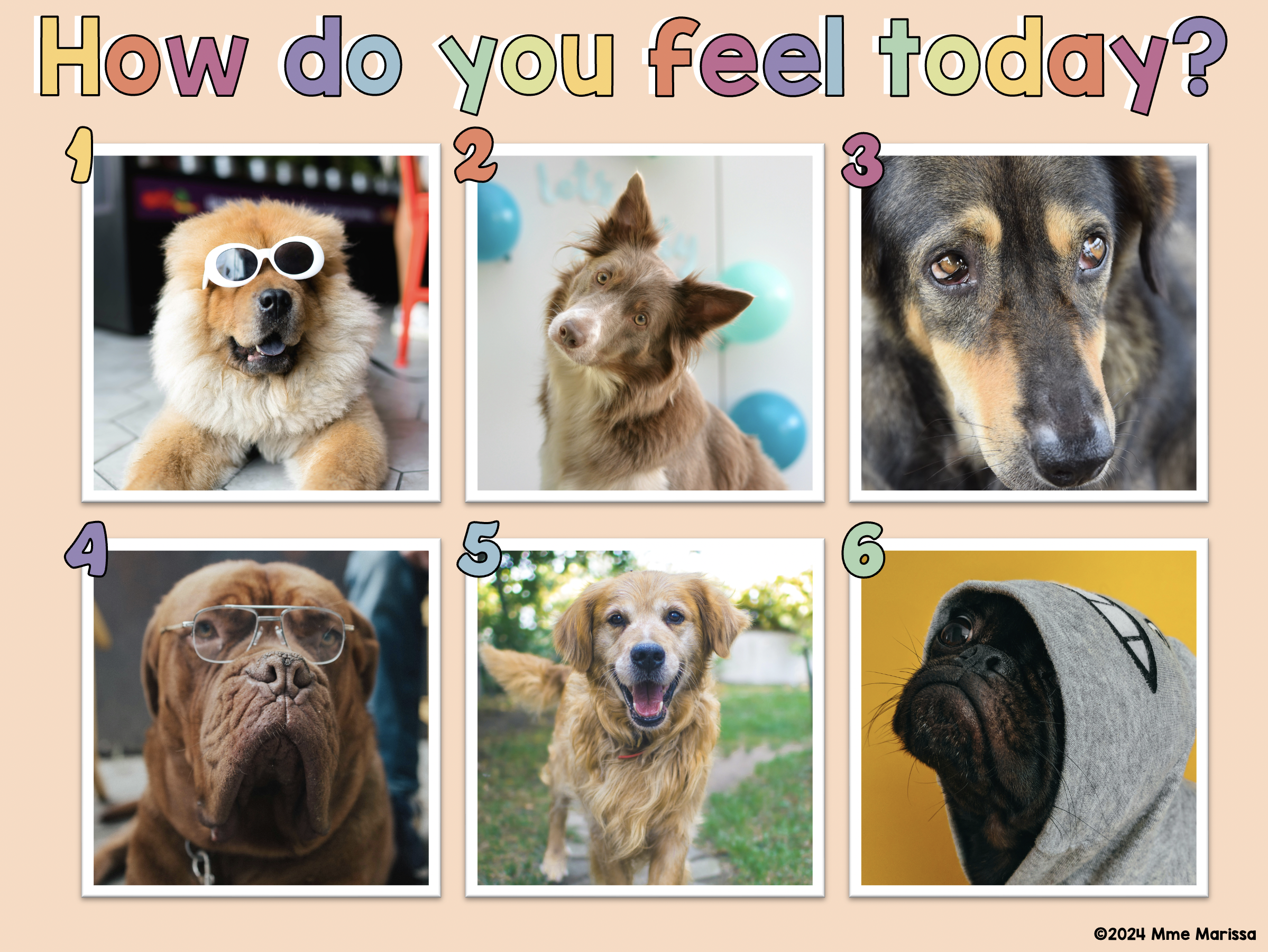
Below is an example of one of my SEL animal check-in slides. Students can share which picture they’re most feeling like. Sometimes they’re silly and fun and sometimes they’re more serious emotions so there’s lots of opportunity for discussion. I often have students hold their fingers in front of their chest so that no one has to see what they choose.
You can find them in French & English in my TPT store (they’re FREE!). Click here to download them on TPT.
Class affirmation & deep breaths (~30 sec)
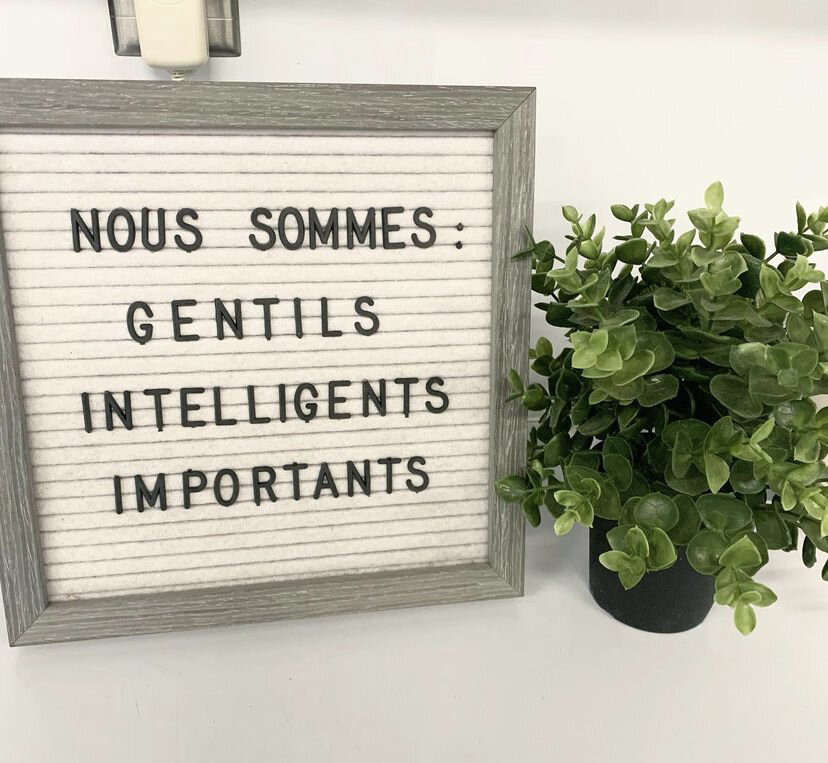
Je suis gentil(le)
Je suis intelligent(e)
Je suis important(e)
Et nous sommes capables.
(ENG: I am kind, I am smart, I am important and we are capable!)
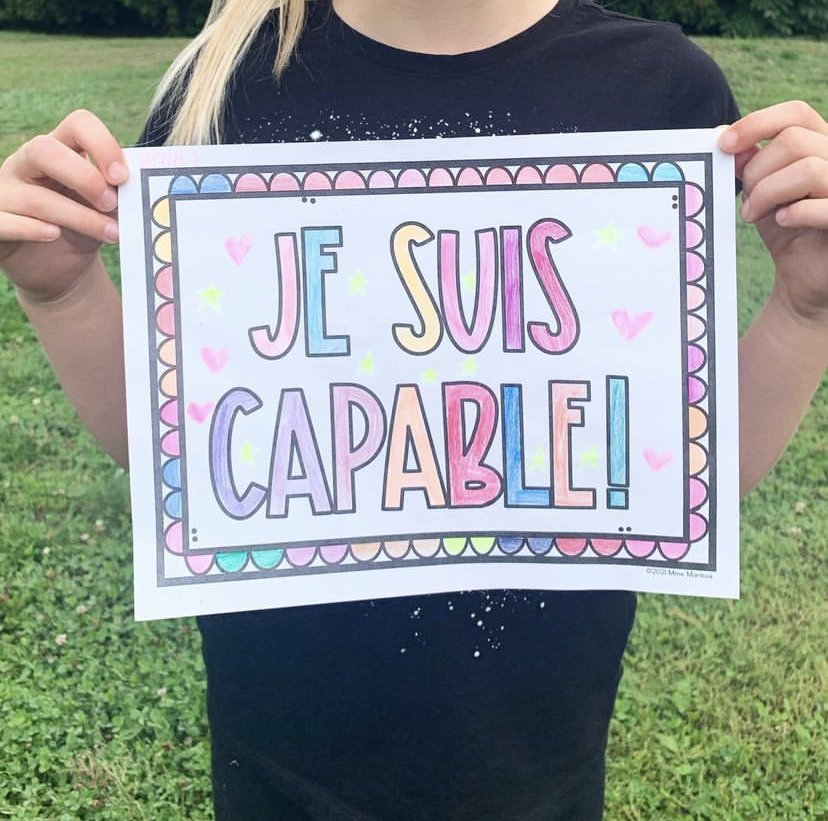
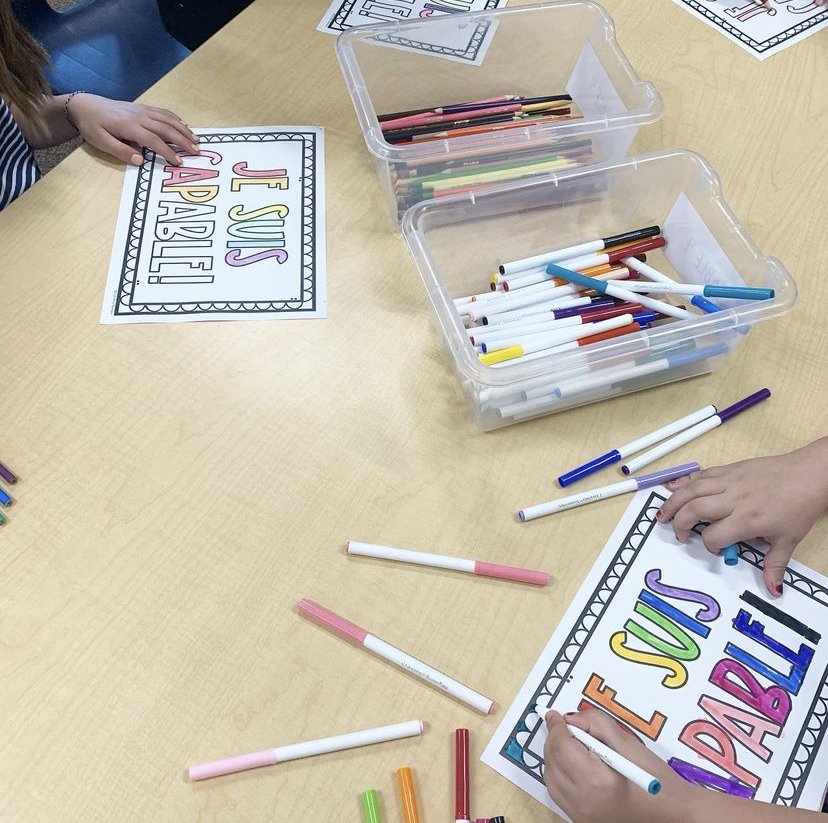
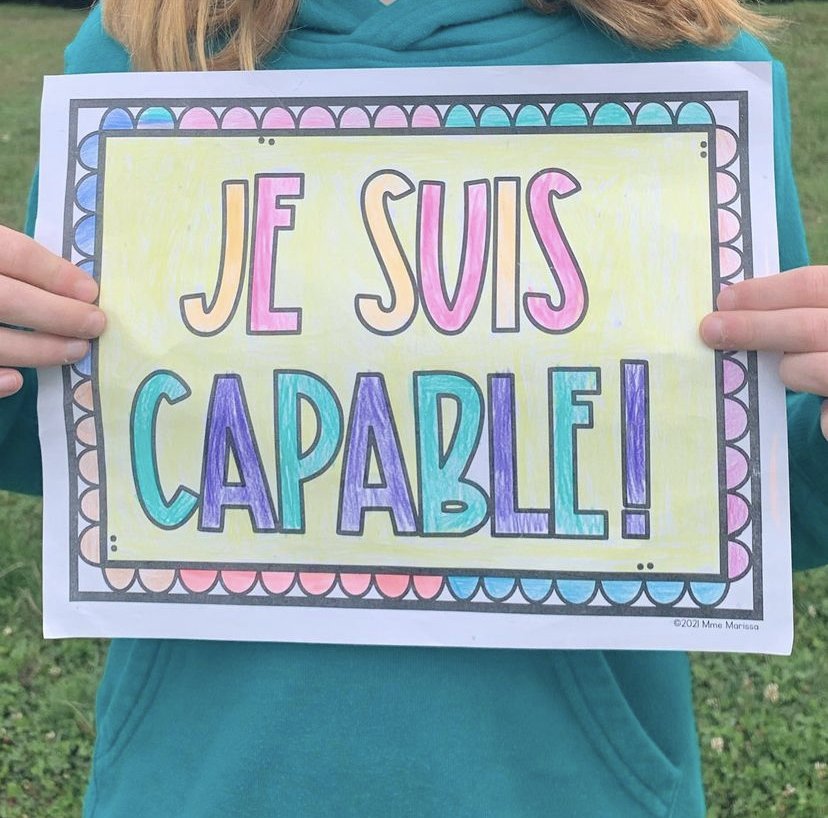
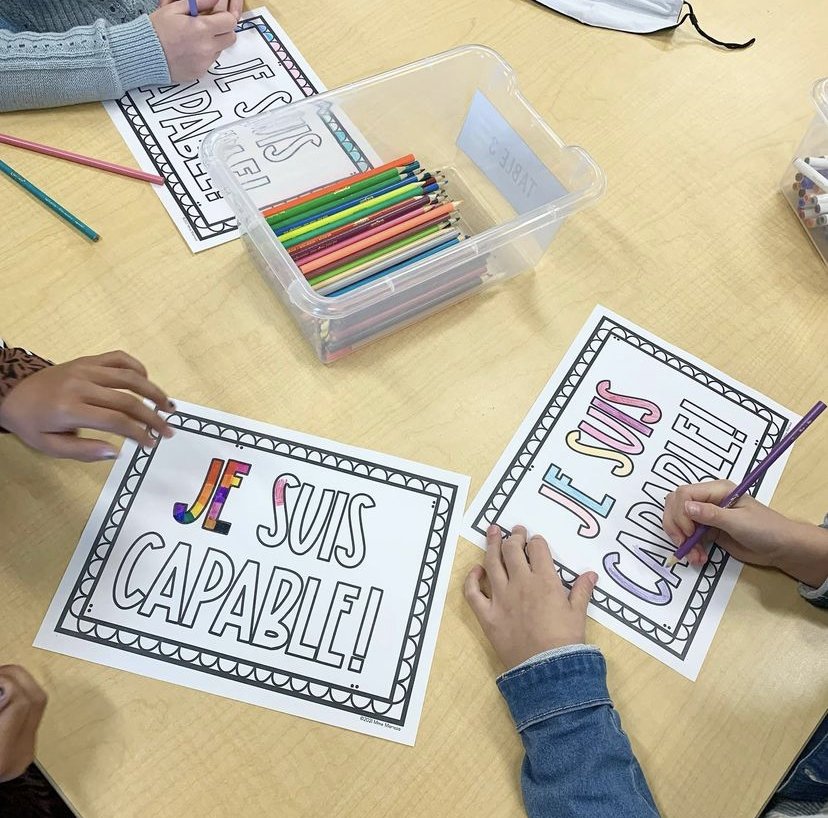
This is a French version of the affirmation from The Help. On one of our walls, I have the words “Nous sommes capables!” where students have their images holding a sign they made with those same words. My students love saying this and never fail to remind me if we forget.
After we finish saying it, we take three DEEP breaths. This makes sure we are all calm and ready to start. Alternatively sometimes we do 5 finger breathing or three noisy breaths where we breathe in, then let it out in a big sigh to get it all out.
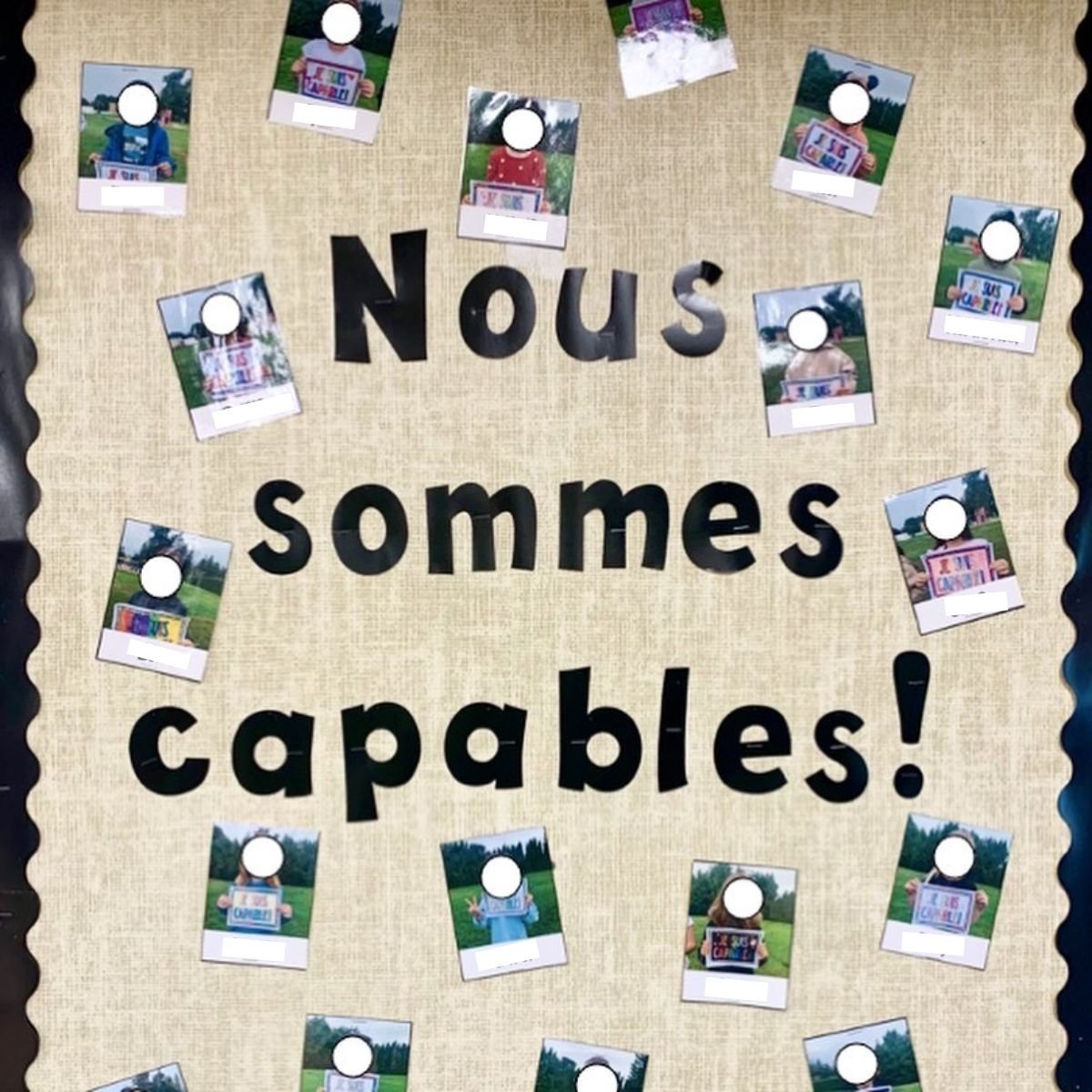
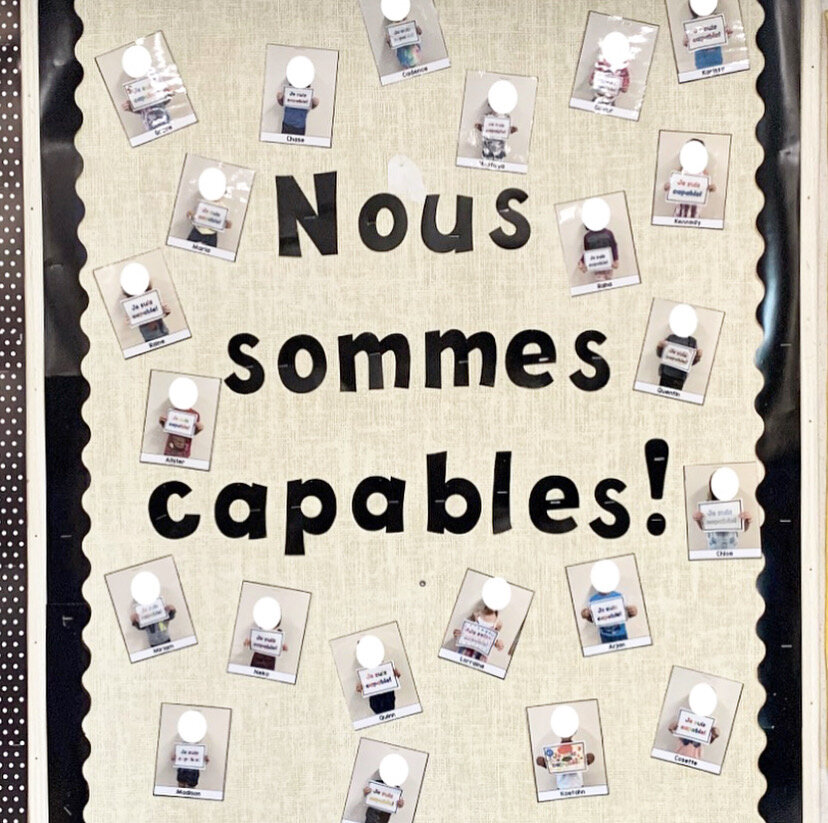
Want to do the same activity with your students? Get it here for FREE! We do it as one of our very first community building activities in September and it serves as a reminder all year long.
“Ami du jour” (special helper) selection (10 seconds-2 min)

All students have their name on a popsicle stick. I have one pocket for people who can still be picked, and another pocket for people who’ve already been picked. Once they’re all done, I move everyone back into the first pocket and start again.
Since I have added more things to the morning meeting, I just pick the name and tell them who it is but…if you have the time and want to use this as an opportunity to work on some oral comprehension, you or the previous ami du jour can do a game to find out who the new one is. Everyone stands up and yesterday’s student gives clues as to who the new ami is. They say things like “l’ami du jour est un deuxième année. L’ami du jour porte du rose”. Each time a statement no longer applies, you sit down.
The selected special friend gets to help me with the morning routine, sit in my big rocking chair, help pass things out, take any messages, lead the line etc.
Sound practice (1 min)
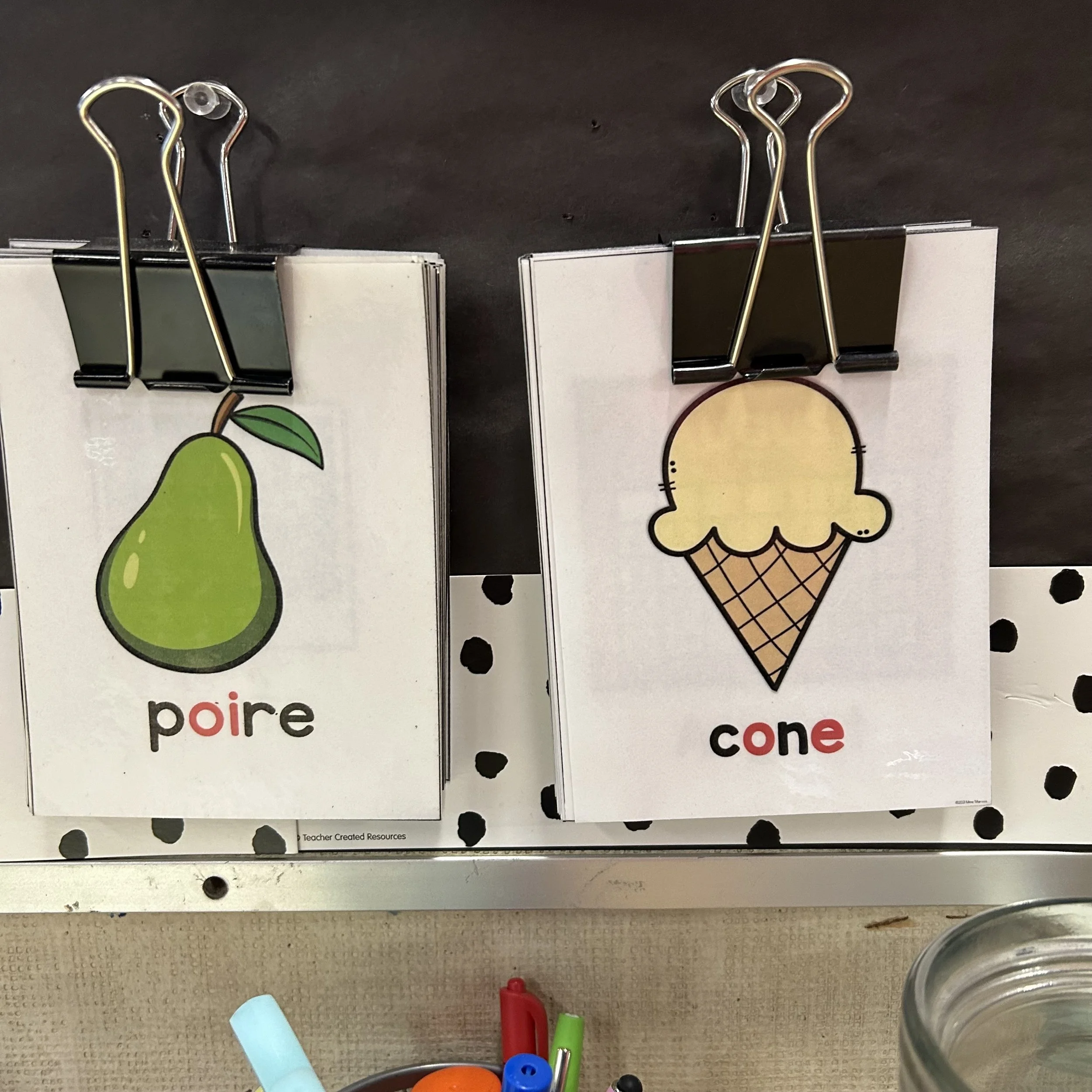
The ami du jour gets given 5 French sound flash cards and 5 English sound flash cards and leads the chant for the class (ie: o-u fait “ou” de poule”/e-e says “ee” like tree)
Oral activity - Mot du jour (word of the day) (3-5 min)
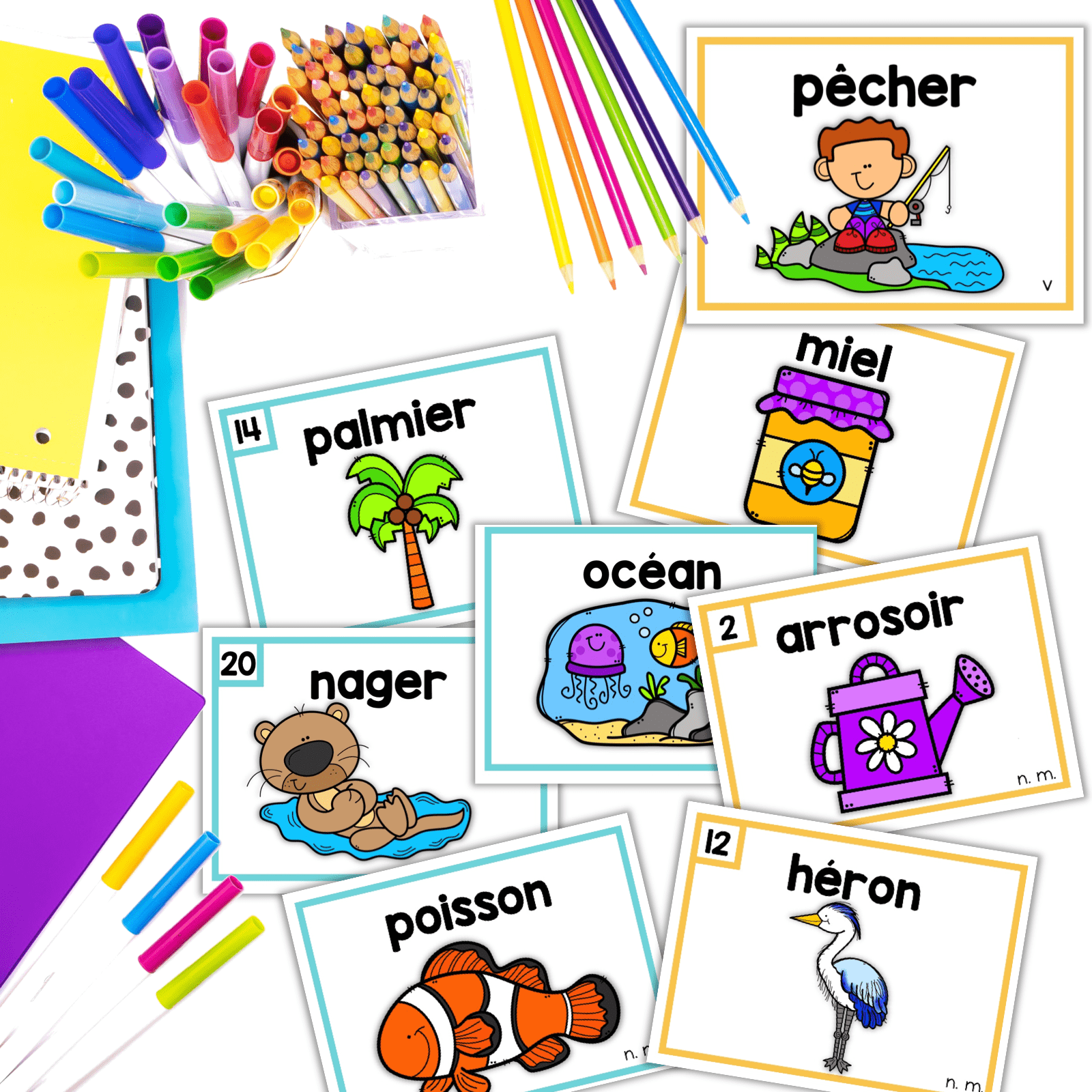
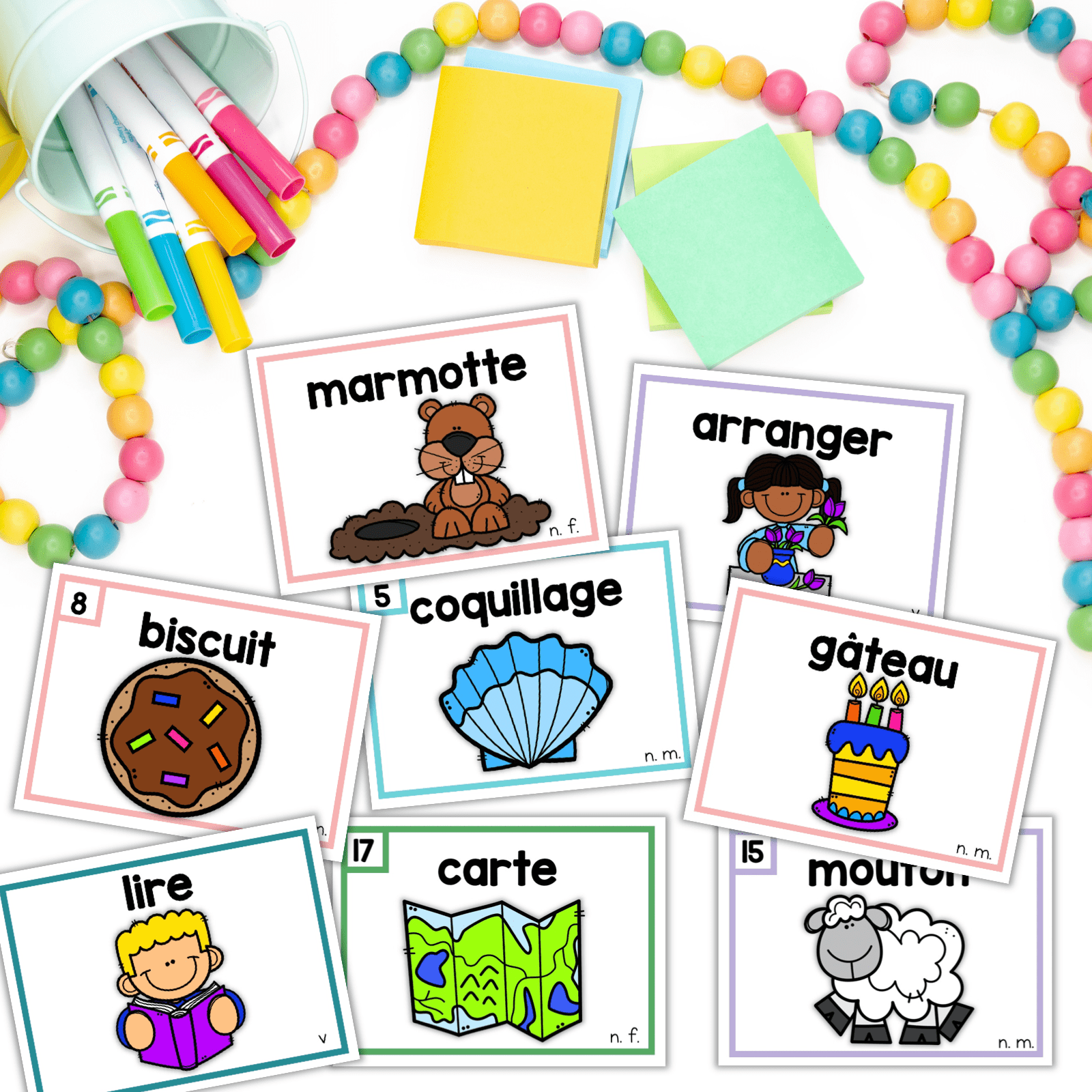
I select the “mot du jour” card which has a word like “papillon”. We’ll talk about whether it’s masculine or feminine and which articles we can use. Then I’ll ask who has a sentence to share using that sentence. I accept any length and participation is voluntary.
Try it using this free animal set
They might say things like:
Le papillon est orange et noir.
Le papillon vole dans le jardin.
Je vois un papillon qui vole dans mon jardin parce qu’il aime les fleurs.
Check out the Mot du Jour blog post to learn more about how I run this activity.
Oral activity - Which one doesn’t belong (~3-5 min)
This can be done with pictures, shapes, numbers or words.
Students decide which one doesn’t belong and have to share orally why they think so. This is a good way to practice vocabulary and speaking in full sentences.
It’s a critical thinking exercise. There is no correct answer.
A few available on TPT: THIS PICTURE ONE, THIS MATH ONE and THIS PICTURE ONE.
Phrase du jour (sentence of the day) for grammar & vocab (~3-5 min)
Grammar at this stage is so important but I get it, it’s boring. My solution is to practice it every single day with the use of my “Phrase du jour”. Each month has a different theme and different tasks that students need to do after unscrambling a sentence. Some teachers opt to do this as individual work but I like doing it as a class so that I can build on it. We complete the prompts on the slide and then I’ll ask them to find more and more things. I like to project it on my board but also have it available in a workbook style so that students can do it as morning work or follow along if you do it as a class.
You can learn more about my daily 5-minute grammar HERE.
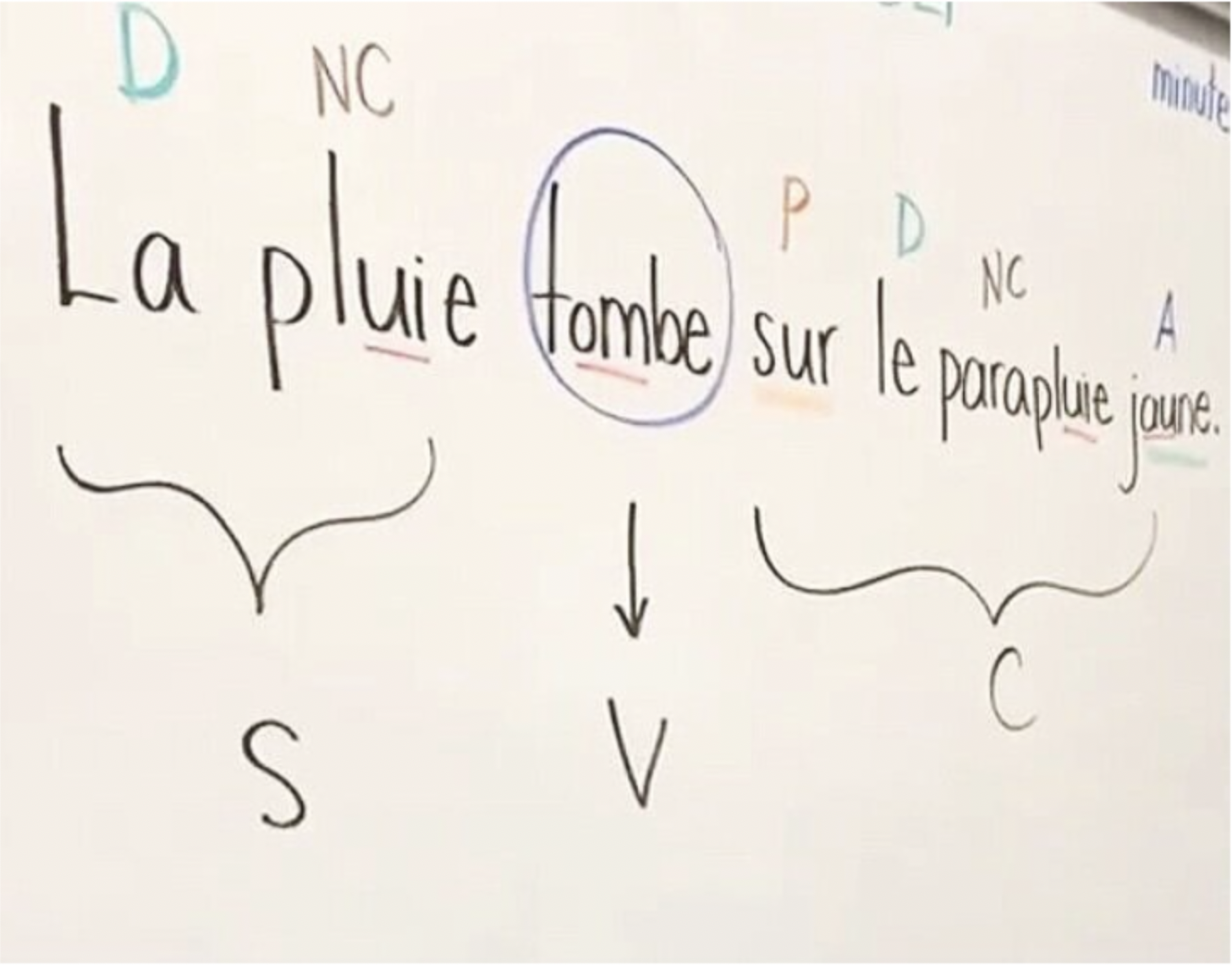


*Note: If you teach a straight 2, you may be interested in the 1/2 version if you want them to be more independent. If you want to do it as a group and support them as you work through it, the 2/3 version will work (many used it before the newest version was available)
Problème du jour (Word problem of the day) *alternate to phrase du jour (~3-5 min)
I like to do a couple math word problems during the routine too, helps keep them sharp on their skills and understand word problems. When I did this, I used resources from Madame Angel. I do one from the grade 2 pack and one from the grade 3 pack.
Shape of the day info (1 min)
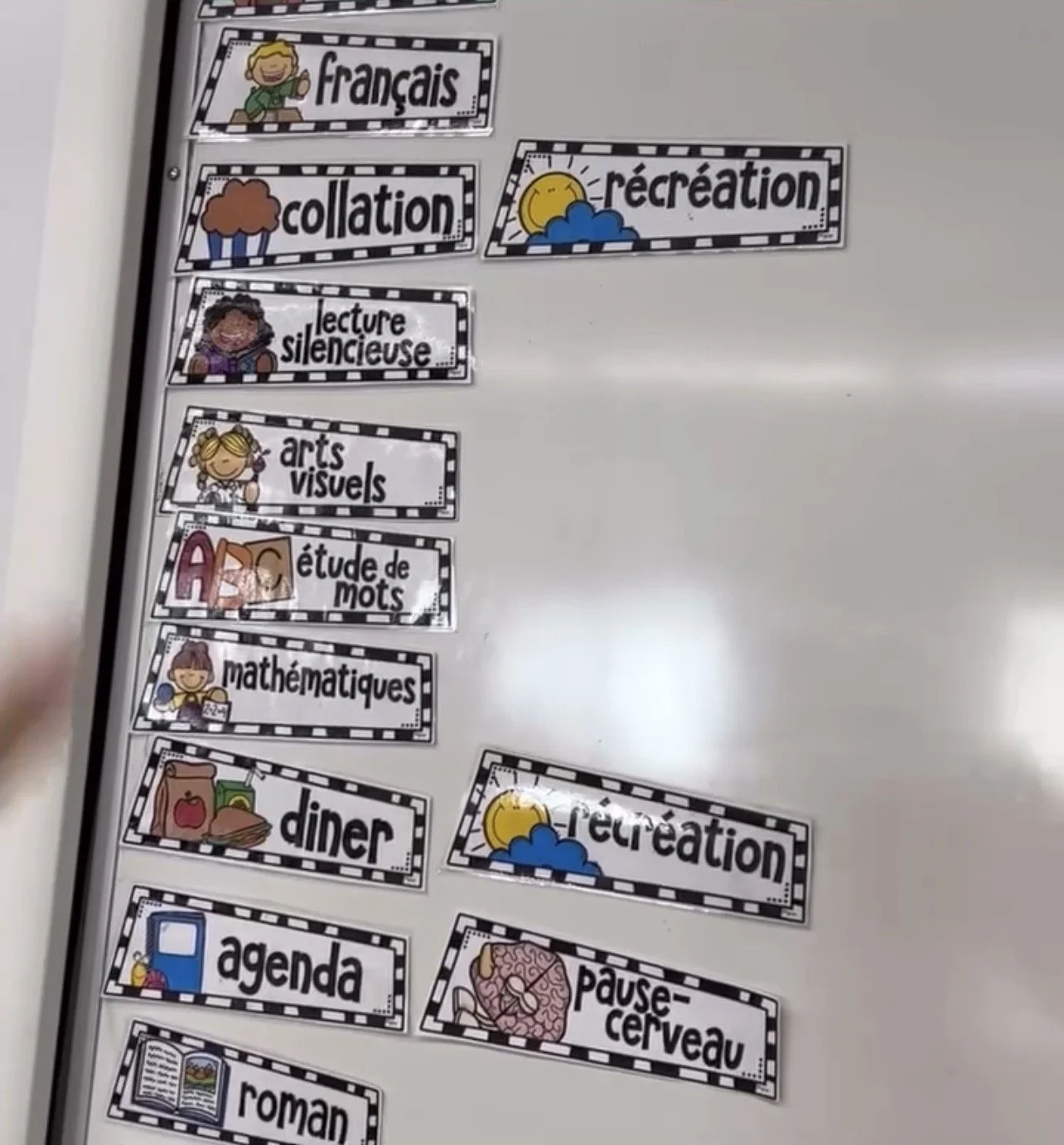
I use these schedule cards from Peg Swift.
I have a schedule posted on my whiteboard so I quickly run through it. Since I love structure and routine, we have a pretty predictable schedule but I’ll let them know that in math we’re playing a game or in art we’re doing X project (things that aren’t written on the board).
We know how much it benefits students to have a visual schedule and a predictable day outlined for them. This is HUGE for students with behavioural or emotional needs as the expectations are laid out for them so that there are no surprises. Of course, sometimes things change, but the understanding of what’s to come can help settle students.
Song and/or poem (1-3 min)
Songs and poems are an easy way to work on pronunciation and develop vocabulary in a second language.
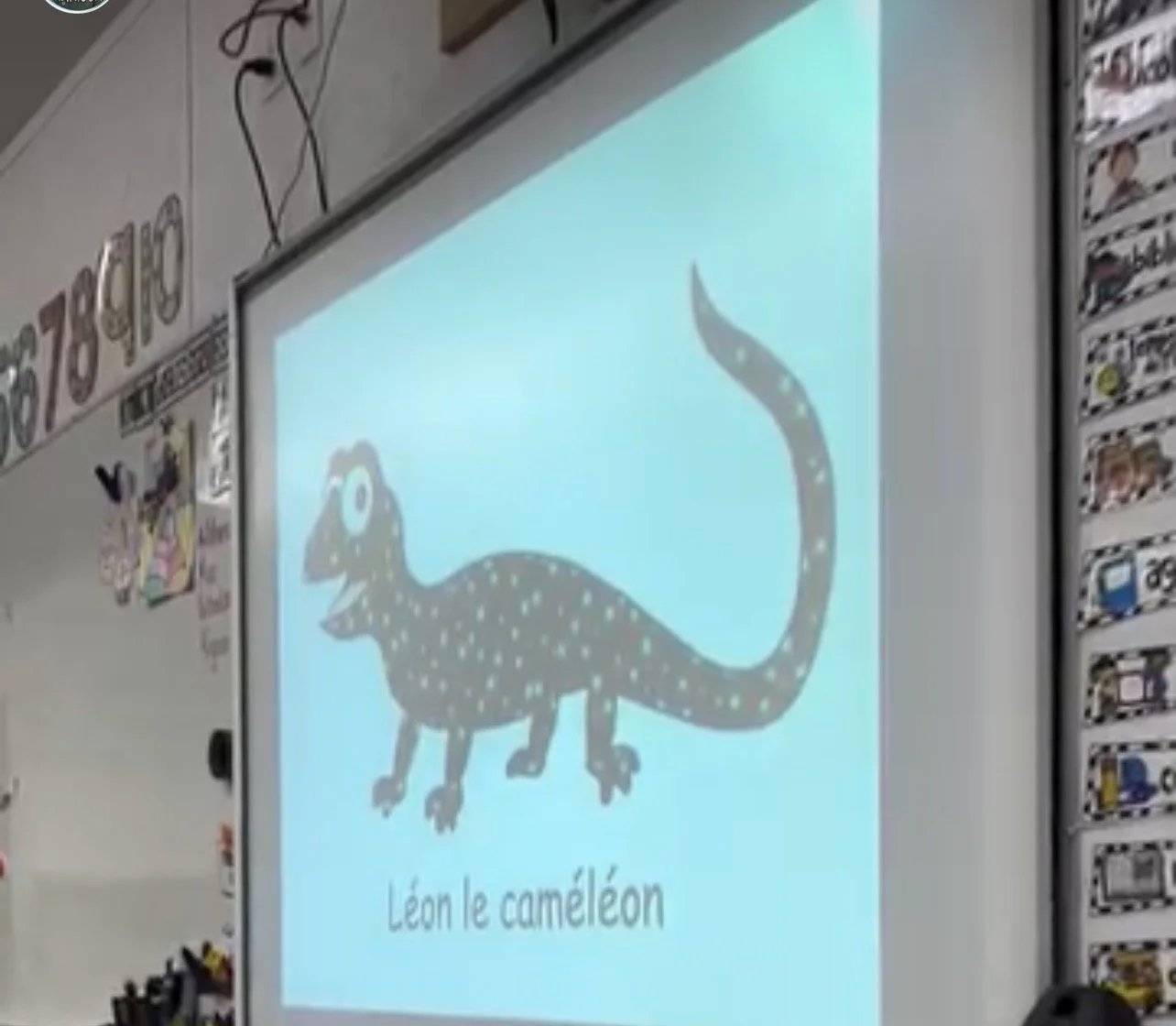
The poems are from all kinds of sources, but lots were just found on Google. I wrote them on chart paper and had them up at the front.
For the songs, I like to project the words on the board so that students can follow along. You can often find these songs on YouTube.
Check out my post “Songs for Primary French Immersion” that features links to many of the songs! Many songs become class favourites and we end up singing them long after the month has past.
Movement break (3-4 min)
The last thing we do before jumping into our literacy block is a little movement break. My kids LOVE Just Dance and I also have a playlist of other brain/movement break videos on YouTube. They also love Go Noodle brain breaks as well. Basically, any movement break is great!
EXTENSIONS
Depending on time, you might wish to add a discussion, game or other group activity to extend your meeting. Below are examples you can cycle through to keep things fresh. These don’t need to happen every day, maybe you have different things on different days (riddle Wednesday, perhaps) or you include them when you notice the room needs to shift and sentence of the day is just not it right now.
Discussions
Question of the day/Would you rather
If your students can read, you can write a question on the board and they can make a tally mark on their selection as they come in in the morning. For example: If a tomato is a fruit, does that make ketchup a smoothie? Yes or No. Have a discussion about the answers.
Alternatively do this orally and invite a few students to share. For example: What super power would you like?
Jokes/riddles
Spot the difference
Show two images (lots on Youtube) and ask students to spot the difference but they must answer in full sentences.
Word games
One word stories
Go around the room and create a story where each person adds one word at a time
Headbands
Have one student come up to the front and try to guess a word based on clues or questions
I’m going on a picnic and I’m bringing a…
See if students can guess what the pattern or rule is with the items allowed to come
Tongue twisters